In an act of boycott, Malaysia makes its own ‘McDonald’s’
In over a year, Ahmad’s Fried Chicken has grown to 35 outlets with expectations to reach 110 in 2026
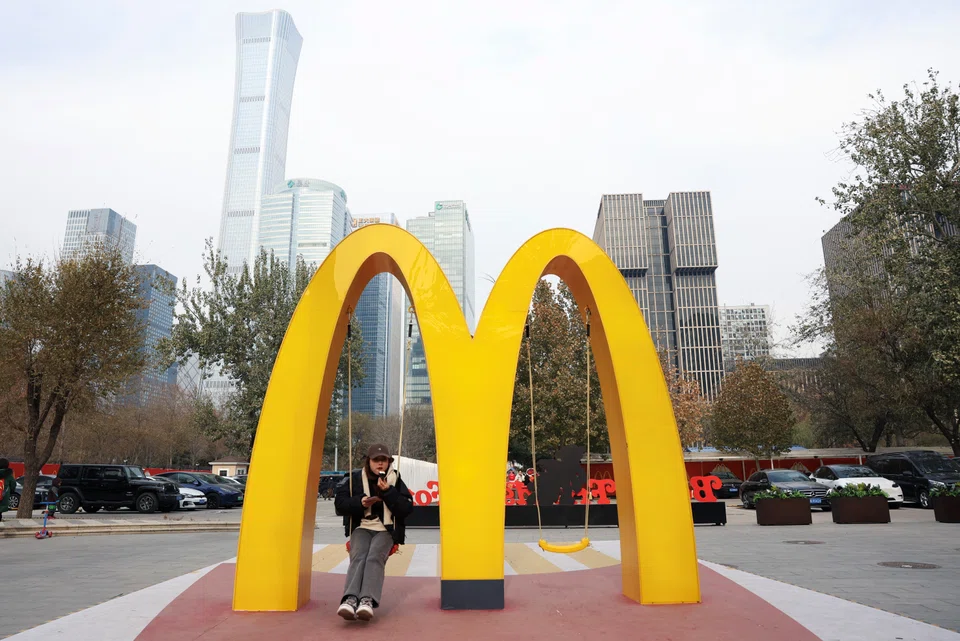
[SHAH ALAM/SINGAPORE] It was a Saturday afternoon in the summer of 2024, and Lailatul Sarahjana Mohd Ismail’s children were asking – again – to go to McDonald’s.
But Lailatul, like scores of other Muslims in Malaysia, was boycotting the fast-food chain and other American brands over US support for Israel.
That moral choice, in solidarity with the people of Gaza, did not override her kids’ craving for fried chicken, one of the chain’s most popular offerings in the country.
As the chorus for crispy drumsticks grew louder, Lailatul temporarily quelled the dissent by frying her own at home. And then she went a step further.
Convinced that there were probably thousands, if not millions, of other Malaysians craving the same thing, but steering clear of international brands perceived to have a link to Israel or its close ally, the US, she launched her own small-scale competitor to the mega chain.
Just over one year in, Ahmad’s Fried Chicken – the brand that Lailatul and her husband, Mohd Taufik Khairuddin, which originally started out of a food truck – has grown to 35 outlets. By the end of 2026, that number will soar to about 110.
Across the South-east Asian country of 34 million people, where about two-thirds are Muslims, customers who had sworn off global restaurant chains in solidarity with Palestine have fuelled a boom in local brands.
Malaysian cafe chain Zuspresso, for instance, which had fewer locations in the country than Starbucks in 2023, doubled its store count last year as Starbucks’ shrank.
Today, the chain known as Zus Coffee is the largest coffee purveyor in Malaysia, with more than 700 outlets that sell pumpkin spice lattes as well as concoctions infused with local flavours such as coconut and palm sugar.

Even as the prospects for a peace plan in the Middle East is increasing, the consumer shift to homegrown alternatives appears to have staying power.
“The change is permanent,” said Adib Zalkapli, founder of Viewfinder Global Affairs, a geopolitical consulting firm that tracks trends across South-east Asia.
“Politics or specifically events in Palestine definitely are a major factor driving consumers to alternative brands. Palestine is the most important foreign policy issue in Malaysian politics,” he added.
Malaysia, the third-richest country in South-east Asia, has become a hotbed for pro-Palestinian sentiment in recent years.
Prime Minister Anwar Ibrahim’s vocal support of Hamas – designated a terrorist organisation by the US and European Union – has endeared him to Muslim voters, who view support for Palestinians as a religious duty.
Rallies supporting the Palestinian cause draw thousands, while “Save Gaza” bumper stickers are a common sight on the road. The country does not have diplomatic relations with Israel.
Opposition to McDonald’s boiled over in the early days of the Israel-Hamas conflict as photos of franchised stores in Israel giving soldiers meals circulated on social media.
McDonald’s Malaysia, a franchised operation owned by Saudi Arabia’s Lionhorn, was quick to distance itself from the actions of McDonald’s Israel.
“A unilateral decision made by an individual franchisee should not be considered a global action,” an October 2023 statement from McDonald’s Malaysia read.
Still, local pushback continued at many of the chain’s 370 domestic locations, including vandalism of signs, billboards and restaurants.
McDonald’s Malaysia, which has not disclosed the financial impact on its operations, did not reply to a request for comment.
In the latest quarter, comparable sales in McDonald’s international developmental licensed markets segment, which includes Malaysia, grew 4.7 per cent.
Malaysia is by no means a make-or-break market for major global brands. The size of the food-service industry in the country will almost double to US$27.5 billion by 2030, said estimates research company Mordor Intelligence. By comparison, in the US, it will surpass US$1.5 trillion.
But the loss of its customers still has commercial implications, especially since Malaysia is not the only country rethinking its relationship with global consumer brands.
Coca-Cola Icecek, which bottles and sells Coke products in the Middle East, reported a loss of market share in Turkey and Pakistan this summer, following calls to boycott Western companies with perceived links to Israel.
In Indonesia, which has the world’s largest Muslim population, KFC’s franchise operator Fast Food Indonesia has closed dozens of outlets over the past two years as buyers abstained from its fried chicken. The list goes on.
And once customers made the shift to local brands, many said they are not going back.
Malaysia’s Zus Coffee, which expanded to the Philippines in late 2023, has since launched storefronts in Thailand, Singapore and Brunei as it realises everyone, not just Malaysians, want localisation and tailor-made products.
In the Philippines, for example, it is building allegiance by selling coffee drinks flavoured with ube, or purple yam. “This growing confidence in local brands is something we strive to sustain,” said Zus chief operating officer Venon Tian.
Of course, not every local brand that thrived during the boycott period will survive.
“Expansion may slow down from resource constraints,” said Azizul Amiludin, a senior nonresident fellow at the Malaysian Institute of Economic Research.
And while consumers may be gravitating towards local names now, “legacy brands have their heritage and their strength”, said Sydney Lawrance Quays, chief executive officer of Berjaya Food, the operator of Starbucks in Malaysia.
Despite the boycotts, store closures and steep losses triggered by the Gaza conflict, the company still “believes strongly in the Starbucks brand”, Quays said, adding that business is gradually recovering.
For now, domestic brands such as Ahmad’s Fried Chicken are riding high. The restaurant chain founded by Lailatul and her husband, both 34, brings in about RM3 million (S$945,000) in sales per month, an excellent return on the RM700,000 they initially invested to build the first physical storefront in December 2024.
In Shah Alam – a manufacturing hub in Selangor, Malaysia’s most developed state – the bright red exterior and sleek layout of a recently opened Ahmad’s could easily be mistaken for any one of the international fast-food chains.
Inside, Faisal Mohamad and his wife settle at a table with fried chicken, fries and soft drinks for lunch.
When it comes to international fast-food brands, “I don’t think I’ll go back. The local ones are just as good,” said Faisal, 41, also a frequent consumer of coffee from Zus. “This has everything the other restaurants offer, minus the political issues.” BLOOMBERG
Decoding Asia newsletter: your guide to navigating Asia in a new global order. Sign up here to get Decoding Asia newsletter. Delivered to your inbox. Free.
Share with us your feedback on BT's products and services