After a torrid 2022, Indian rupee seeks some reprieve as economy stays resilient
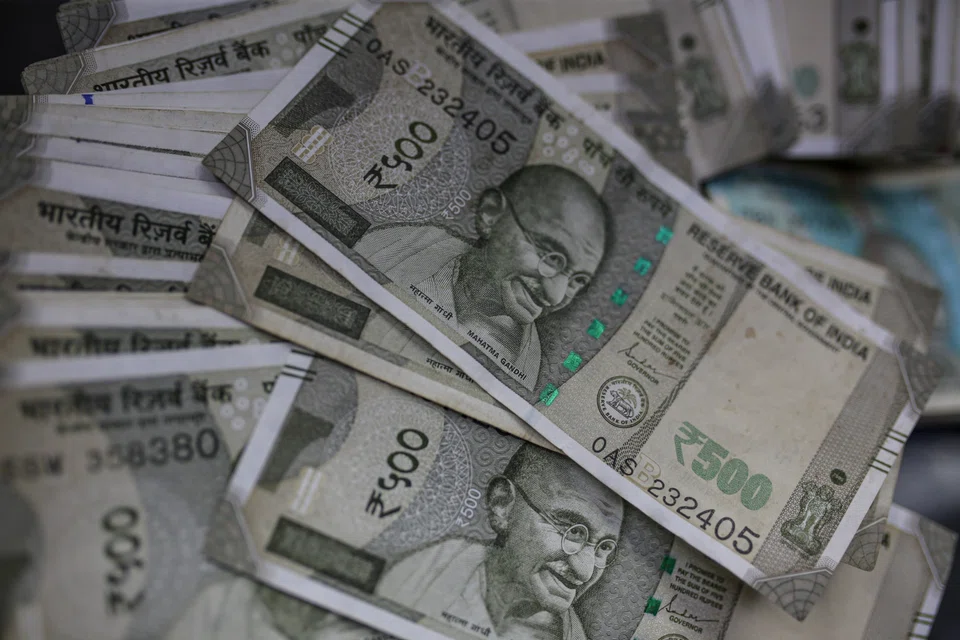
[NEW DELHI] The Indian rupee had a year to forget in 2022, as it fell 11.4 per cent against the US dollar – the sharpest decline since 2013 – to become one of the worst-performing currencies in Asia.
While the country’s strong foreign reserves offered some cushion, it was the hawkish US Federal Reserve’s string of interest rate hikes that lifted the greenback against the currencies of both developed and emerging economies, including India.
What hurt the rupee more than its Asian peers was India’s heavy dependence on energy imports. India, the third-largest economy in Asia, imports nearly 80 per cent of its crude oil requirements. And while India’s exports are rising, it still runs a currency account deficit that is bridged through foreign direct investment flows.
The rupee’s performance in 2022 was a story of two halves. In the first six months, the Reserve Bank of India (RBI) was active in the forex market on both sides, which helped the rupee stay a median performer, said Dilip Parmar, a research analyst at HDFC Securities.
“By the end of the year, the RBI’s strategy of aggressive dollar-buying to increase its forex kitty backfired,” he added.
On Dec 30, the last trading day of 2022, the rupee stood at 82.7 to the US dollar, a slight improvement from its record low of 83.08 two months earlier. As of Saturday (Jan 14), the currency pared some losses to trade at 81.29.
Analysts believe the rupee could weaken to 84 against the greenback, with some projecting a wider range of between 78 and 84 in the coming months. The pace of future Fed rate hikes, the movement in energy prices, the global economic slowdown and foreign fund flows in emerging markets are among the key factors that will define the rupee’s performance in 2023, they said.
“As far as ultra short-term trends are concerned, the rupee’s movement is likely to get impacted by flow of funds into China and associated Asian countries, which are likely to benefit from the normalisation of demand in China. A possible shallow rate hike cycle in India against that of the US may also keep the rupee under pressure for the first quarter of 2023,” said Garima Kapoor, an economist at Elara Capital.
She highlighted four tailwinds for the currency over the medium term.
They include a likely weakness in the dollar index once the Fed’s rate hike cycle comes to an end; rising impulses of deflationary trend in global commodity prices; continued relative outperformance of the Indian economy vis-a-vis its emerging market peers,; and the government’s fiscal consolidation thrust.
“We see the rupee ending 2023 at around 80 to the dollar, said Kapoor.
While the rupee has started catching up with other Asian currencies, the ongoing Russia-Ukraine crisis and the risk of global recession are among the near-term challenges.
The silver-lining lies in the real effective exchange rate (REER) – the weighted average of a country’s currency in relation to an index or a basket of other major currencies.
“The rupee is down by less than 2 per cent on a REER basis compared to end-2021 levels and still above the ten-year average. This suggests that, compared to its trading partners, the currency is still firm on an inflation-adjusted basis, said Radhika Rao, executive director and senior economist at DBS Bank.
Kapoor noted that the rupee will be a beneficiary of the decline in global commodity prices amid weakening global growth, and its inward orientation and lesser dependence on global exports.
India’s economy is forecast to expand by 7 per cent in 2023, lower than last year’s 8.7 per cent, according to latest available data from National Statistics Office. The RBI and the World Bank’s projections are 6.8 per cent and 6.9 per cent respectively for 2023.