

AI to double data centre power and water consumption by 2030: UN researchers
Annual power consumption is forecast at 945 terawatt-hours, with AI accounting for 40%
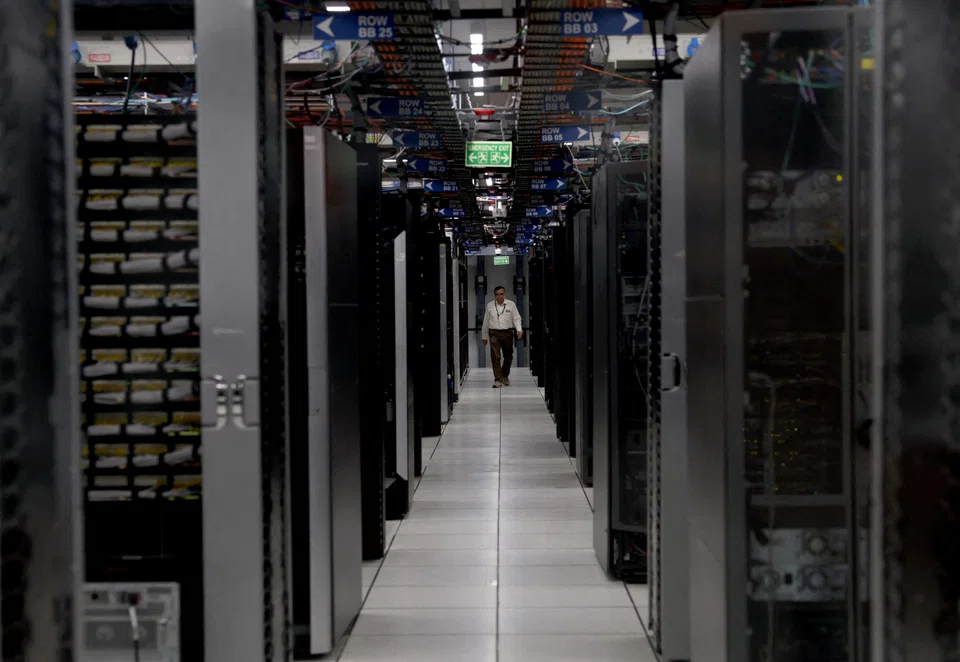
[SINGAPORE] Data centres are expected to consume twice as much power and water by 2030 as they expand to meet the surge in demand from artificial intelligence, UN researchers said on Wednesday (Jun 3).
Unless governments heed the rising environmental costs of AI, the rapid roll-out could also strain scarce land resources and create mountains of electronic waste, the United Nations University Institute for Water, Environment and Health warned in a report.
Here are a few takeaways from the report:
Last year, data centres consumed 448 terawatt-hours (TWh) of electricity globally, more than the whole of Saudi Arabia. AI accounted for a fifth of the total.
They also consumed 4.5 trillion litres of water, enough to meet the needs of more than 600 million people in sub-Saharan Africa, and generated 189 million tonnes of carbon dioxide emissions.
Kaveh Madani, the institute’s director and the report’s lead author, said: “The public debate still often treats AI as software, but AI is also physical infrastructure: data centres, electricity generation, cooling systems, transmission networks, chips, minerals, land and water.”
Annual power consumption from data centres is projected to double to 945 TWh by 2030, around the same as the whole of Japan, with AI accounting for 40 per cent of the total.
Water consumption is expected to reach 9.3 trillion litres, while CO2 emissions will rise to 399 million tonnes.
The data centre land footprint is also forecast to increase from 6,900 square km in 2025 to more than 14,500 square km by 2030, the report said.


While AI could boost efficiency by optimising power grids and reducing waste, overall electricity and water demand is still likely to rise as countries and corporations race to build new capacity.
“Right now, the competition for growing faster than others overshadows the very basic principles of sustainable growth,” he added.
“AI will not simply ‘run out’ of water or electricity worldwide. But in specific places, poorly planned data centre expansion could collide with existing resource pressures. That is why responsible planning matters now, before infrastructure and dependencies become locked in.” REUTERS
Decoding Asia newsletter: your guide to navigating Asia in a new global order. Sign up here to get Decoding Asia newsletter. Delivered to your inbox. Free.
Share with us your feedback on BT's products and services
TRENDING NOW

Once staunchly pro-China, Malaysian Chinese businesses are now distancing themselves from Beijing

Looking beyond looming CEO succession, should UOB potentially pursue a transformative merger?

Could stablecoins be the future of money?

Grab CEO’s wife Chloe Tong on life with Anthony Tan and finding her purpose

