

AI startup Sereact raises US$110 million for robots predicting consequences
Bullhound Capital and Daphni are among the new investors participating in the funding round, the company says
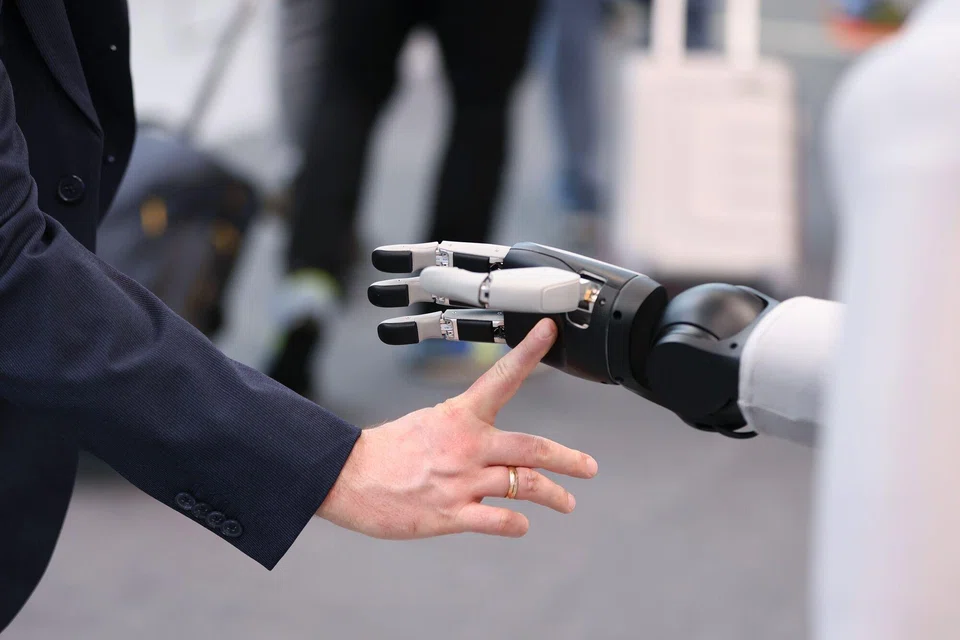
[STUTTGART] Sereact, a German robotics software company, has raised US$110 million in fresh funding to develop its artificial intelligence model that makes robots smarter and more adaptable to different tasks.
The Series B funding round was led by venture capital company Headline, with other new investors participating including Bullhound Capital, Felix Capital and Daphni, alongside several existing backers, Sereact said on Monday (Apr 27).
The company declined to disclose its valuation.
The Stuttgart-based startup, its name deriving from the words sense, reason and act, develops software that allows industrial robots to perform tasks they have not been explicitly trained on.
Its software already powers machines that pick and deliver components for automakers such as BMW and Daimler Truck.
CEO Ralf Gulde said that most of the new funding will be used to build Sereact’s newest AI model, Cortex 2.0, which enables a machine to simulate different outcomes and decide on the action to take next.
The company will also expand in the US, he added.
Venture capitalists increasingly consider robotics to be the next wave of AI, as the underlying models become smarter and components become cheaper.
Humanoid robots are in the early stages of moving out of startups and labs to the real world, mostly in manufacturing settings.


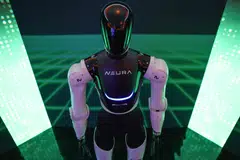
Global investment in the sector more than trebled year on year to US$27.6 billion in 2025, going by the data from financial database PitchBook.
Sereact peer Neura Robotics is raising about one billion euros (S$1.4 billion), Bloomberg News reported.
One bottleneck for adoption is that robots are reactive, meaning that errors such as dropping items are likely to happen and hard to undo, Sereact said.
The startup’s newest model would enable robots to anticipate likely errors before they happen and act accordingly, similar to the way a human might adjust their grip to avoid spills while picking up a cup of coffee.
Gulde drew a comparison to the newer generation of reasoning models from large language model providers such as OpenAI and Anthropic, but for the physical world.
Besides building its own model, Sereact trains on publicly available world models including Nvidia’s Cosmos Reason.
The company already has 200 robotics systems running on its Cortex model. The systems are a mix of single-arm robotics, dual-arm systems and wheeled mobile robotics.
Gulde said the company is targeting a growing need in the market – processing returned goods.
Unpacking and restocking items can be expensive, and Gulde said robots can help retailers sort through the products, assess the condition of the item and cut costs. The startup is in talks with H&M.
Besides Stuttgart, Sereact also has offices in Zurich and Boston. It counts former Formula 1 world champion Nico Rosberg as an investor. BLOOMBERG
Decoding Asia newsletter: your guide to navigating Asia in a new global order. Sign up here to get Decoding Asia newsletter. Delivered to your inbox. Free.
Share with us your feedback on BT's products and services
TRENDING NOW

DBS, OCBC, UOB rout lops billions off STI as inflation, rate concerns spook investors

Grab CEO’s wife Chloe Tong on life with Anthony Tan and finding her purpose

OCBC sheds S$8 billion in value as shares close nearly 6% down; analysts cautious on banks

Deal between tycoon friends sparks scrutiny of Philippine power sector

