

At an AI summit, India tries to find a way between the US and China
New Delhi is using technology as a tool of foreign policy, casting itself as a moral voice for smaller, developing countries
[NEW DELHI] In a world where geopolitical power is being defined partly by the race between the US and China to dominate artificial intelligence (AI), India has a pitch for those left behind.
The South Asian giant has neither America’s homegrown AI giants such as OpenAI and Anthropic, nor China’s know-how and stores of the rare-earth elements that power everything from chips to data centres.
Instead, India is using technology as a tool of foreign policy, casting itself as a moral voice for the smaller, developing countries of the Global South, which may lack the resources to tackle the AI superstorm that has hit the world.
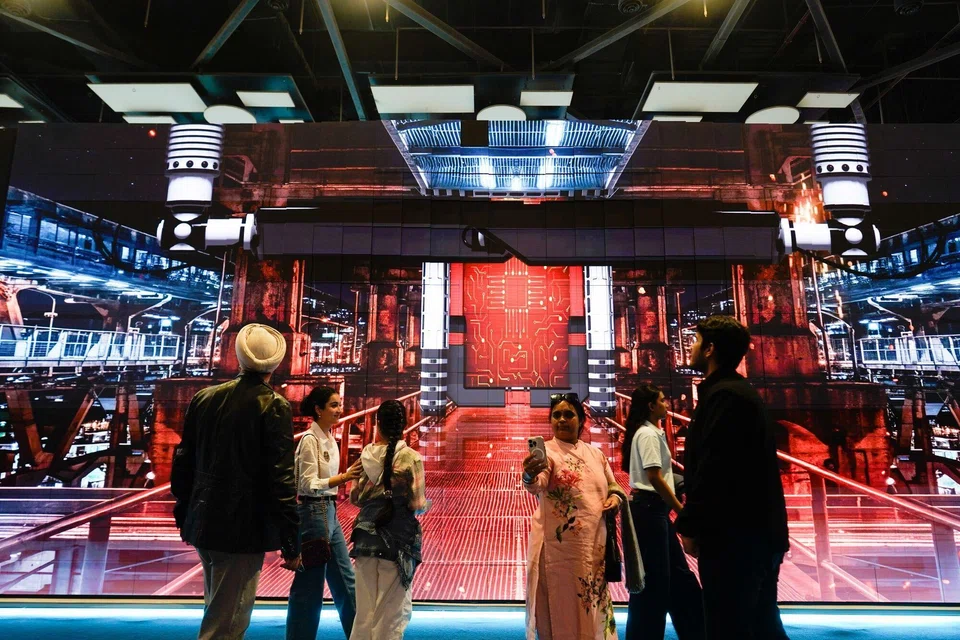
At the AI Impact Summit in New Delhi this past week – attended by the leaders of countries including Spain, Bolivia, Mauritius and Sri Lanka – India emphasised that the main questions were about how AI should be governed and how it should be used for the welfare of the people. It also dangled its pool of information technology workers and huge domestic market as a test case for applications of the technology.
During his address at the summit, Prime Minister Narendra Modi of India likened AI to nuclear power; both are technologies that have immense power to destroy but also to be directed for good, he said. If AI becomes “directionless,” Modi added, it will lead to destruction. A core question is not about what AI can do in the future, but what it can accomplish now to serve people, he noted.
Many analysts saw his approach as trying to make the most of a situation where India, like many other countries represented, has no clear advantages in a field led by US and Chinese companies.

“India is trying to position itself as a distinct, third-way alternative, centred on the Global South and AI as a public good,” said Sushant Kumar Yaduka, who teaches at the Jindal School of Government and Public Policy. It “made sense” for India to take this approach rather than try to join the “geopolitical-technological arms race” between China and the US, he felt.
“You can’t think of foreign policy without thinking of technology,” said Arun Teja Polcumpally, a JSW Science and Technology Fellow at the Asia Society Policy Institute. “India is trying to show it is a country that can be a trusted platform for emerging economies” by doing the groundwork to deploy AI responsibly, he added. NYTIMES
Decoding Asia newsletter: your guide to navigating Asia in a new global order. Sign up here to get Decoding Asia newsletter. Delivered to your inbox. Free.
Share with us your feedback on BT's products and services






