

Airlines face fare dilemma as fuel spike threatens travel demand
Low-cost carriers could struggle the most as their passengers are more price-sensitive
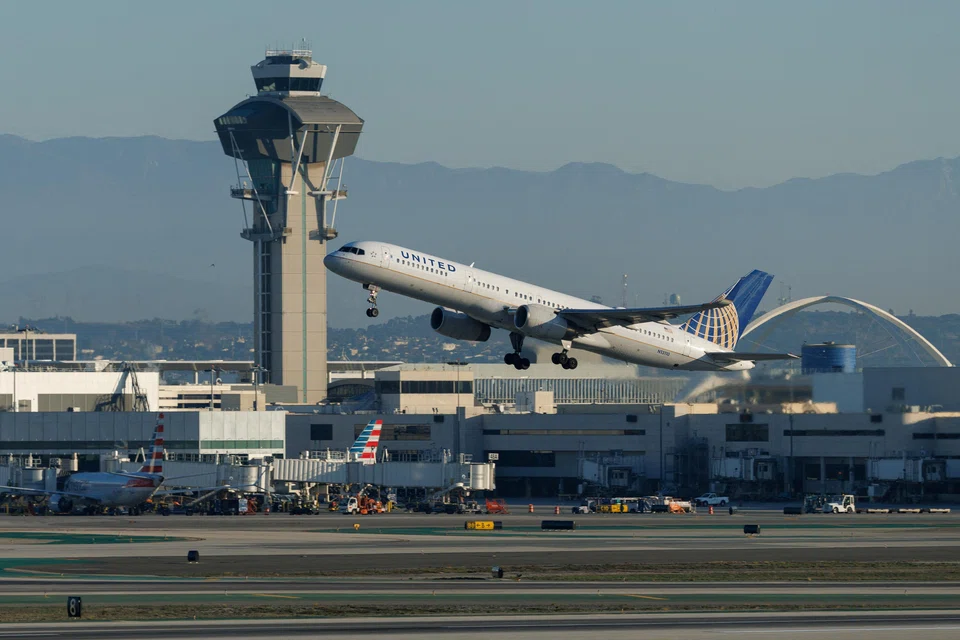
[BENGALURU] Global airlines have started hiking fares and cutting capacity to cope with the sudden surge in oil prices, but the industry’s ability to remain profitable may depend on whether consumers pull back on flying as petrol costs threaten household budgets.
Before the US-Israeli conflict with Iran began in February, the airline industry had forecast record profits of US$41 billion in 2026, but a doubling in jet fuel prices has placed that at risk and forced carriers to rethink their networks and strategies.
Carriers ranging from United Airlines and Scandinavia’s SAS have announced capacity cuts and fare hikes, while others have imposed fuel surcharges.
“Airlines face an existential challenge,” said Rigas Doganis, who once headed Greece’s former national carrier Olympic Airways and served as a director of Britain’s easyJet. He now chairs London-based consultancy firm Airline Management Group.
“They will need to cut fares to stimulate weakening demand, while higher fuel costs will be pushing them to increase fares. A perfect storm.”
Record passenger traffic
Last year, the industry reported record global passenger traffic that rebounded to about 9 per cent above pre-pandemic levels.
That came even in the face of persistent supply-chain challenges that affected deliveries of new planes.
Record post-pandemic demand for travel and persistent supply-chain challenges constrained capacity growth and gave airlines significant pricing power as they filled more seats on each plane.
But the scale of the increases needed to make up for the jet fuel price surge is huge, at a time when consumers are under pressure from higher petrol prices that could curb discretionary spending.


“The only way to get prices up is to reduce capacity,” said Andrew Lobbenberg, Barclays’ head of European transport equity research.
“That is what I would expect to... happen this time, and it’s what we (observed) in the previous occasions when we had other crises; people just have to start trimming capacity.”
Higher ticket prices
United Airlines chief executive officer Scott Kirby told ABC News on Mar 24 that fares would need to rise 20 per cent for the airline to cover the higher fuel costs.
Hong Kong’s Cathay Pacific Airways has lifted fuel surcharges twice in March. From Wednesday (Apr 1), a return trip from Sydney to London will attract a fuel surcharge of US$800.
Before the Iran conflict, a normal round-trip economy-class fare on the route cost about A$2,000 (S$1,769).
Low-cost carriers could struggle the most.
This is because their passengers are more price-sensitive than the corporate customers and wealthy consumers, who have been increasingly targeted by premium rivals such as Delta Air Lines and United Airlines, said analysts.
Nathan Gee, Bank of America’s head of Asia-Pacific transport research, said: “I think for the more price-sensitive travellers, even the short-haul flying trip gets downgraded, potentially to rail or to bus or other alternatives.”
Oil shocks
The Middle East conflict is the fourth oil shock for the airline industry since the turn of the century, though the first in which carriers such as Vietnam Airlines have expressed concern about securing physical supplies of fuel due to the Strait of Hormuz’s closure.
There was one in 2007 to 2008 before the global financial crisis dented demand, another after the Arab Spring around 2011, and a third after the Russia-Ukraine war broke out in 2022.
A string of mergers between 2008 and 2014, such as Delta-Northwest and American Airlines-US Airways, reduced eight major US airlines to four.
This brought on the era of tighter capacity control, and low-cost carriers such as Ryanair and India’s IndiGo leaned on single-aircraft fleets and fast turnarounds to keep unit costs low.
Replacing older, thirstier planes with more fuel-efficient models is an obvious way for carriers to reduce costs, but a severe supply-chain shortage in the wake of the pandemic and issues with new-generation engines have delayed deliveries.
And while US ultra-low-cost carriers have some of the newest, most fuel-efficient planes in the industry, if travel demand falters, paying for the new planes could become a barrier to profit.
Dan Taylor, head of consulting at aviation advisory firm IBA, said that the current oil shock was expected to widen the gap between financially strong and weaker airlines.
“Carriers with robust balance sheets, strong pricing power and reliable access to capital are better positioned to absorb ongoing pressures,” he added. “In contrast, airlines with low profitability and limited funding options may face increasing financial stress.” REUTERS
Decoding Asia newsletter: your guide to navigating Asia in a new global order. Sign up here to get Decoding Asia newsletter. Delivered to your inbox. Free.
Share with us your feedback on BT's products and services
TRENDING NOW

Once staunchly pro-China, Malaysian Chinese businesses are now distancing themselves from Beijing

New launch or resale unit? Here’s a guide for homebuyers
The lesser-known prospects in the Asian chipmaking supply chain

Cliff Tan has 7 million followers and a 4-month waitlist. Why won’t he expand his business?

