

Aluminium’s surge propels Chinese tycoon to US$48 billion fortune
Zhang Bo, the world’s largest private producer of the metal, has a grip on low-cost output at a critical moment for global demand
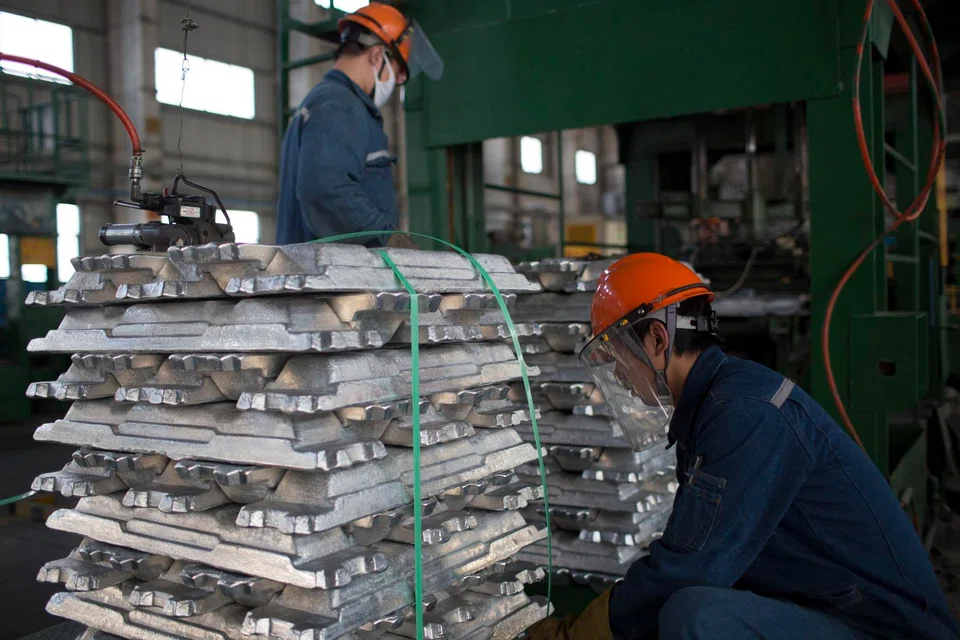
WHEN Zhang Bo took over his father’s industrial empire in 2019, it was already a sprawling industrial giant and one of the world’s biggest producers of aluminium.
Since then, the stock of his China Hongqiao Group has risen 585 per cent, quietly turning Zhang into Asia’s richest metals tycoon with a fortune of about US$48 billion.
Zhang, the world’s largest private producer of the metal, has a grip on low-cost output at a critical moment for global demand. He’s a supplier to China’s biggest tech firms, such as Huawei Technologies, Xiaomi, and BYD. Aluminium has spiked more than 25 per cent in the past year, fuelled by demand from new energy vehicles to solar panels and wind turbines, while geopolitical shocks like the war in Iran have added to volatility. The metal rose to its highest in almost four years on Monday (Mar 9).
The widening Middle East conflict has disrupted local smelters, which account for 9 per cent of global primary aluminium supply. An effective halt on shipments via the Strait of Hormuz, off Iran’s coast, has also choked shipments of the metal. That positions Chinese aluminium producers like Zhang’s to plug emerging supply gaps if global output slows.
“Their influence and personal wealth expanded because the industrial platform they built reached a scale where the market could no longer ignore it,” Harry Yu, senior partner at family office advisory Fung, Yu & Co, said of the Zhang clan. “Families like this tend to stay low-profile because their power sits in production systems and supply chains, not in branding.”
Chinese aluminium smelters in the past years have grappled with access to bauxite, the ore used to produce aluminium, as political instability in Guinea and export restrictions in Indonesia disrupted shipments. Jakarta’s drive to keep more processing at home further tightened global supply. Zhang and his father, however, had moved ahead of their peers to lock in upstream resources.
Hongqiao began developing bauxite mines in Guinea, the largest mining country for the raw material, around 2014. That’s given better access to bauxite than rivals, Bloomberg Intelligence analyst Michelle Leung said. Securing upstream resources in the early days has contributed to earnings growth, she said.
The company is now one of the lowest-cost producers globally through power plants in China, bauxite mines in Guinea and alumina plants in Indonesia.
Since he controls a significant share of primary aluminium output, which totalled nearly 73 million tonnes globally in 2024, Zhang Bo’s decisions affect global supply and price expectations. Hongqiao’s share placements and refinancing are also closely watched by investors, affecting sentiment for aluminium equities across the region.

In the last year alone, his family’s wealth has gained 110 per cent, according to the Bloomberg Billionaires Index, placing the clan among the wealthiest in Asia as at 2025. Zhang declined to comment.
Zhang Xuexin, the patriarch of rival firm Xinfa Group, is worth more than US$35 billion.
Since taking over the helm from his father, Zhang Bo has helmed a major pivot by relocating a chunk of aluminium capacity to China’s mountainous Yunnan province to tap cheap green hydropower and align himself with China’s broader energy transition. He later expanded into high-end aluminium products used in electric vehicles as demand from traditional sectors such as property and construction waned.
Still, the company is highly exposed to aluminium price volatility, while weaker-than-expected economic growth in major economies amid escalated trade and geopolitical tensions poses a major downside risk to demand for the most widely used industrial metal.
Early days
The family’s history in aluminium goes back to 1994, when his father, Zhang Shiping, founded Weiqiao Textile. By the early 2000s, the elder Zhang began using excess energy from his textile plants to fuel a venture in aluminium.
The Chinese aluminium industry expanded rapidly in the late 1990s as the country moved towards a more market-oriented economy. While state-owned giants remained dominant, as they did in strategically important sectors such as oil and steel, aluminium’s economics hinged less on political control and more on access to cheap electricity. Hongqiao capitalised on that dynamic by building its own captive power plants, allowing it to scale rapidly and maintain some of the industry’s lowest production costs.
By 2017, the company had overtaken global titans like Russia’s Rusal and China’s state-owned Chalco to become the world’s largest producer. Chalco has since grown bigger in terms of aluminium production, closely followed by its privately-owned rival. BLOOMBERG
Decoding Asia newsletter: your guide to navigating Asia in a new global order. Sign up here to get Decoding Asia newsletter. Delivered to your inbox. Free.
Share with us your feedback on BT's products and services
TRENDING NOW

DBS, OCBC, UOB rout lops billions off STI as inflation, rate concerns spook investors

Grab CEO’s wife Chloe Tong on life with Anthony Tan and finding her purpose

OCBC sheds S$8 billion in value as shares close nearly 6% down; analysts cautious on banks

Deal between tycoon friends sparks scrutiny of Philippine power sector

