
Amnesty to quit Hong Kong, citing fears under security law
 Add BT as a preferred source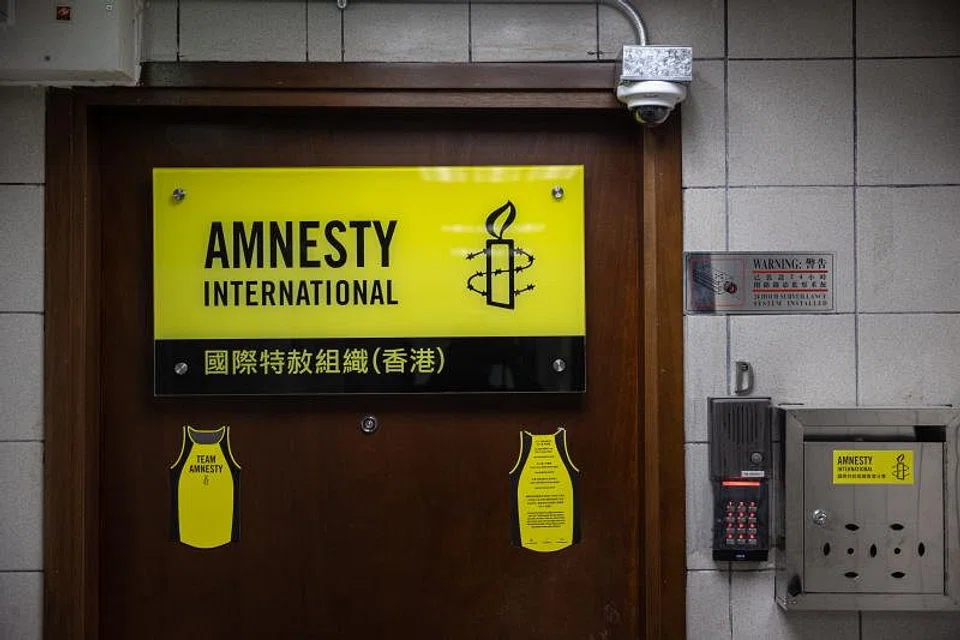
[HONG KONG] Amnesty International is shutting its Hong Kong operations, citing fear of "serious reprisals" under a China-imposed national security law, becoming the latest civil society group to fold amid a crackdown on freedoms in the city.
The non-governmental organisation's office dealing with human rights issues will close on Oct 31; the branch focusing on East and South-east Asia will shutter by the year's end, the group said in a statement on Monday (Oct 25), adding that it will shift regional advocacy work to new locations.
Anjhula Mya Singh Bais, chair of Amnesty's International Board, in a statement: "This decision, made with a heavy heart, has been driven by Hong Kong's national security law, which has made it effectively impossible for human rights organisations in Hong Kong to work freely and without fear of serious reprisals from the government.
"The law has repeatedly been used to target people who have upset the authorities for any number of reasons - from singing political songs to discussing human rights issues in the classroom," she added.
At least 35 civil society groups have closed in the wake of security legislation handed down by Beijing in June 2020 - and the UK-headquartered global human rights organisation is the most recognisable name among them.
In that environment, Hong Kong - for decades, a regional hub for international corporations, media companies and charities - is struggling to preserve its reputation as an open, international finance centre. Compounding that issue are some of the world's strictest Covid-19 related quarantine measures that are designed to align the city with China's pandemic model but have proved wildly unpopular with international businesses in the financial hub.
Navigate Asia in
a new global order
Get the insights delivered to your inbox.
While Hong Kong Chief Executive Carrie Lam has repeatedly said the security law restored stability to the city after the mass protests of 2019, lawyers and foreign governments have criticised the legislation as vaguely-worded and designed to stifle political opposition. In recent months, as authorities expanded their crackdown on dissent to any organisation that engages in what the government deems "political" activities, the city's largest teachers' union and a decades-old group that ran an annual vigil for the victims of the 1989 Tiananmen Square crackdown have both closed.
Even charities have been targeted with the threat face losing their tax exempt status if deemed to be engaging in or supporting activities "contrary to the interests of national security," under guidelines published in September.
BLOOMBERG
Decoding Asia newsletter: your guide to navigating Asia in a new global order. Sign up here to get Decoding Asia newsletter. Delivered to your inbox. Free.
Copyright SPH Media. All rights reserved.

