

Analysts in doubt over whether Bank Indonesia’s rate hike will stem rupiah’s slide
Jakarta next needs to have consistent economic and business policies to protect the currency, national assets, they say
[JAKARTA] Indonesia’s central bank’s move on Wednesday (May 20) to raise interest rates further to bolster the rupiah has been met with doubt in some quarters, with some analysts saying that this and other policy steps may fail to prevent further losses in the nation’s assets.
Swedish bank SEB’s representatives, for example, said that the move, aimed at slowing the pace of the currency’s slump, would not stem declines until the dollar tops out.
Observers from financial consultancy JB Drax Honore added that there is room for further policy tightening as the extra yield on Indonesian bonds over US Treasuries is still historically narrow.
The analysts were reacting to Bank Indonesia’s larger-than-expected 50 basis point interest-rate hike on Wednesday, in what was a step-up to its defence of the rupiah following the currency’s tumble to a succession of record lows in May.
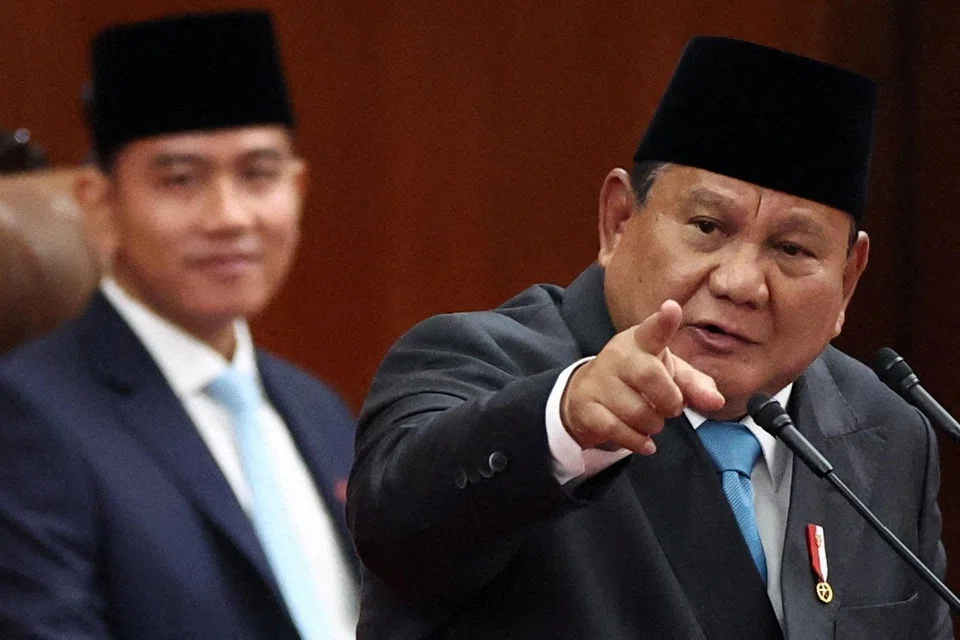
Indonesian President Prabowo Subianto also announced a number of steps to support local assets, including the creation of a state-owned entity to centralise exports of strategic commodities.
Eugenia Fabon Victorino, head of Asia strategy at SEB in Singapore, said: “Even with the unexpected jumbo hike, investors remain wary of the populist government policies that risks a deterioration of the fiscal balance.
“Ultimately, the pressure on the rupiah is for further weakness.”
Indonesia’s assets have tumbled in recent months on concerns that rising oil prices triggered by the Iran war will worsen the nation’s fiscal position; there has also been speculation that MSCI would downgrade the nation’s status to that of a frontier market.
The rupiah has slumped about 5.5 per cent this year, the nation’s benchmark stock index has slid about 29 per cent, and the nation’s 10-year bond yields have marched higher.



Vivek Rajpal, an Asia strategist at JB Drax Honore in Singapore, said Wednesday’s rate hike “was a step in the right direction, but that from here on, consistency in approach will be the key”.
“The gap between Indonesian government bond yields versus US yields is still narrow relative to the history, so hawkishness is still expected to persist,” he added.
Investor unease about the fiscal risks and policy uncertainty under Prabowo has been growing. Fitch Ratings and Moody’s Ratings have both lowered their credit rating outlooks for the nation, citing such concerns.
Indonesia’s Finance Minister Purbaya Yudhi Sadewa said in April that the nation would boost energy subsidies by up to 100 trillion rupiah (S$7.3 billion) this year. Under this move, the government will bear the costs of higher oil prices to protect households.
Economists pointed out, however, that the subsidies will crowd out other spending and make it harder to sustain fiscal support, while keeping the deficit below an official ceiling of 3 per cent of gross domestic product.
Lionel Priyadi, fixed income and macro strategist at Mega Capital Indonesia in Jakarta, said: “The ball is in the government’s court, with the biggest question on how it will design economic and business policies going forward.
“The government needs to reduce spending on programmes that cost too much money without equivalent economic impact, (such as those for) free meals, village cooperatives and, most recently, the state-linked commodity export entity.”
Finance minister Purbaya said on Tuesday that his ministry has been buying back up to US$113 million in government bonds daily, to cool rising yields and stem capital outflows.
However, this has not stopped the currency sliding to further record lows in the week of May 18.
Jeffrey Zhang, an emerging-markets strategist at Credit Agricole CIB in Hong Kong, said that any policy rate hike by Bank Indonesia is unlikely to be a “game changer” to reverse the ongoing depreciation of the rupiah, though policy support will help curb excess currency volatility in the event of future shocks. BLOOMBERG
Decoding Asia newsletter: your guide to navigating Asia in a new global order. Sign up here to get Decoding Asia newsletter. Delivered to your inbox. Free.
Share with us your feedback on BT's products and services
TRENDING NOW

Mooted COE changes will solve category issues, but higher premiums likely: observers

Grab CEO’s wife Chloe Tong on life with Anthony Tan and finding her purpose

Once staunchly pro-China, Malaysian Chinese businesses are now distancing themselves from Beijing

Cliff Tan has 7 million followers and a 4-month waitlist. Why won’t he expand his business?

