Andy Burnham’s vow to change Labour already risks coming unstuck
Burnham’s political honeymoon might be over even before he officially becomes prime minister on Monday
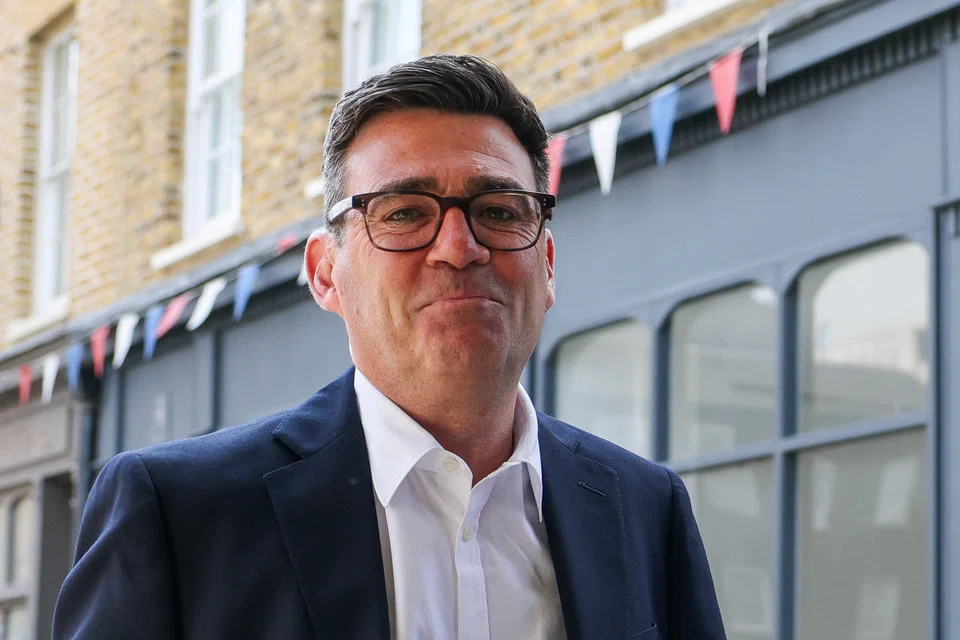
ANDY Burnham wanted to take over as Britain’s prime minister on a wave of hope, positive vibes and a promise to end the Labour Party infighting that marred Keir Starmer’s premiership. That optimism is fading before he’s even taken office.
Burnham will complete his ascent to power when he enters 10 Downing St. on Monday (Jul 20). Yet even some of his own supporters fret that his transition into government has been dominated by a policy vacuum, indecision in his inner circle, a high-profile falling out with one of his main allies and a nascent rebellion from Labour’s left flank — the faction that fought to get him the job in the first place.
The danger for Burnham and the country is that Britain’s seventh premier in little more than a decade enters office already at odds with a swath of his party. The events of recent weeks have left Labour members of Parliament and aides with a sense of foreboding that he’s in danger of succumbing to the same problems that brought his predecessor down.
While the party is united on the need for Burnham to succeed, there is mounting anxiety about his approach, one official said. Another warned some of the Manchester politician’s earliest supporters are starting to lose faith in his project.
The incoming prime minister’s spokesperson declined to comment for this story. A supporter said the weeks preceding him entering government were always going to be challenging and that the mood should improve once he’s in the job.
Burnham tried to get ahead of the doubts in a speech on Friday after formally becoming Labour leader. He vowed to end political point-scoring, change what he called an “insidious” culture of briefings and make the UK’s political discourse “less toxic.”
He repeatedly told the audience “I’m ready” and insisted “I have a plan”, a nod to widespread criticisms that little is known about his programme for government.
That rhetoric built on an email he wrote to Labour MPs earlier this month pledging to “create a team and culture where everyone is valued” and to avoid using party discipline to stifle debate. Lawmakers, he said, would be consulted when devising legislation rather than presented with bills as a fait accompli.
Labour MPs and aides warned those promises were already starting to sound hollow.

Several people who supported Burnham’s candidacy said they were concerned by how he and a circle of close advisers were conducting themselves. They had cut many broader allies out of planning for power, appearing at odds with his commitment to inclusivity, the people said. One accused Burnham and his team of doing the opposite of his promise to decentralise power.
Burnham’s decision to hold off from naming cabinet appointments means that when he reveals who has and hasn’t got a job on Monday, many will be disappointed. The aftermath of his first day in office will inevitably now be overshadowed by tensions with those who he overlooks, one official said.
That may include Energy Secretary Ed Miliband, a close Burnham ally who was the early favourite to be named Chancellor of the Exchequer but is now expected to get a different job, potentially foreign secretary. While some investors may welcome that decision because the former Labour leader is seen as interventionist, it’s provoked upset from the left of the party.
One MP said it risked disappointing those who thought Burnham would govern more radically. Another warned it doesn’t bode well for the rest of the party if Burnham treats a key supporter who was integral to his ascent to power in that manner.
The left-wing Mainstream campaign group, which backed Burnham, warned on Friday that it wants to see a “progressive chancellor” who “understands the threat that climate breakdown poses,” an implicit endorsement of Miliband.
Burnham appears set to appoint Home Secretary Shabana Mahmood as chancellor, although he insisted on Friday that he hadn’t made any decisions about his top team. Mahmood’s allies describe her as a fiscal hawk but other officials said that while she is more conservative on social issues she’s more left-wing on economic matters.
The danger, one official said, is her appointment might not upset just leave left-wing MPs who oppose her hard-line immigration stance, but also frustrate party moderates. A Bloomberg Markets Live Pulse survey showed only 11 per cent of respondents wanted Mahmood in the Treasury, though fewer wanted Miliband.
Several Labour officials said Burnham has already amassed a dangerously long list of internal political enemies. Those with axes to grind may soon include Starmer, Miliband, outgoing Chancellor Rachel Reeves, former deputy premier Angela Rayner, who is also outside of Burnham’s circle, as well as former health secretary Wes Streeting and foreign secretary Yvette Cooper, if they aren’t given top jobs.
Others noted Burnham has appointed men to most of the senior roles in his provisional Downing Street operation and plans to keep on a number of male Starmer aides, despite pledging to end a much-criticised “boys’ club” under the departing premier.
One official said the upset risked becoming unsustainable and it was unnecessary to put so many noses out of joint.
They warned that unless Burnham quickly seeks to right the wrongs of the last few weeks, he risks losing the support of key figures in the party and inviting a leadership challenge before the next election due in 2029 — an extraordinary prospect given Labour won power in 2024 on a promise to end the chaos of the previous Conservative administration.
Another official said Burnham was grappling with ensuring his cabinet represents different types of seats and regions nationwide, as well as trying to appease his supporters. A third pointed to the dilemma feeding his indecision: Burnham has to weigh who’s more damaging to keep on the outside.
It remains to be seen whether figures including Cooper, who wants to remain as foreign secretary, or Reeves, who is said to be interested in being business secretary, will land jobs.
The new premier intends to drown out commentary about his cabinet picks with a series of announcements in his first week, including on North Sea drilling, the public control of Thames Water, devolution, and social care.
He will also be briefed by officials that potential escalation in the Iran war may complicate those plans, as well as receive forecasts from the treasury warning that the economy faces choppy waters ahead.
One official said that when the history of Burnham’s transition into power is written, the question will be whether he had too much time to prepare, or too little.
Appearing to acknowledge not everything has gone smoothly, Burnham said on Friday that “I haven’t got everything right and I’m sorry where I’ve fallen short.”
Labour will hope that is the last time he has to make such an apology. BLOOMBERG
Decoding Asia newsletter: your guide to navigating Asia in a new global order. Sign up here to get Decoding Asia newsletter. Delivered to your inbox. Free.
Share with us your feedback on BT's products and services