

Anwar’s battle against allies shapes up as key Malaysian states call polls
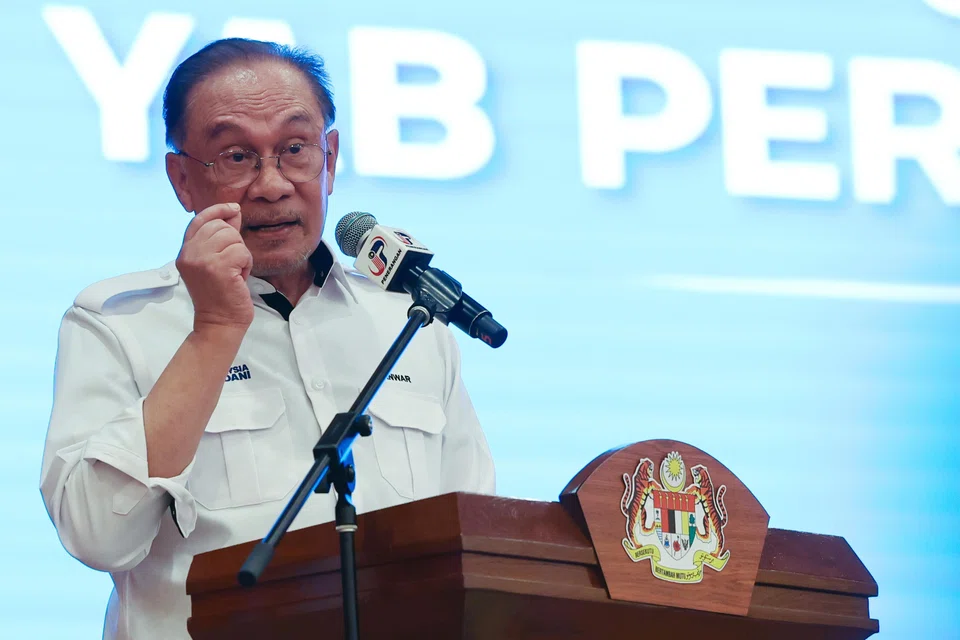
[KUALA LUMPUR] Malaysian Prime Minister Anwar Ibrahim’s grip on power is set to be tested as he prepares to face off against his erstwhile allies, with his party’s urban base in play in two upcoming state elections.
Anwar’s Pakatan Harapan and Barisan Nasional joined forces to form a unity government after the 2022 election produced a hung parliament, but the two coalitions are expected to go head to head in the states of Negeri Sembilan and Johor – two booming economies with large pockets of urban voters that have traditionally been Anwar’s strongholds.
The leaders of both states this week moved to dissolve their assemblies and call new elections, which are expected by August.
The upcoming battles are eroding any chance that the two major groups work together in the next national election, scrambling the coalition math for Anwar in a country where no party is expected to win a majority. The two are the biggest members of the 153-member bloc that controls parliament now.
“The door to electoral cooperation is almost closed, short of being locked,” said Asrul Sani, associate vice-president at The Asia Group. “They sit in the same government, but electorally are moving in different directions.”
Although the next national elections aren’t scheduled until 2028, Anwar has signalled he might call snap polls this year as political pressures build. That sets the stage for a flurry of election activity that will restructure the Malaysian government at a time of heightened uncertainty in the global economy and surging oil prices.
The biggest party in Barisan Nasional – United Malays National Organisation (UMNO) – wants to defend its control of the southern state of Johor with its own coalition, having won handsomely there in early 2022, before it joined Anwar’s government.
The Election Commission will meet on Jun 12 to discuss the dates pertaining to the upcoming legislative polls in Johor state, the commission’s secretary Khairul Shahril Idrus said on Friday (Jun 5).
After UMNO made those intentions clear, Anwar’s Pakatan Harapan followed suit by announcing it would defend its state control of Negeri Sembilan by also contesting solo.
That lack of cooperation with his federal ally will present Anwar with an “uphill battle” in Negeri Sembilan, where his coalition won in 2023 with cooperation from UMNO, said Adib Zalkapli, founder of Viewfinder Global Affairs, a geopolitical risk consultancy.
“It will be a difficult campaign for Pakatan Harapan in both states,” he said. Anwar’s Pakatan Harapan “is not only facing a more energised UMNO, but is also dealing with growing political fatigue and disappointment among its own supporters. It is entering elections from a weaker position.”
A strong showing in both state polls would only bolster the argument for Barisan Nasional contesting the federal elections against Pakatan Harapan, Adib said.
Over the past year, Anwar has faced an opposition-led protest demanding his ouster while his coalition performed poorly in November’s Sabah state elections, a slide in fortunes since his approval rating climbed to 55 per cent last June in a Merdeka Center poll.
The premier is also facing a fresh challenge from another ally-turned-rival.
Former economy minister Rafizi Ramli – who quit the government following a fallout with Anwar last year – is looking to electorally debut his new party, Bersama, during the Johor polls. It may also enter the fray in Negeri Sembilan, primarily targeting urban and mixed-race constituencies where Anwar has performed strongest.
“Bersama does not need to win to be relevant,” The Asia Group’s Asrul said. “In tight contests, being a spoiler is enough.”
The twin elections are also happening at a time when fuel subsidy costs have climbed 10-fold because the Middle East crisis sent energy prices soaring, forcing Anwar to take the unpopular move of cutting subsidy quotas.
Anwar earlier this year was considering calling for general elections by the third quarter, before he’d be forced to make any further cuts in fuel subsidies, according to people familiar with the situation.
He told reporters Friday that he had urged his government colleagues to focus on the country’s economic recovery for the next “two to three months” before calling an election, but officials in Johor had wanted to hold polls sooner.
There are several options open for Anwar going forward. He can wait until after the state elections to make a move towards a national vote, which would require the approval of the country’s monarch. He can also use the budget, due by October, to signal campaign promises before trying to dissolve parliament.
The rise of Islamist parties under the Perikatan Nasional coalition, has also pushed Anwar and Barisan Nasional into an alliance that would have been difficult to imagine before the 2022 general election.
While they still could join forces after the election to stymie the Islamists, he may no longer be in the driver’s seat. Ahmad Zahid Hamidi, head of UMNO and Malaysia’s deputy prime minister, could take the reins.
“The strongest argument for the calling of an early general election this year is that things will likely become worse for Anwar and Pakatan Harapan, not better,” said Ong Kian Ming, a former deputy trade minister and now an adjunct professor at Taylor’s University in Selangor state.
That’s because worsening economic conditions, especially if shipping through the Strait of Hormuz remains constrained, could erode public support for the government while allowing challengers in Barisan Nasional, Perikatan Nasional and Rafizi’s camp to strengthen their positions ahead of the next election, he said. BLOOMBERG
Decoding Asia newsletter: your guide to navigating Asia in a new global order. Sign up here to get Decoding Asia newsletter. Delivered to your inbox. Free.
Share with us your feedback on BT's products and services
TRENDING NOW

LTA proposes combining car COE categories, adding rebate-surcharge system

StarHub to acquire MyRepublic’s mobile business amid ongoing telco consolidation

DBS, OCBC, UOB rout lops billions off STI as inflation, rate concerns spook investors

Grab CEO’s wife Chloe Tong on life with Anthony Tan and finding her purpose

