

Apec leaders meet amid trade pact tensions, regional disputes
China looking to assert its influence in Asia and to stem the US presence in the Pacific
Beijing
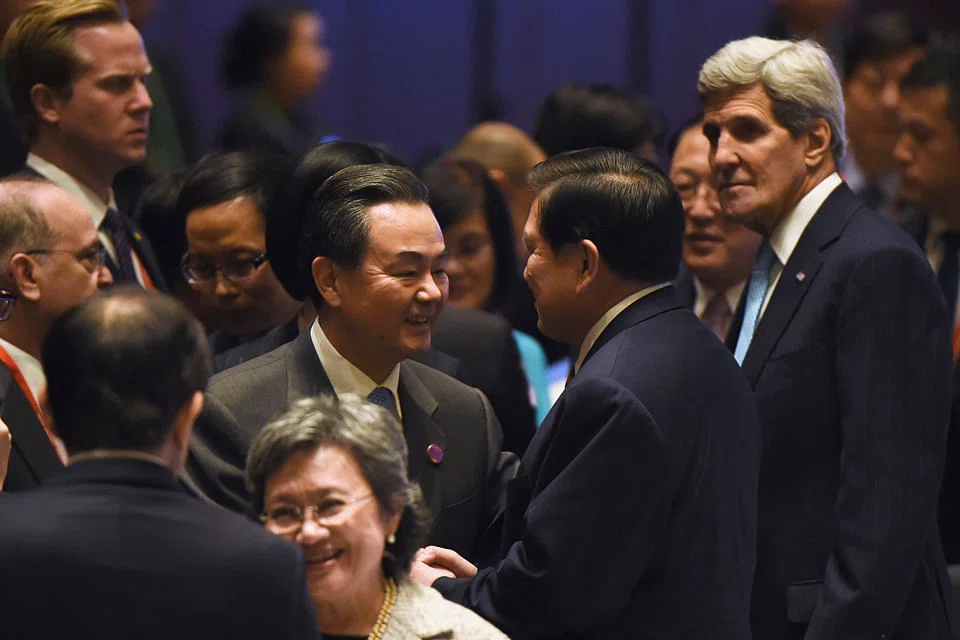
MINISTERIAL-LEVEL meetings among Asia-Pacific Economic Cooperation (Apec) members kicked off on Friday in Beijing, a city that has virtually ground to a halt as the world's second-largest economy rolls out the red carpet for the annual summit which brings together 21 economies.
The talks will lay the ground for the official Apec meeting to be held on Monday and Tuesday next week just outside Beijing, which will see leaders such as Shinzo Abe, Vladimir Putin and Barack Obama in Beijing. The US president will then embark on a two-day visit in China, his first since 2009.
The summit will focus on free trade, anti-corruption, investment, technology, and climate change.
On Friday, the Pacific Economic Cooperation Council (PECC) called for Apec to pursue reforms with a focus on policy and trade to maintain strong growth. It said: "PECC's annual survey of the regional policy community identified technological innovation; policy reform; trade (to both emerging and advanced economies); and investment in infrastructure as the future drivers of growth over the next 5-10 years. These engines are needed to replace the region's reliance on exports as the primary engine of growth."
Apec, launched 25 years ago, now represents 40 per cent of the world's economy and, according to the PECC, is of increasing relevance. In another survey released on Friday, the PECC said that 61 per cent of respondents thought the organisation was just as important today, if not more so, than when it was launched.
Japan and China will hold a summit in the Chinese capital, Japanese media reported on Friday - the first such meeting in nearly three years amid badly strained ties. The two countries have "agreed to arrange a Japan- China summit next week" in Beijing on the sidelines of the Apec forum, national broadcaster NHK said.
Beijing is keen to showcase its rise on the international scene and has left nothing to chance. Half the cars are off the roads, administrations and schools are closed, and thousands of factories have shut for 10 days to clear the sky of its infamous smog.
But the real issue for China is to assert its footprint and influence in Asia and to stem the US presence in the Pacific. It will be an opportunity for President Xi Jinping - who has gathered unprecedented power at home and has been in office for two years now - to make his presence felt on the diplomatic front.
The meeting comes amid continued tensions between the top two world powers embattled in a series of issues covering trade, hacking and protectionism. China, keen to play a bigger role internationally, is also being criticised for picking territorial disputes with its neighbours in the South China Sea and its growing maritime assertiveness.
Despite a visit last year to the US by Mr Xi, the relationship has never really taken off between the two countries. They are expected to clash on a number of issues during the summit as China considers South-east and North Asia its rightful zone of influence and wants the US to back off.
Earlier this week, Global Times in an editorial said Mr Obama was doing an "insipid" job. And on Thursday, the White House expressed "deep concern" about the treatment of human rights advocates in China.
One of the issues to be debated is the creation of an Asia-Pacific regional free trade area (FTAAP), backed by Beijing but opposed by the US in favour of a more restricted zone called the Trans-Pacific Partnership (TPP), from which China is excluded.
"We hope we can adopt some concrete measures to make progress on the path to realising the (FTAAP) vision presented by leaders in 2006," China's Assistant Commerce Minister Wang Shouwen told reporters this week.
Experts say a TPP deal would cost China about US$100 billion a year in lost exports.
Estimates by the PECC say that benefits of the TPP could add US$223 billion to the global economy by 2025. That compares with US$2.4 trillion via the Beijing-backed proposition.
This conflict comes after last month's signing of the agreement for the AIIB (Asia Infrastructure Investment Bank) - also launched by Beijing against the wishes of the Obama administration as an alternative to the Asian Development Bank (ADB), which is under American and European influence.
But for the Apec meeting to be successful, Beijing must appear to be a regional pacifier and has thus tempered its antagonism towards Tokyo through less-than-usual aggressive editorials in recent days. A handshake between Mr Xi and Japanese Prime Minister Abe is expected. A one-on-one meeting is still up in the air but would be their first face-to-face meeting since both took power nearly two years ago.






