

As Merkel exits, Germans debate famed budget discipline
 Add BT as a preferred source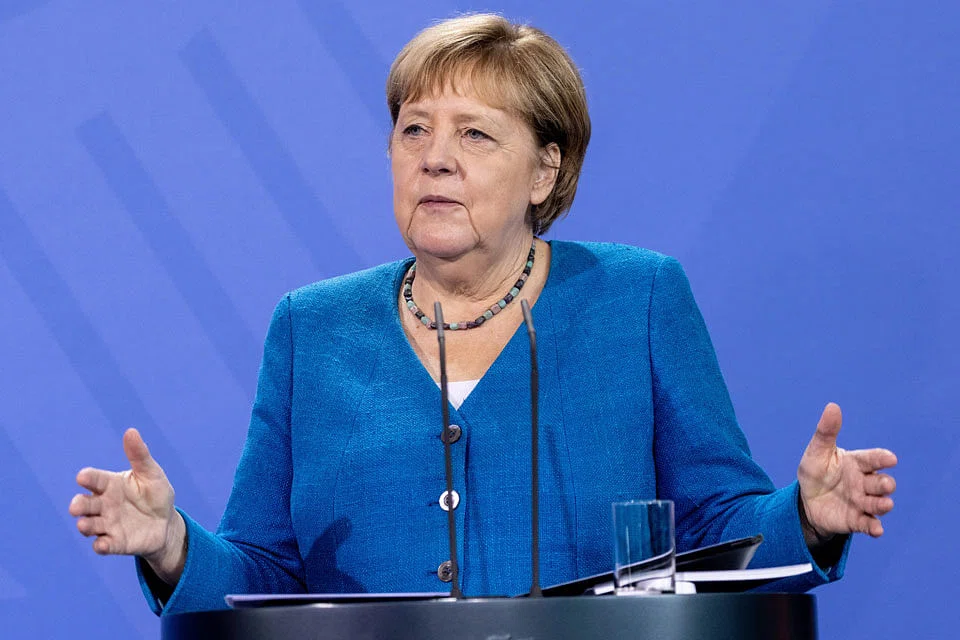
DeeperDive is a beta AI feature. Refer to full articles for the facts.
Frankfurt
WHEN Chancellor Angela Merkel's government smashed its debt taboo and opened the money taps to help the German economy weather the pandemic crisis, it vowed to return to fiscal rigour as soon as possible.
But as the post-Merkel era beckons, voters may have other ideas.
In the closing stretch before the Sept 26 polls that will see Dr Merkel bow out after 16 years, surveys show her CDU-CSU alliance trailing the centre-left Social Democrats (SPD).
Hoping to turn the tide, the conservatives have returned to their favoured attack lines.
The SPD's candidate for the top job, Finance Minister Olaf Scholz, would be a "debt chancellor", warned CSU leader Markus Soeder.
Navigate Asia in
a new global order
Get the insights delivered to your inbox.
Conservative millionaire Friedrich Merz, the CDU's economic policy spokesperson, said taxpayers would end up footing the bill for an SPD-led government's "free beer" policies.
Mr Scholz himself has said he wants higher taxes for top earners and the reintroduction of a wealth tax to help fund much-needed investments in Europe's largest economy.
Whoever wins, any future German government will be presented with a "difficult choice" between "changing budgetary rules" to match the economic reality, or "sharply reducing the public deficit", says Patrick Artus, the chief economist at Natixis.
Germany's cherished balanced finances have been turned upside down during the pandemic, with Dr Merkel's government taking on 370 billion euros (S$586 billion) of new debt in 2020 and 2021.
Total public debt is expected to exceed 70 per cent of gross domestic product (GDP) this year, up from 59.7 per cent before the pandemic.
Dr Merkel's Germany is well-known for its budgetary discipline - and at times for enforcing it on fellow Europeans - but the pandemic spending forced it to suspend the "debt brake" written into the constitution in 2009.
The rule forbids the government from borrowing more than 0.35 per cent of its GDP, other than in "exceptional circumstances" approved by parliament.
Between January and March this year, the public deficit exceeded 80 billion euros, equivalent to 4.7 per cent of GDP.
It's a long way from Germany's vaunted "black zero" budget - the shorthand name given to the achievement of balancing the books and a target the country consistently met between 2014 and 2019.
The crisis also saw Dr Merkel spearhead the European Union's 800-billion-euro coronavirus recovery fund, which will be financed through joint borrowing for the first time - crossing a German red line on EU debt pooling.
But European member states watching the election and hoping for a transformation of German debt attitudes may be disappointed.
As a battle looms on whether to loosen the EU's strict budget rules, Mr Scholz ruled out any changes at a recent meeting of EU finance ministers.
The pandemic had shown that the bloc's fiscal rules already had enough flexibility, he said.
By Dr Merkel's own admission, Germany will have to "spend gigantic sums of money in the coming years".
The country's biggest challenges - energy transition, climate protection and digital infrastructure - mean that "40 to 50 billion euros of public investment a year, between 1 and 1.5 per cent of GDP, will be needed for the next 10 years," said Marcel Fratzscher president of the economics think-tank DIW.
To solve this budgetary equation, it will be necessary to "reform" the debt brake to reflect EU norms, which tolerate deficits of up to 3 per cent of GDP, Mr Fratzscher said.
The catch: any change to the debt rule would have to be approved by a two-thirds super majority in the German parliament.
"The ruling parties will have to find another way to get around the rule," Mr Fratzscher said.
Much will depend on the balance of power between the parties in Germany's next coalition.
Sticking to the debt brake will be "impossible without tax rises", Mr Fratzscher said - something the conservatives have ruled out.
The left-wing Greens, who fancy their chances of being part of the next government, want to adapt the debt brake to allow 50 billion euros of borrowing for investment annually until 2030.
The SPD are open to more public spending, but within the limited scope allowed by the constitutional brake. AFP
Decoding Asia newsletter: your guide to navigating Asia in a new global order. Sign up here to get Decoding Asia newsletter. Delivered to your inbox. Free.
Share with us your feedback on BT's products and services
TRENDING NOW
Vietnam acts fast to shield firms, households from fuel price surge
Beijing’s calculated silence on the Iran war
S-E Asia tourism takes hit from Middle East crisis, but intra-regional travel could spell hope
China pips the US if Asean is forced to choose, but analysts warn against reading it like a sports result

