As world shuts borders to stop Omicron, Japan offers a cautionary tale
 Add BT as a preferred source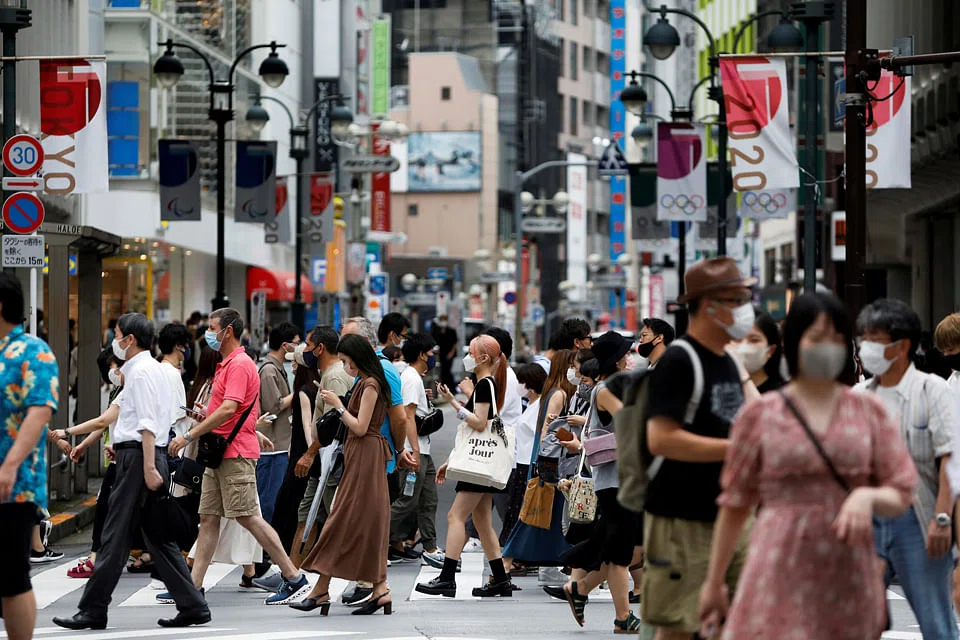
Tokyo
WITH the emergence of the new Omicron variant of the coronavirus last week, countries across the globe rushed to close their borders to travellers from southern Africa, even in the absence of scientific information about whether such measures were necessary or likely to be effective in stopping the virus' spread.
Japan has gone further than most other countries so far, announcing on Monday (Nov 29) that the world's third-largest economy would be closed off to travellers from everywhere. It is a familiar tactic for Japan. The country has barred tourists since early in the pandemic, even as most of the rest of the world started to travel again.
And it had only tentatively opened this month to business travellers and students, despite recording the highest vaccination rate among the world's large wealthy democracies and after seeing its coronavirus caseloads plunge by 99 per cent since August.
Now, as the doors slam shut again, Japan provides a sobering case study of the human and economic cost of those closed borders. Over the many months that Japan has been isolated, thousands of life plans have been suspended, leaving couples, students, academic researchers and workers in limbo.
As the United States, Britain and most of Europe reopened over the summer and autumn to vaccinated travellers, Japan and other countries in the Asia-Pacific region opened their borders only a crack, even after achieving some of the world's highest vaccination rates.
Navigate Asia in
a new global order
Get the insights delivered to your inbox.
Now, with the emergence of the Omicron variant, Japan - along with Australia, Thailand, Sri Lanka, Singapore, Indonesia and South Korea - are quickly battening down again.
China, which has barred international tourists since the start of the pandemic, is so far still issuing visas for work or diplomatic purposes, although limited flight options and lengthy quarantines have deterred travellers.
Taiwan has prohibited nearly all nonresidents from entering since early in the pandemic. Australia, which only recently started allowing citizens and visa holders to travel abroad, said on Monday that it would delay a relaxation of its border restrictions. Sri Lanka, Singapore, South Korea, Indonesia and Thailand have all barred travellers from southern Africa, where the variant was first reported.
Although the true threat of the new variant is not yet clear, Japanese Prime Minister Fumio Kishida told reporters on Monday that he had decided to revoke the relaxations for business travellers and international students in order to "avoid the worst-case scenario".
The government's decision to close again reflects its desire to preserve its successes battling the virus and to prevent the kind of strain on the healthcare system that it experienced over the summer during an outbreak of the Delta variant.
Japan is recording only about 150 new Covid-19 infections a day, and before the emergence of Omicron, business leaders had been calling for a more aggressive reopening.
"At the beginning of the pandemic, Japan did what most countries around the world did - we thought we needed proper border controls," Yoshihisa Masaki, director of communications at Keidanren, Japan's largest business lobbying group, said in an interview earlier this month.
But as cases diminished, he said, the continuation of firm border restrictions threatened to stymie economic progress.
Japan had already lagged countries in South-east Asia, where the economies are dependent on tourism revenues and governments tiptoed out in front in the push to reopen.
Thailand had recently reopened to tourists from 63 countries, and Cambodia had just started to welcome vaccinated visitors with minimal restrictions. Other countries, like Malaysia, Vietnam and Indonesia, were allowing tourists from certain countries to arrive in restricted areas.
Wealthier Asian countries like Japan resisted the pressure to reopen. With the exception of its decision to hold the Summer Olympics, Japan has been cautious throughout the pandemic.
It was early to shut its borders and close schools. It rolled out its vaccination campaign only after conducting its own clinical trials. And dining and drinking hours remained restricted in many prefectures until September.
Foreign companies could not bring in executives or other employees to replace those who were moving back home or to another international posting, said Michael Mroczek, a lawyer in Tokyo who is president of the European Business Council.
In a statement on Monday, the council said business travellers or new employees should be allowed to enter provided they follow strict testing and quarantine measures.
"Trust should be put in Japan 's success on the vaccination front," the council said. "And Japan and its people are now firmly in a position to reap the economic rewards." NYTIMES
Decoding Asia newsletter: your guide to navigating Asia in a new global order. Sign up here to get Decoding Asia newsletter. Delivered to your inbox. Free.
Share with us your feedback on BT's products and services