



After India’s surprise rice ban, Thailand’s exporters see prices of the food staple stabilising
Pakistan’s ramping up of its own rice supplies in early September has helped normalise prices, says the Thai Rice Exporters Association
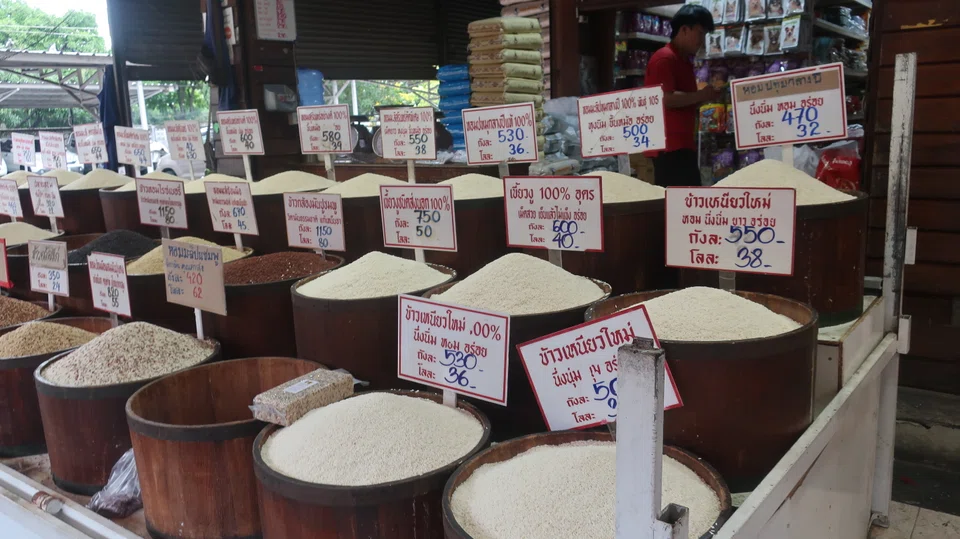
[BANGKOK] The Thai Rice Exporters Association (Trea) foresees a stabilisation of global rice prices on the horizon after almost three months of “disruption” caused by India’s surprise ban on shipments of non-basmati rice in July.
India’s move followed a ban on the export of broken rice, which took effect a year ago and remains in force.
Describing the past couple of months since India’s latest ban as “chaotic” for the industry, Charoen Laothamatas, the president of the association that tends to set the benchmark for the world’s white rice prices, pointed to Pakistan’s ramping up of its rice supplies earlier this month that has helped normalise prices for the staple food.
According to the United Nations’ Food and Agriculture Organization, the price of white rice has dropped from a 12-year high of US$646 per tonne on Aug 30, to US$612 per tonne on Sep 20.
India – fearing food shortages at home due to anticipated drought caused by the return of the El Nino weather phenomenon – on Jul 22 slapped a ban on its exports of non-basmati white rice, leading to a surge in rice prices in August as they went up by US$100 per tonne year on year.
The current rice prices on the global market are comparable to those in 2008, when India at the time sparked a “food crisis” by banning its rice exports after Australia experienced a bad wheat crop due to drought, igniting fears of global shortages.
India is the world’s largest rice exporter, accounting for 22 million tonnes in 2022, or roughly 40 per cent of the global market. Thailand and Vietnam vie for the second position every year, exporting about eight million tonnes each.
Pakistan is usually a distant fourth. After suffering from devastating floods in 2021, Pakistan is expected to export 3.5 million tonnes of rice this year, helping to fill the gap left by India, which will probably see its rice exports drop to 18 million tonnes, according to estimates by Trea.
El Nino effect
Overall, global rice prices have been on the upswing since May 2022, when Indonesia started to import large quantities of rice to bolster its stockpiles in anticipation of poor domestic crops this year and in 2024 due to the El Nino weather phenomenon, which usually induces dry weather in South-east Asia and South Asia.
Severe drought could slash Thailand’s rice output by 10 per cent to 15 per cent next year, but so far there’s no sign that dry weather will harm the country’s main rice harvest in November and December, said Charoen, who has headed Trea for the past decade.
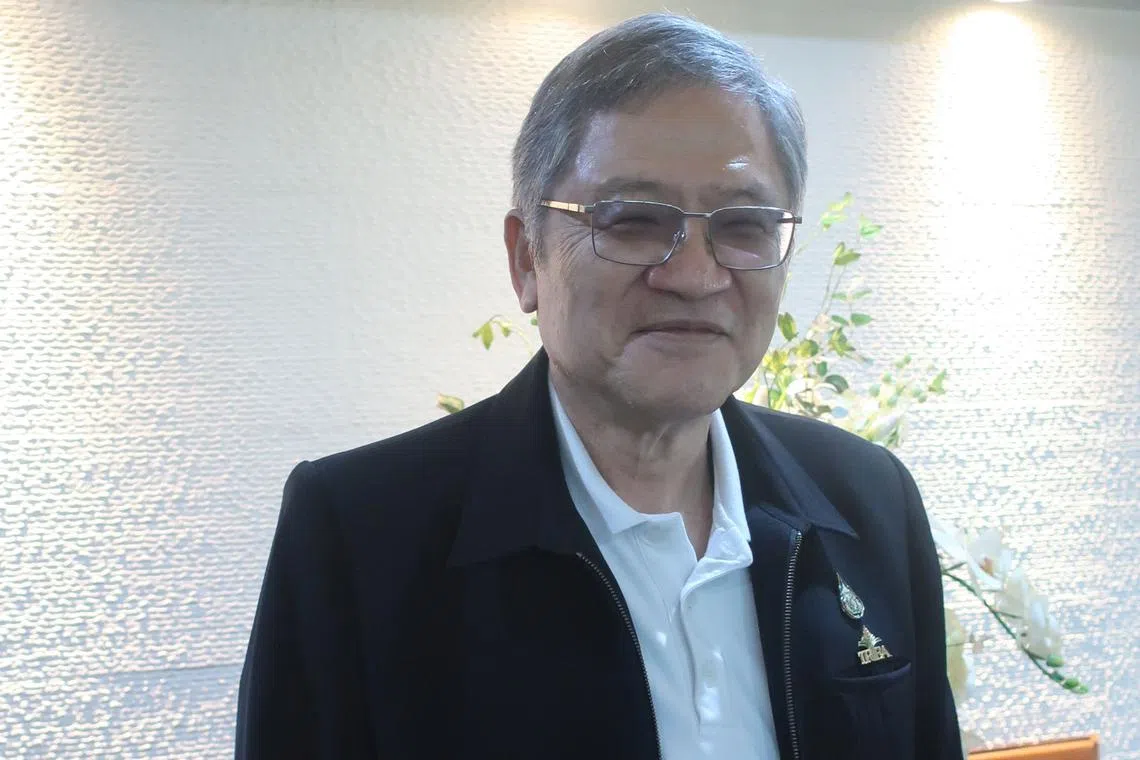
“If you talk about the weather, it’s not so bad (yet),” Charoen said. “It is raining in Thailand and Vietnam. In India, it’s not as bad as expected. Pakistan is enjoying a bumper crop this year, so I don’t see any shortage on the supply side.”
Indonesia and India are both heading for general elections early next year, and industry players said their governments will want to avoid food shortages at home during the pre-election period. These two countries also need to avoid sharp rises in domestic rice prices and inflation, they added.
Domestic prices of rice have reportedly risen in Indonesia, Malaysia, the Philippines and Thailand. The price of white rice in Bangkok has risen 20 per cent since July, causing hardship for food vendors who rely on large amounts of the staple.
“With rice prices up, my profit margin is down. It’s not possible to raise my food prices because I already did so five months ago to account for inflation,” said Suwanna Taphaneeyaphan, who operates two office lunch canteens in the Thai capital.
Thai farmers, however, are happier these days because they are now receiving 12,000 baht (S$456) per tonne of paddy (or unhusked) rice that they sell on the market, compared to the usual price of 9,000 baht.
New Prime Minister Srettha Thavisin and his Pheu Thai party-led government has vowed to intervene in setting ceilings on the domestic prices of 20 essential daily items, including rice, in the next few months.
But exporters hope that they will not intervene in fixing local rice prices, as the previous Pheu Thai government did when it was in power from 2009 to 2011.
This required a hefty 500-billion-baht budget to pay farmers for their rice at inflated prices, resulting in 15 million tonnes of rice inventory in 2011 that could not be sold on the market due to higher-than-market prices.
Environmentally friendly rice
“I think most of the new government’s investment should go to research and development – to find new rice varieties that are suitable for the market, suitable for climate change, and the environment,” said Charoen.
Countries in Europe have already indicated that they may ban the import of rice with high greenhouse gas emissions in the future.
“Under normal practice, one hectare of rice field in South-east Asia produces as much emissions in one season as a middle-class sedan car driving 25,000 km,” said Bjoern Ole Sander, a senior scientist at the International Rice Research Institute.
The Manila-based institute has been using artificial intelligence (AI) to speed up its analysis of some 130,000 rice varieties in its data banks to create new, environmentally friendlier ones, he said.
“A new variety usually takes five to six years to develop, but with AI, this could make the process faster by two to three years,” he said.






