



After mega-IPO, Thailand pet food giant ITC takes aim at premium market
The company is opening a new cattery with 48 cats “employed” to test the food

[BANGKOK] Fresh from its initial public offering (IPO) that raised 21.1 billion baht (S$817.4 million) last December, Thailand’s premium pet food producer i-Tail is putting some of that money to good use.
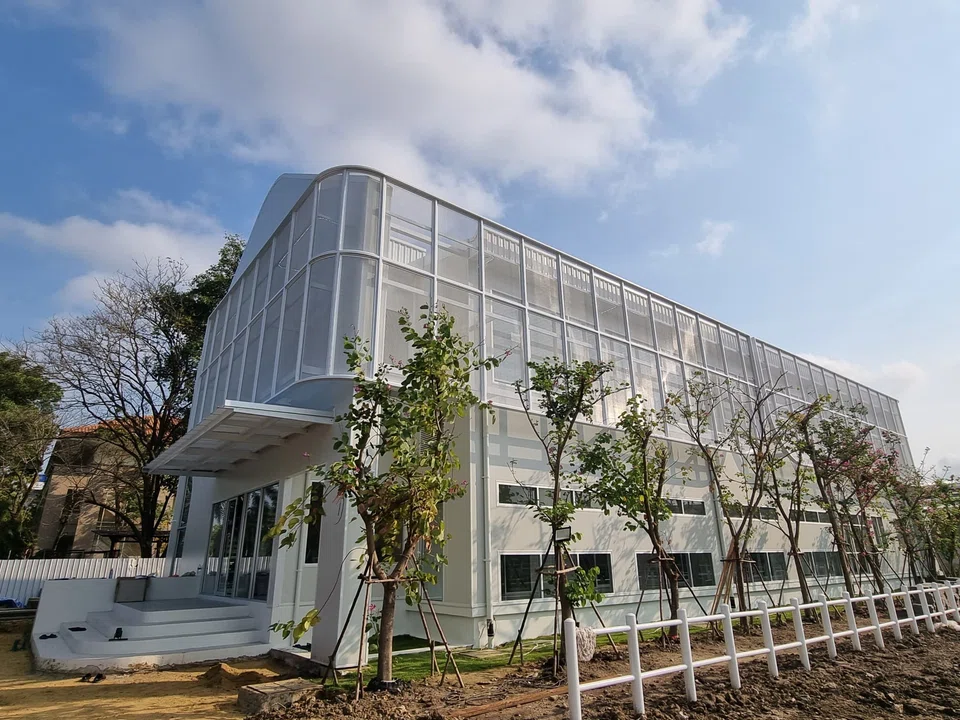
This month, i-Tail Corporation (ITC) is opening its first cattery, with 48 finicky felines “employed” to do what cats enjoy most – eating.
These four dozen cats, comprising the most well-known breeds, had to go through a tough admissions process to land the job.
“We had to train them and eventually test them,” said ITC’s chief executive officer Pichitchai Wongpiya. “Many of them failed the exam because of health issues or the way they ate the products. The winners (became) our superstars.”
The animals’ main task will be to ensure that i-Tail premium cat food is not only healthy, but also palatable – to their fellow cats.
“It’s difficult enough to produce pet food to meet all of the nutritional aspects, but what we can’t test in the labs is how tasty it is. And that’s why we have these cats in place,” Pichitchai told The Business Times.
ITC’s listing last November, with its shares priced at 32 baht each on its debut on the Stock Exchange of Thailand (SET), was the second-largest IPO in Thailand in 2022, after Thai Life Insurance’s debut last July.
Thailand is fast shaping up to become a regional hub for pet care innovation and pet food production. In February this year, Mars Petcare (Thailand) opened a US$10 million product testing facility in Chon Buri province, the first such integrated pet food research and development (R&D) centre in the Asia-Pacific region.
And earlier this month, Nestle (Thai) announced plans to invest 6.5 billion baht to increase its production capacity at its pet care factory in Rayong province. Both Mars and Nestle are major customers of ITC worldwide.
In the interview with The Business Times, Pichitchai said that ITC’s IPO earnings enabled the company to pay off about 7.5 billion baht in debt, invest in new production facilities, automate its pet food warehouses, and spend more on R&D.
The IPO earnings also enabled ITC to pay off about 7.5 blilion baht in debts, and to invest in new production facilities, the automation of its pet food warehouses and in R&D.
ITC is 78 per cent-owned by Thai Union Group (TU), the world’s leading producer of canned tuna, which decided to hive off ITC as a separate listed company on the SET to “unlock” its value. ITC’s results are consolidated with TU’s.
In 2022, TU reported a net profit 7.1 billion baht, of which ITC accounted for 62 per cent, or 4.4 billion baht. ITC’s sales last year reached 21.4 billion baht, up 47.4 per cent from 2021.
While ITC can claim the lion’s share of TU’s net profit last year, the pet food business only accounted for 14 per cent of the group’s total revenues in 2022.
Analysts say that the growth of TU’s pet food unit has been outpacing its other seafood products for several years, in line with global trends.
“Based on ITC’s presentations, the global pet food market size will grow at the CAGR (compound annual growth rate) of 7.3 per cent during 2022-2027, while ITC’s sales CAGR will be 15 per cent in the same period, outgrowing the market,” said Prasit Sujiravorakul, an analyst at Bualuang Securities.
Meanwhile, the canned tuna consumption among humans – TU’s main market – is likely to grow at about 2-3 per cent per annum.
Nearly 73 per cent of ITC’s production is for cat food, followed by dog food (12 per cent) and pet treats (15 per cent).
While ITC has its own brands, almost all of the company’s production (99 per cent) is for original equipment manufacturers, providing finished products manufactured in Thailand for international pet food brands worldwide.
In North America, which accounted for 55 per cent of ITC’s sales last year, the company’s major clients include Nestle, Mars and Smucker’s – all leaders in the US pet food market.
While the US has traditionally been TU’s main market for pet food since it started in 1977, Pitchichai said it is China where the growth is expected in the coming years.
“China is the fastest growing market,” he said. “It has been growing at over 20 per cent a year, and the projection is 19.8 per cent in the next four to five years.”
While there are plenty of local producers of pet food in China, he said ITC’s advantage in China is in the fast-growing premium segment of the market, which accounts for 50 per cent of ITC’s worldwide production and sales.
As Chinese consumers prefer international brands for premium pet food, ITC has persuaded its international clients to use Thailand as a base to export these US and European brands to China, saving on shipping costs.
ITC enjoyed rapid sales growth over the past three years despite – or thanks to – the Covid-19 pandemic.
“It really supported the pet food business,” said Pichitchai. “One of the main reasons was people stayed more at home and they needed some companionship so they adopted more pets.”
Last year, the company benefitted from massive over-ordering by clients in the US and Europe who were worried about supply chain disruptions.
“Last year, our sales went up almost 50 per cent, but we can’t (achieve) that every year,” said Pichitchai. “Our guidance is that we will grow at a rate of about 15 per cent, by maintaining both a gross profit margin and a net profit margin.”
Shares of ITC ended trading last Friday (Mar 10) at 29.25 baht, a 0.85 per cent dip from the previous day’s close of 29.50 baht.
TRENDING NOW

Government to bring forward raising of retirement age, give employers more financial support to create flexi-load jobs

If Europe goes to war, the fallout will be felt in East Asia

Indonesia stocks suffer worst plunge in nearly 30 years as MSCI proposes standalone status

Vietnam’s northern provinces, not Hanoi or Ho Chi Minh City, are powering near 10% GDP growth

