



After a year, Indonesia’s Danantara under pressure to prove governance and returns
As the sovereign investment vehicle enters its second year, analysts expect greater focus on performance metrics

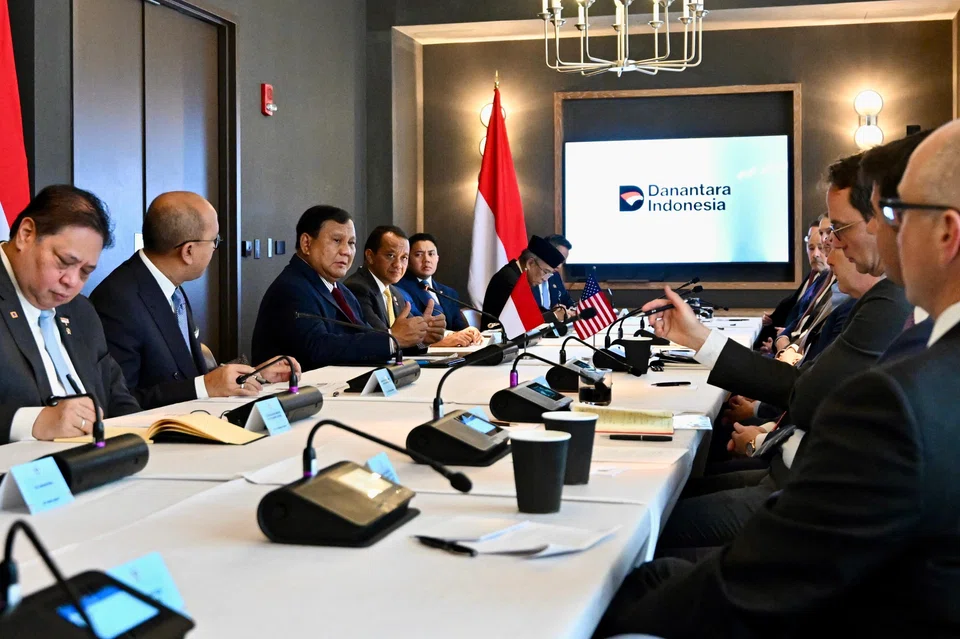
[JAKARTA] Indonesia’s sovereign investment vehicle Danantara has completed its first year with institutional structures largely in place, but analysts say its long-term credibility will depend on execution, transparency and measurable returns rather than announcements.
Launched on Feb 25 last year as a key pillar of President Prabowo Subianto’s economic agenda, Danantara or Daya Anagata Nusantara was tasked with consolidating oversight of roughly 1,000 state-owned enterprises (SOEs) and generating investment returns.
One year on, analysts describe its progress as foundational, with performance delivery now the main test.
On the new investment front, Professor Johan Sulaeman, director of the Sustainable and Green Finance Institute of the National University of Singapore, noted that the fund has adopted a relatively cautious deployment pace. He views this approach as being consistent with a long-term sovereign investor still building internal capabilities and governance systems.
“This seems appropriate since sovereign vehicles that deploy too aggressively in year one can compromise portfolio construction discipline,” he said.
With about US$900 billion in assets under management, Danantara is preparing to raise its capital deployment to around US$14 billion this year, as it seeks to support Prabowo’s target of lifting growth to 8 per cent.
The fund deployed about US$12 billion last year through a mix of project financing, direct investments and public market placements, spanning sectors such as healthcare, energy and renewable downstream industries.
In its investment activities, Danantara has secured support from a range of multinational partners, including sovereign wealth funds such as the Qatar Investment Authority, Australia’s Future Fund and China Investment Corporation.
Twelve months on, analysts say that the real test is no longer about announcements but about governance, investment discipline and whether the fund can demonstrate it is structured for returns rather than politics.
Edward Gustely, managing director of Penida Capital Advisors, noted that investors remain cautious and are waiting for independent verification of Danantara’s performance before committing deeper capital.
“Building investor confidence is driven by results, not daily media campaigns and MOU (memorandum of understanding) signing ceremonies,” he felt. “Market trust will follow when it sees completed transactions such as asset disposals, IPOs (initial public offerings) and co-investments that are actually executed and closed with Danantara’s involvement.”
Independence and governance questions
Danantara reports directly to Prabowo and has been framed as a central instrument for drawing in capital and stimulating growth in South-east Asia’s largest economy, which recorded subdued expansion and flat foreign investment inflows last year.
The fund is led by Rosan Roeslani, who also serves as Indonesia’s minister of investment and downstreaming and previously headed Prabowo’s campaign team during the 2024 presidential election.
However, concerns have also been raised about Danantara’s transparency framework and its exposure to political influence, with analysts questioning whether these factors could affect its credibility in managing such a large and complex portfolio.
“We see potential conflicts of interest among top executives who hold ministerial positions or are politically exposed persons. Those concerns have not been properly addressed,” said Tabita Diela, a researcher at the Center of Economic and Law Studies (Celios).
Clearer governance safeguards and independent oversight mechanisms would help address such concerns.
While Danantara’s structure and stated methodology align with international sovereign wealth fund standards, Gustely from Penida Capital noted that investors are still waiting for implementation, particularly independent audits and consistent disclosures, to assess whether those standards are effectively applied in practice.
Portfolio composition and concentration
Danantara has begun allocating capital to domestic equities and government bonds, while also appointing external managers to oversee investments in overseas public and private markets in the second half of last year.
During the recent market rout triggered by an MSCI-related warning in late January, Danantara reaffirmed its active participation in the capital market, signalling support by allocating capital to buy shares of fundamentally strong and liquid companies amid heightened volatility.
The fund is also moving ahead with its first overseas investment in Saudi Arabia, where it plans to deploy at least US$1 billion to develop hospitality and real estate assets serving the hundreds of thousands of Indonesians who travel annually for pilgrimages to Mecca. It announced the acquisition of a hotel in December and is bidding for additional land nearby to expand its footprint.
Analysts say that Danantara’s pace of new investment has been measured, but clearer articulation of long-term sector priorities would strengthen strategic coherence. Tabita from Celios said that some project selections have raised questions about their alignment with Danantara’s mandate.
A planned 20 trillion rupiah (S$1.5 billion) investment in chicken farming development has also drawn scrutiny, particularly amid rising poultry imports from the US following the new reciprocal trade agreement signed last week by Prabowo and US President Donald Trump.
Transparency around green investments is another area where more clarity is needed, Tabita said.
Other planned investments in coal gasification projects remain controversial due to questions about profitability and environmental impact.
Sustainable transition role
Danantara has indicated that it aims to play a role in Indonesia’s sustainable transition. Analysts, however, say tangible indicators will determine whether that ambition materialises.
Prof Sulaeman said that the bulk of Indonesia’s emissions footprint sits within the existing SOE portfolio. Without explicit portfolio-level emissions targets, time-bound coal phase-down plans or capital expenditure shifts towards renewables and grid infrastructure, transition claims may remain limited, he noted.
On new investments, he added, the relevant measure is whether Danantara can mobilise private capital into renewable energy, storage and transition infrastructure projects that might not otherwise proceed. “At this stage, it is too early to describe Danantara as a clear anchor for the transition,” he explained. “The potential exists, but implementation will be decisive.”
Second-year challenges
As Danantara enters its second year, analysts expect greater focus on performance metrics.
On the SOE management side, governance reform may face internal resistance, particularly where tighter return benchmarks alter established practices.
Political pressure related to dividend payouts or capital expenditure decisions could also test the fund’s commercial discipline.
On the investment side, there is a risk of accelerating capital deployment to demonstrate short-term impact, potentially weakening standards.
Looking ahead, Gustely said that Danantara’s success should be measured by a combination of financial returns, governance credibility, the ability to crowd in private capital and clarity on how investment returns support broader fiscal and social objectives. “All of those metrics matter,” he added. “Investors will assess whether results align with stated ambitions.”






