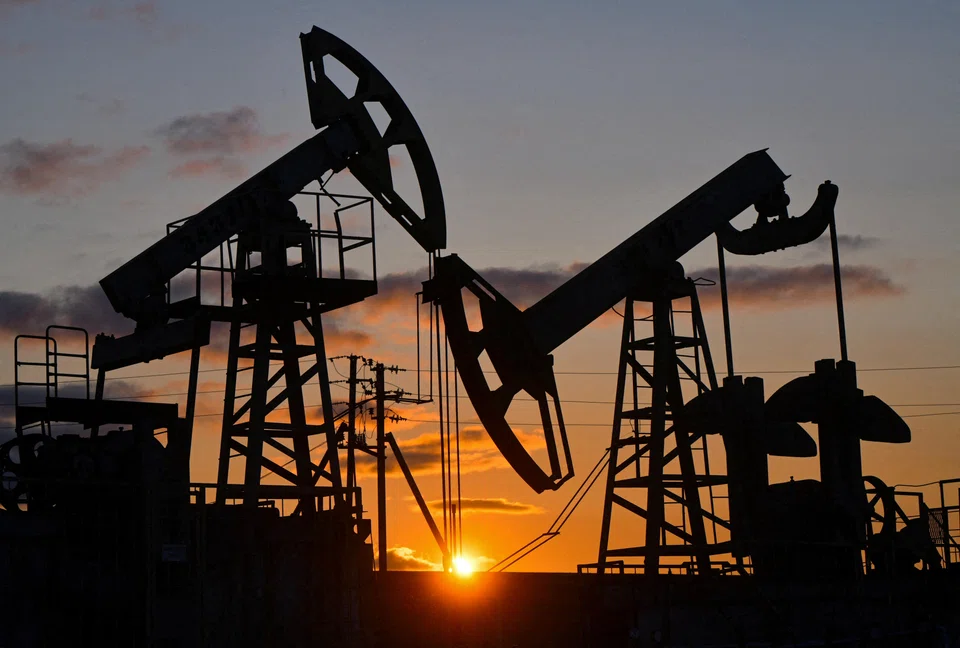
All eyes on Saudi Arabia production as oil prices continue to stay elevated
Among Asean economies, the Philippines and Thailand are the most vulnerable to rising prices, say Nomura analysts

OIL prices, already at their highest in more than a year, continue to climb as the world watches the commodity inch closer towards the psychologically key US$100 per barrel threshold.
Since June, the global benchmark Brent crude futures price has rallied some 30 per cent to over US$94 per barrel from the low of around US$72 per barrel. Last Wednesday (Sep 27), it reached a new 2023 high, going past US$97 a barrel during the session before eventually closing at US$96.55.
The surge in oil prices is largely attributed to the supply cut by the Organization of the Petroleum Exporting Countries (Opec) and its allies including Russia, commonly referred to as the Opec+ alliance.
An Opec+ ministerial panel meeting will be held on Oct 4, and there is an “increasing probability the voluntary supply cuts by Aramco are reduced”, said National Australia Bank analysts in a note to clients, referring to Saudi Arabia’s state oil producer.
In early September, Saudi Arabia and Russia extended their voluntary output cuts of a combined 1.3 million barrels per day until the end of the year. Simultaneously, oil prices are being driven up by rising energy demand from the US and China as they recover from the Covid-19 pandemic.
Higher inflation
Most Asian economies are net oil importers. As such, higher oil prices will add to inflation as freight and transportation costs increase, said Nomura’s research analyst Sonal Varma, who anticipates rising risks of higher inflation in the near term.
She attributed this to higher food and oil prices, which form a bigger share of the consumer price index basket in emerging Asian economies.
Consequently, this also hurts growth as high inflation can squeeze real disposable income of households while soaring input costs could threaten corporate profit margins, she added, while acknowledging that government intervention could soften the impact.
Rising prices will, in theory, also increase import bills, erode the economies’ current account balances, and result in local currency depreciation pressures, she said.
HSBC oil and gas research analyst Ajay Parmar noted that higher crude prices will also filter through into dearer prices at the pump.
“(Petrol) and diesel prices have risen due to the higher crude prices, but also due to their own markets seeing limited supply amid strong demand, and this has provided even more upward movement to (petrol) and diesel prices,” he said.
Most and least at risk
In a report published on Sep 15, analysts from Nomura ranked the vulnerability of major Asian economies to rising oil prices based on the economies’ fiscal space, dependence on oil imports, current account balances and inflation outlook.
The Philippines emerged as the most vulnerable in South-east Asia due to its lack of fuel subsidies. This means the rise in oil prices will quickly translate into rising utility, freight and transportation costs, adding to headline inflation.
As pointed out by Varma, the higher oil prices come at a time when the Philippines is grappling with rising rice prices, making the rate of inflation there even more pronounced.
The Philippines is also running a current account deficit as of 2022. According to Nomura, it is “the most at risk amid an already-weak starting point”.
In Thailand, Varma expects the government’s ongoing fuel subsidies to help mitigate inflationary pressures in South-east Asia’s second-largest economy. While the high oil prices will have adverse effects on Thailand’s current account balance, which had a deficit last year, part of the damage can be offset by the steady inflow of foreign tourists and their spending.
In contrast, economies with current account surpluses and sufficient fiscal space for fuel subsidies are expected to be less affected by rising oil prices. These include Indonesia, Malaysia and Singapore.
“Oil importers running current account deficits will be more vulnerable than oil importers with a large to modest current account surplus,” said Lavanya Venkateswaran, a senior Asean economist at OCBC.
What to expect in 2024
Suvro Sarkar, an energy sector team lead at DBS Bank, said in a Reuters report on Saturday that a march towards US$100 per barrel could be short-lived because of “the artificial nature of supply shortages in the system, and the fragile macro environment”.
HSBC’s Parmar believes oil prices will remain high for the foreseeable future, with all eyes on when and how Saudi Arabia – the world’s top crude oil exporter – will ease its production cuts.
The market is currently tight with the combined cuts of 1.3 million barrels per day by Saudi Arabia and Russia till the end of this year. Opec has said it forecasts a supply deficit of three million barrels a day in the October to December quarter.
Parmar added: “We assume some level of voluntary cuts from Saudi Arabia through H1 2024, which will support elevated prices.”
In the longer term, OCBC’s Venkateswaran foresees oil demand being weighed down by slower growth in the US and weakness in China, while supply is likely to pick up with the potential easing of geopolitical friction between the US and Iran, and the US and Venezuela.
She expects oil prices to ease in 2024, and eventually settle at below US$80 per barrel.
TRENDING NOW
He built the Vingroup empire. Now South-east Asia’s richest man is handing some key roles to his sons
Grab CEO’s wife Chloe Tong on life with Anthony Tan and finding her purpose
What role can Japan play in Asean’s future?
From folding clothes to factory work: Why China is sending humanoid robots to school