



All eyes on Vietnam’s VNG as it seeks to be first to achieve dual listing
Vietnam
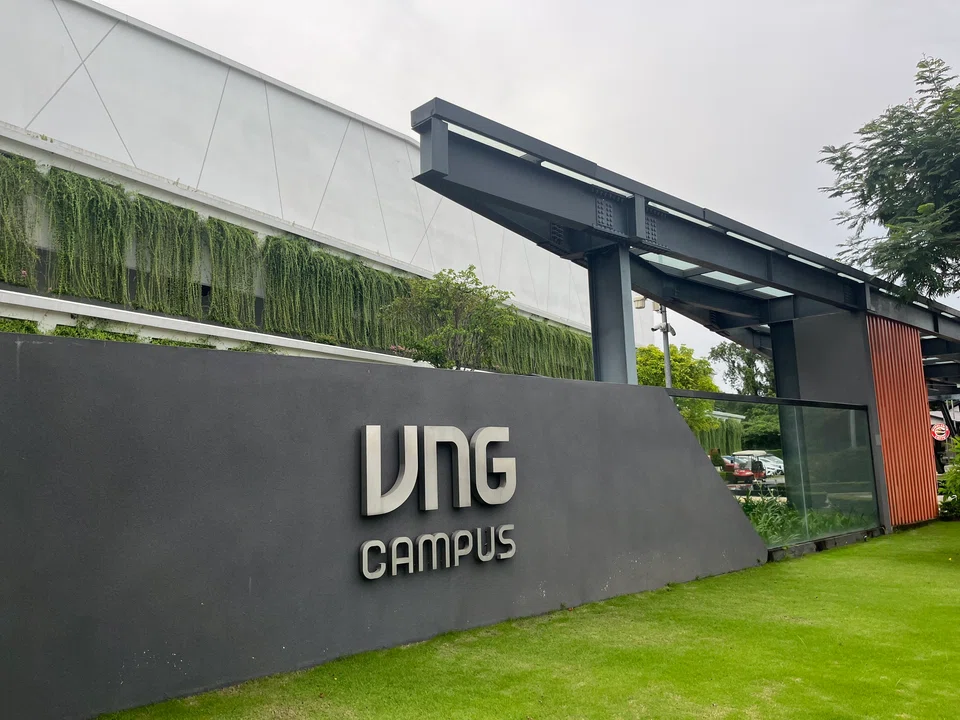
[HO CHI MINH CITY] When Vietnamese Internet startup VNG announced it would go public in the US, observers quickly pointed to the fact that the tech unicorn was poised to be the first in the country to achieve a unique dual listing.
VNG’s US$150 million initial public offering (IPO) – filed via its Cayman Islands-based shareholder VNG Ltd – was expected to take place sometime at the end of September or in October this year.
Those plans have since been delayed until the first half of 2024 due to the ongoing fragile market conditions.
In January this year, VNG launched its IPO on UpCoM – a local market for public companies unlisted on Vietnam’s main bourse, the Ho Chi Minh City Stock Exchange (HoSE).
To date, Vietnam has not had any local company that has listed both onshore and offshore at the same time, but it seems like just a matter of time before that milestone is reached for the country’s 23-year-old stock market.
UPCoM was often used as a stepping stone for the subsequent main listings of many Vietnamese companies, including various state-owned enterprises seeking equitisation.
In 2019, Hanoi-based digital advertising services startup Clever Group sold its shares publicly first on UPCoM before switching to HoSE a year later.
For now, it remains unclear if VNG – which has been exploring going public in the US since at least 2017 – will eventually pursue a dual listing at some point after it makes its US IPO debut.
The gaming and messaging provider did not respond to queries by The Business Times about its listing plans. It had earlier said it wanted to sell about 22 million shares for the US IPO, but had not disclosed a price range.
Nguyen Thi Huong Giang, the founder and chief executive of Tititada, a Vietnam-based investment app, said that it is possible for a public company to return to a private one while maintaining its overseas listing.
However, she noted how the process in Vietnam is very complicated and time-consuming.
It sometimes takes years to acquire shares from all minority shareholders and reduce the number of shareholders to below the threshold of 100.
“Whether this strategy is preferable to a dual listing depends on the company’s long-term business strategy or how they would like to raise capital in the future, as well as the reference of the major shareholders over what exit strategy would give them the best return,” she said.
Dual-listing precedents
Market analysts said that listing in multiple capital markets has an advantage of endowing a company with exposure to a larger liquidity pool and an expanded base of global investors, which in turn could give the company a better share price.
In addition, companies could also benefit from a wider presence on the global stock market and improve its corporate management with higher levels of transparency and efficiency.
Stock prices of dual-listed companies in Vietnam and overseas markets would likely fluctuate in the same direction and remain quite close in value in the long run, said Giang.
At the close of trading on Friday (Oct 6), VNG shares traded at 809,900 dong (S$45.29), giving it a market capitalisation of around US$1 billion.
“In a way, VNG’s business is not new to US investors. When they know about the business, they will generally give them a better valuation. In Vietnam, VNG doesn’t really have many (domestic) peers to be compared to,” said Nguyen Manh Dung, the head of institutional equity sales at Maybank Investment Bank in Vietnam.
VNG, formerly known as Vinagame, was founded in 2004 as a game publisher. VNG owns the popular messaging app Zalo, which is used by about 75 million people in Vietnam, more than Facebook Messenger.
It develops and publishes its own titles as well as local versions of international hits. Its services include music sharing, video streaming, messaging, a news portal and mobile payments.
VNG is one of the earliest tech startups in Vietnam, with existing backers including Singapore’s Seletar Investments (a unit of Temasek Holdings) and GIC, as well as China’s Tencent and Ant Group.
Historically, though, dual listings are not common in South-east Asia, said analysts.
Antz Capital, a Singapore-based corporate finance firm, cautioned in a May note that dual-listed entities have to deal with greater operational costs, complex compliance with distinct regulatory and accounting standards, as well as tailored marketing and investor relations strategies in each market.
“Nevertheless, the future of dual listings for Singapore and Asean is bright,” Antz Capital wrote. “Companies that have achieved successful dual listings would become role models encouraging other companies to consider this avenue for capital raising and expansion.”
The first Vietnamese company that ever received approvals for an official dual listing in both Vietnam and the Singapore Stock Exchange was Vietnam’s leading dairy company Vinamilk in 2008.
However, the firm eventually gave up the offshore listing in 2011 due to the market conditions at the time as well as the hurdles faced when complying with two distinct sets of securities regulations.
Dinh The Anh, the head of mergers and acquisitions at KPMG in Vietnam, believes that VNG could be the first Vietnamese firm to list concurrently in two markets and set a legal precedent in the country.
“Other startups can copy that playbook, he said. “After VNG, I think the local authorities here will make it easier to accept startups for a dual listing in Vietnam and Singapore or in other markets.”
As analysts expect the US financial market to improve in 2024, VNG’s tentative IPO may lend itself to Wall Street’s mounting attention to stock offerings from emerging Asian markets outside of China due to the perceived lower economic economic and geopolitical risks.
The high-profile US listing of Vietnamese electric vehicle maker Vinfast on Nasdaq in August gave the company a lofty valuation of around US$85 billion, greater than that of legacy US auto giants Ford and General Motors.
A handful of South-east Asian companies from Singapore and Malaysia also launched their US IPOs in the first half of 2023, fuelling hopes that this trend could continue, Deloitte noted in a July report.
“There has always been an appetite for investors to access Vietnam’s tech sector,” said Andrea Campagnoli, the managing partner at Bain & Company Vietnam.
“The demand is there, both domestically and abroad. How long will the supply take to catch up? It depends on all of these variables (in terms of listing rules, regulatory developments and individual companies’ strategies).”
TRENDING NOW

‘My grandfather’s legacy’: Sherman Kwek lays out three-year plan for CDL to drive returns

He built the Vingroup empire. Now South-east Asia’s richest man is handing some key roles to his sons

Canada is upping oil flows to Asia, but South-east Asia’s refineries aren’t ready to handle them yet

What role can Japan play in Asean’s future?

