



Amid global green transition, Vietnam faces pressure to meet renewable energy demands
Jamille Tran
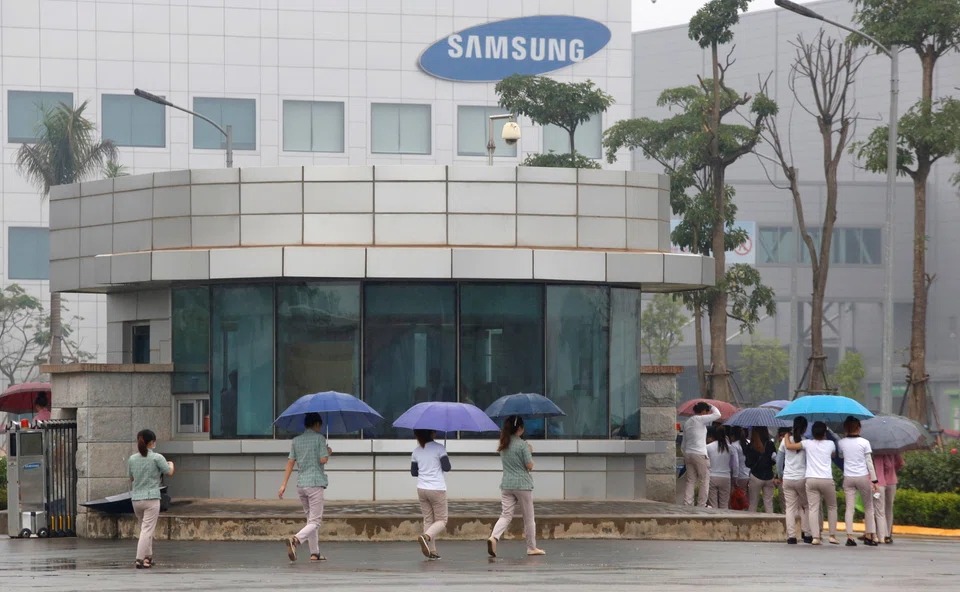
[HO CHI MINH CITY] With the US-China trade war showing no signs of abating and global supply chains still facing disruptions, Vietnam has become a major beneficiary as more companies are shifting a portion of their production out of China.
As more of these power-hungry manufacturers set up shop in Vietnam, the country is facing greater pressure to cope with their energy demands.
According to a report by McKinsey and Company, Vietnam is seen as a country with huge renewable energy potential as it is the “most naturally suited country in South-east Asia” to develop wind and solar energy.
The government, however, must first deal with the fallout from a series of blackouts in May and June this year, which put the spotlight on the country’s energy shortages. These power outages interrupted production in the industrial zones of several northern provinces, where the likes of Samsung and Foxconn have operations.
Observers say this energy deficiency is expected to persist for years, due to adverse weather patterns that have resulted in higher usage, lesser rainfall and lower hydropower output.
“Many international companies are choosing Vietnam as they diversify from China, attracted by Vietnam’s rapid economic growth and human capital abundance,” said McKinsey in its report.
However, the management consulting firm noted that Vietnam is “at risk” of losing the interest of these foreign investors if the country cannot meet the increased demand for renewable energy.
Many of the world’s largest manufacturers have committed to 100 per cent renewable energy for their operations, and they may not choose Vietnam if there is insufficient renewable power, the report added.
A report by the US Department of Commerce’s International Trade Association said that the increasing demand for power means Vietnam must balance the development of power projects, with the need to develop a more efficient and robust transmission system and smart energy grid.
“This will require a large amount of investment and advanced technology in order to modernise the power generation, transmission and distribution network,” the report said.
Preparation for energy security
Vietnam’s government has been planning ahead in order to ensure the country’s energy security for the future. In May this year, Vietnam approved its latest Power Development Plan, which aims to double the power generation capacity to over 150 gigawatts by 2030.
The plan also prioritises and encourages the development of wind and solar power, with the goal of having half of all office and residential buildings covered by rooftop solar by 2030. By that year, the government wants wind, solar, hydropower and biomass to provide nearly half of Vietnam’s installed capacity.
Speaking at an event organised by the Singapore Chamber of Commerce in Vietnam in August, Jonathan Lin, a partner at Allen & Gledhill Vietnam, said the possibility of power outages in Vietnam has led to more companies looking at alternative energy sources such as solar power or backup generators.
“Grid electricity retail prices are also likely to increase, increasing the attractiveness of alternative sources such as rooftop solar power,” he said.
Electricity, meanwhile, will be moved from the list of goods that are “subject to price stabilisation” to “price determined by the state” from July 2024. This allows the state-owned utility company Vietnam Electricity, which has a monopoly in electricity transmission, to raise the price of electricity.
In a recent draft legal document, Vietnam’s trade ministry also proposed the average retail price of electricity be reviewed for adjustment every three months instead of six at present.
The ministry has also been working on a direct power purchase agreement (DPPA) scheme. This scheme has the option of allowing the purchase and sale of electricity between renewable power generators and large private off-takers.
On Oct 24, it was announced that Singapore will, from 2033, import 1.2 gigawatts (GW) of low-carbon electricity – primarily generated by wind power – from Vietnam. These imports will be transmitted through new subsea cables that cover a distance of roughly 1,000 km.
Environmental factors
Global efforts in combating climate change have taken root in Vietnam’s energy policies, which in turn have urged manufacturers to further utilise renewable energy for their production.
For instance, the European Union (EU) – Vietnam’s third-largest export market – kicked off the transitional period for the adoption of a carbon border adjustment mechanism on Oct 1 this year, with a view to being fully operational in 2026.
This scheme extends the carbon price paid by EU firms to foreign producers of the same goods. This weighs on Vietnam-based manufacturers that export to the EU, especially for things like aluminum, steel, cement and fertilisers.
Experts say this will urge Vietnam, which is an export-oriented economy, to introduce its own carbon pricing policy to retain part of the export taxes that businesses would otherwise be obliged to pay in their home countries.
In an effort to realise its commitment to achieving net zero emissions by 2050, the Vietnamese government has implemented several strategies and policies on this front.
From 2026, Vietnam will require manufacturers to implement measures to report, capture and mitigate carbon dioxide (CO2), and to pay for the amount that exceeds the permitted quota.
Currently, there are about 2,000 manufacturers and companies that generate 3,000 tonnes of CO2 or more per year that would be impacted by this rule.
Separately, Vietnam will establish an official emissions trading system by 2028 to enable the exchange and trading of carbon credits – permits that allow a business owner to emit a certain amount of greenhouse gases. This mechanism is expected to be piloted in Vietnam’s southern metropolis of Ho Chi Minh City in 2025.
TRENDING NOW

First Resources blames El Nino, outside fires for Kalimantan hotspots amid haze scrutiny

High Court rules against Julius Baer’s Singapore trust arm in US$50 million family trust dispute
Singapore key exports jump by higher-than-expected 68.4% in September, led by non-electronics
MSCI proposes downgrading Indonesia to standalone market status

