AMRO forecasts growth of 4.7% for Asean+3 as growth normalises

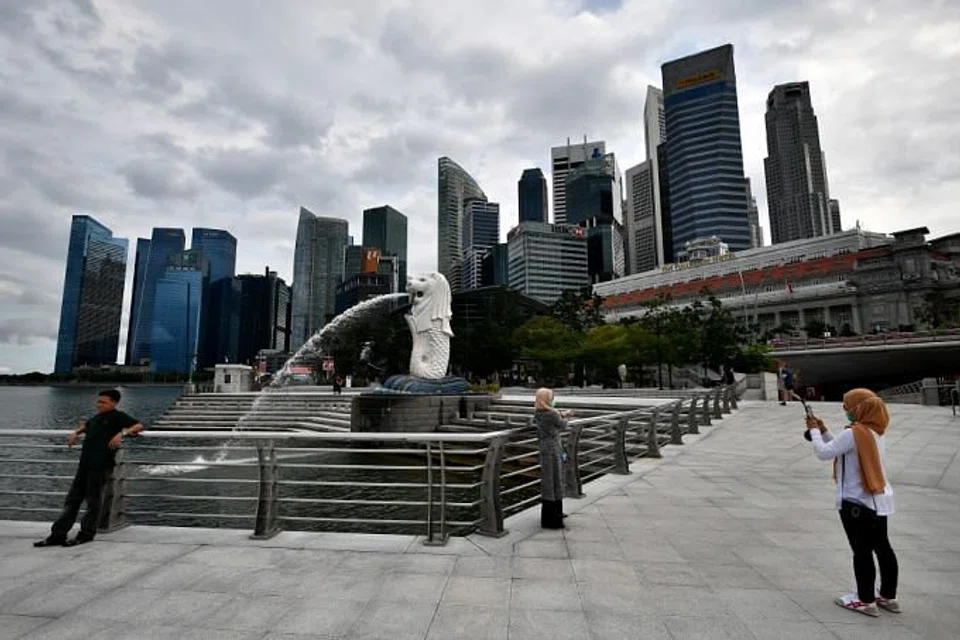
Singapore
THE Asean+3 region is expected to grow at a more moderate pace of 4.7 per cent this year, with the moderation largely due to the +3 economies, especially China which registered a strong rebound last year, said Asean+3 Macroeconomic Research Office (AMRO) chief economist Khor Hoe Ee.
Dr Khor was speaking on Apr 12 at the launch of AMRO's annual flagship report, the Asean+3 Regional Economic Outlook. China clocked gross domestic product (GDP) growth of about 8.1 per cent in 2021; forecast GDP growth for the coming year is 5.2 per cent.
AMRO said in its report that it expects the region's GDP to come in at 4.6 per cent in 2023.
Asean, meanwhile, is expected to register a stronger expansion of 5.1 per cent in 2022 and 5.2 per cent in 2023. Economies that were weighed down by the Delta outbreak, such as Indonesia, Malaysia, the Philippines, Thailand and Vietnam in particular, are projected to see firmer growth this year.
"As we move through 2022, it appears as though the region may finally have gained some ground in its long battle against the virus and we can look forward to a fuller opening-up and a strong economic recovery," said Dr Khor.
The exception in the Asean group is Singapore, where GDP growth is expected to moderate in 2022 to 4.0 per cent following a strong rebound in 2021.
This mirrors expected GDP growth in China, Hong Kong and South Korea which rebounded strongly in 2021.
Asked about the impact of the Covid-19 outbreak in China on the country's economic development, Dr Khor said it will have a "dampening effect on growth and the ability of the Chinese economy to achieve the 5.5 per cent growth target set".
He added: "Fortunately, the government has a lot of policy space and can use that to support the economy."
Meanwhile, the ongoing Russia-Ukraine conflict is expected to have limited impact on the Asean+3 region's GDP growth in 2022. But, it is an emerging risk to the outlook.
In its upside scenario, AMRO projects GDP growth for the Asean+3 region at 5.4 per cent in 2022 and 5.7 per cent in 2023. This scenario assumes that the conflict is resolved within the first half of 2022 and that ongoing economic reopening is faster than expected, culminating in all containment measures being removed by end 2022.
In its adverse scenario, the Asean+3 region's GDP growth could come in at 3.9 per cent this year and 3.5 per cent in 2023. In this scenario, the conflict lasts beyond 2023, with more virulent Covid-19 strains potentially emerging by the end of 2022.
For Asean, the adverse scenario projection is 4.2 per cent growth and the upside scenario projection is 5.7 per cent growth.
Said Dr Khor: "Russia and Ukraine are major producers of commodities, oil, gas, wheat, sunflower oil, neon gas, and palladium. Most of the countries in the region are energy importers so there will be adverse terms of trade... and this will show up in higher inflation which will dampen growth, especially consumption.
"On the other hand, there are a few economies in the region - Brunei, Malaysia (and) Indonesia - which are commodity producers and they will benefit."
"For some countries in the region, they have price subsidies and this will show up in terms of a higher fiscal burden," he added.
One of the major concerns is that if the war is prolonged, energy prices will continue to spike and result in global stagflation, in the European Union and the United States, according to Dr Khor. "As these economies are major trading partners for the region, the region's export and GDP growth are likely to be significantly impacted, and that could derail the recovery and it could show up in terms of lower growth or even recession."
Meanwhile, soaring inflation in the United States has prompted the US Federal Reserve to begin tightening monetary policy. A sharper-than-expected rate hike by the Fed, and consequent tightening in global financial markets would have implications for interest rates, capital outflows, and financial market volatility in the region, noted AMRO.
Headline inflation for the Asean+3 region is forecast to increase to 3.5 per cent for 2022, reflecting base-year effects, the removal of subsidies on energy and some essential products, and supply-side constraints that are pushing up the costs of raw materials, energy, transportation and food.
AMRO said in its report that it expects this to moderate to 2.3 per cent next year.
For Asean, inflation is expected to be 4.1 per cent in 2022 and 2.6 per cent in 2023.
Given the less-supportive global policy settings in 2022, policymakers will have to undertake a crucial balancing act - avoiding a premature withdrawal of policy support to sustain the recovery, while at the same time facilitating the reallocation of capital and labour to new and expanding sectors, and restoring policy space to prepare for future risks, noted Dr Khor.
"Asean+3 policymakers will have to be nimble as they navigate this complex environment, strengthen economic recovery and rebuild policy space," he added.