



With Anwar as its new leader, Malaysia hopes for greater stability and progress in 2023
Tan Ai Leng
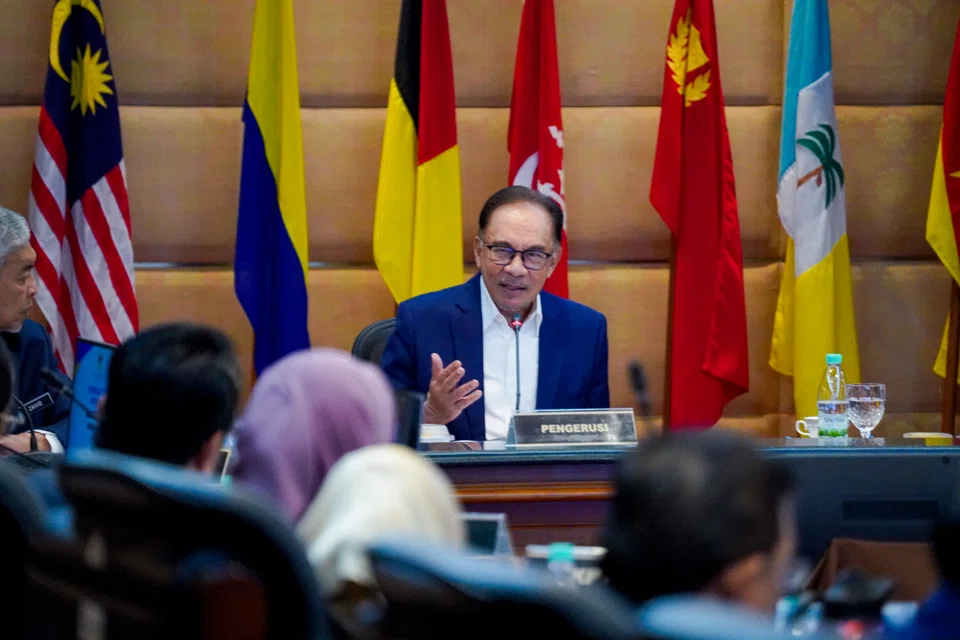
[KUALA LUMPUR] The biggest event that took place in Malaysia was the snap general election in November, which saw longstanding opposition leader Anwar Ibrahim finally realising his decades-long goal of becoming the country’s new prime minister.
With his appointment, many Malaysians hope it will finally put an end to the political uncertainty that has seen no fewer than three prime ministers in the last four years. There is also some hope that the new government, under Anwar’s leadership, can implement policies and make improvements to infrastructure that can give the economy a much-needed boost.
Malaysia’s gross domestic product grew by 14.2 per cent in the third quarter of this year. The economy saw 9.3 per cent growth in the first nine months, compared to the same period in 2021.
Bank Negara governor Nor Shamsiah Mohd Yunus was quick to remind the public, however, that the strong growth in Q3 was mainly due to a low-base effect and she expects growth to moderate in Q4 and throughout 2023 as there are mounting concerns over a global recession.
Many economists share the same sentiment but they generally took a positive view on Malaysia’s growth as the country has a more stable government that is likely to focus on steering the economy and tackling pressing issues such as the rising cost of living.
Kenanga Investment Bank and DBS Group Research both project Malaysia’s economy to achieve 8.5-8.6 per cent growth for the whole of 2022, while Affin Hwang Investment Bank is maintaining its full-year forecast of 7.5 per cent.
Wan Suhaimie Saidie, head of economic research from Kenanga Investment Bank, concluded that 2022 was “relatively a good year” after the economy experienced more than two years of stagnation, largely due to the pandemic.
He cited the reopening of borders in April as the most significant event of the year, as the economy quickly built up a steady growth momentum on the back of higher domestic and external demand, as well as robust growth of services-related activities.
“At the same time, commodity exports, including oil and gas as well as palm oil along with sustained demand for electrical and electronics goods supported growth on the demand side,” he told The Business Times.
Chua Han Teng, economist at DBS Group Research, expects Malaysia’s growth pace will normalise and soften to 4 per cent in 2023 as manufacturing activities slow down. This is in line with the easing of global growth due to “tighter financial conditions and still uncomfortably high but easing inflation”, he said.
Nevertheless, domestic demand, particularly private consumption and investment, would still grow sufficiently to sustain moderate Malaysian headline expansion in 2023 due to much improved labour market conditions, he wrote in a note on Dec 14.
Alan Tan, chief economist of Affin Hwang Investment Bank, shared a similar view, noting that the government will try to find a balance between fiscal consolidation and supporting economic growth when the next Budget is presented in Parliament sometime in the first quarter of 2023.
“The immediate focus of the 2023 Budget measures will also be on the new government’s strategy to revive the country’s business and consumer sentiment as well as to promote better private investment growth trends, especially in attracting foreign direct investment into the country,” he told BT.
With the downside risk from the external factors, particularly concerns of weaker-than-expected global growth, the investment bank projects Malaysia’s real GDP growth to be slower at 3.7 per cent for next year.
Despite worries of a recession next year, economists think that the central bank will raise interest rates early next year, before the country enters a prolonged pause.
Bank Negara Malaysia began its monetary policy normalisation in 2022, lifting the overnight policy rate (OPR) by a total 100 basis points to 2.75 per cent - back to pre-pandemic level.
Chua noted that there are risks of an extension to 3.25 per cent to 3.5 per cent in the first half next year, given upside inflation risks and still-resilient domestic demand.
Affin Hwang Investment Bank maintains their forecast that the central bank will likely raise its OPR by 25 basis points to 3 per cent at the January MPC meeting next year, and pause throughout 2023.
“We believe the future decision of monetary policy will be data-dependent, and Bank Negara will be closely monitoring global commodity price developments amid risks from geopolitical tension, as well as changes to domestic policy measures,” added Tan.
On the ringgit’s movement, Wan Suhaimie said the currency could weaken to around RM4.50 to the US dollar in the first quarter of 2023 due to the increasing divergence with the US Federal Reserve’s policy rates.
Nevertheless, he expects the ringgit to gain some ground and trade stronger at around the RM4.15 to RM4.25 level by end-2023 as the unity government is likely to introduce pro-investment policies, coupled with the Fed’s potential pivot and a possible full reopening of China’s economy in the second half of next year.
The ringgit was trading at RM4.42 against the greenback on Dec 22, having rebounded from its low of RM4.75 on Nov 5. Overall, it is still down 5.3 per cent year-to-date against the US dollar.
Against the Singapore dollar, the ringgit has fallen 4.3 per cent to RM3.28 on Dec 22, from RM3.09 at the start of the year.
The feeling of uncertainty has reflected on the country’s benchmark FTSE Bursa Malaysia Kuala Lumpur Composite Index (KLCI) movement. The index once slumped to 1,441.29 points after the general election outcome resulted in a hung parliament; it has rebounded to 1,501.88 points after Anwar was sworn in as prime minister.
Year-to-date, KLCI has shed 5 per cent to 1,472.38 points on Dec 15, 2022, as compared to 1,549 points on the first trading day on Jan 3, 2022.
All eyes are on how Malaysia’s first unity government – comprising Pakatan Harapan, Barisan Nasional (BN), Gabungan Parti Sarawak and Gabungan Rakyat Sabah – will perform in 2023.
Political consultancy Pereira International founder and CEO Derwin Pereira said other than tackling the issues of escalating living cost, foreign investors are also closely watching how Anwar and his Cabinet will deliver on its promises while dealing with issues related to race and religion.
The upcoming party elections of the United Malays National Organisation (Umno) – a component party of the BN coalition – may present another speedbump for the unity government if Umno leader Ahmad Zahid Hamidi loses its presidency seat.
Nevertheless, Derwin noted that it is unlikely for the new Umno president to choose to leave the unity government, because “to bring down Anwar would be to bring down the house on themselves.”
“Today, no calibration or recalibration of Malaysian politics is possible without factoring in the Anwar effect. Malaysian politicians, including those in BN, understand this,” he said.
TRENDING NOW

Once staunchly pro-China, Malaysian Chinese businesses are now distancing themselves from Beijing

Stocks to watch: HPL, Aims Apac Reit, Zico, Advanced Systems Automation, ComfortDelGro

‘How many will survive?’: Bubble fears arise as China’s humanoid robotics face reality check

Smaller board lots can’t fix a market run by three banks

