Anwar primed to unveil expansionary Malaysia budget to boost economy, attract FDI
However, government faces challenge of balancing any increased spending with need to reduce its fiscal deficit

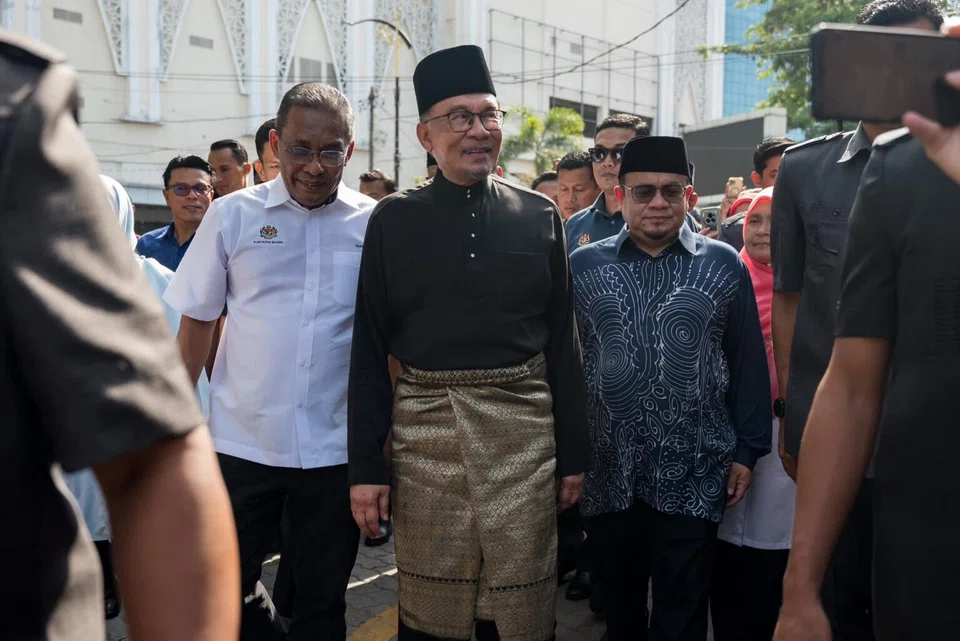
[KUALA LUMPUR] With Malaysian Prime Minister Anwar Ibrahim set to present Budget 2025 in parliament on Oct 18, analysts are expecting him to place a heavy emphasis on economic growth and ways to attract greater foreign direct investment (FDI).
Earlier this week, Anwar, who is also finance minister, said that the Budget – his third since he took office towards the end of 2022 – will strengthen Malaysia’s economic framework and promote equitable distribution.
“With optimism, I anticipate that further enhancements to the economic framework will be unveiled, aiming to facilitate a more equitable distribution of accelerated economic growth among a wider population,” he wrote on X.
He noted the importance of addressing income disparities, wage stagnation and inflationary pressures that have hindered the purchasing power of many consumers.
Observers said the budget comes at a time when the government faces numerous challenges, including dealing with rising inflation and the need for more inclusive policies that can drive sustainable growth.
Malaysia has reported robust gross domestic product growth of 5.9 per cent in the second quarter of 2024, prompting the likes of UOB, RHB and OCBC to revise their economic forecasts for the rest of the year.
However, the government faces the challenge of balancing an expansionary fiscal policy with the need to reduce its fiscal deficit.
RHB economist Chin Yee Sian expects the fiscal deficit target to be set at 3.5 per cent of GDP in 2025, with further cuts to 2.7 per cent of GDP in 2026, in order to meet the mid-term deficit targets.
The budget deficit has long been a concern for Malaysia, with public spending historically driven by large-scale development projects and subsidy programmes.
The World Bank recently raised its forecast for Malaysia’s growth to 4.9 per cent. It also warned of the burden caused by heavy subsidies, particularly for fuel and cooking oil, that have cost an estimated RM81 billion (S$24.7 billion) in 2023.
The World Bank’s lead economist for Malaysia Apurva Sanghi said at a briefing on Tuesday (Oct 8): “Malaysia is not collecting enough revenue to meet its spending needs. This is not sustainable.”
Despite Anwar’s government having initiated numerous subsidy reforms, saving the government around RM7.9 billion this year, it still falls short of the RM11.5 billion target.
Sanghi noted that one solution could be to reintroduce the controversial goods and services tax, which would provide a more sustainable revenue stream and enable the government to continue funding essential social programmes.
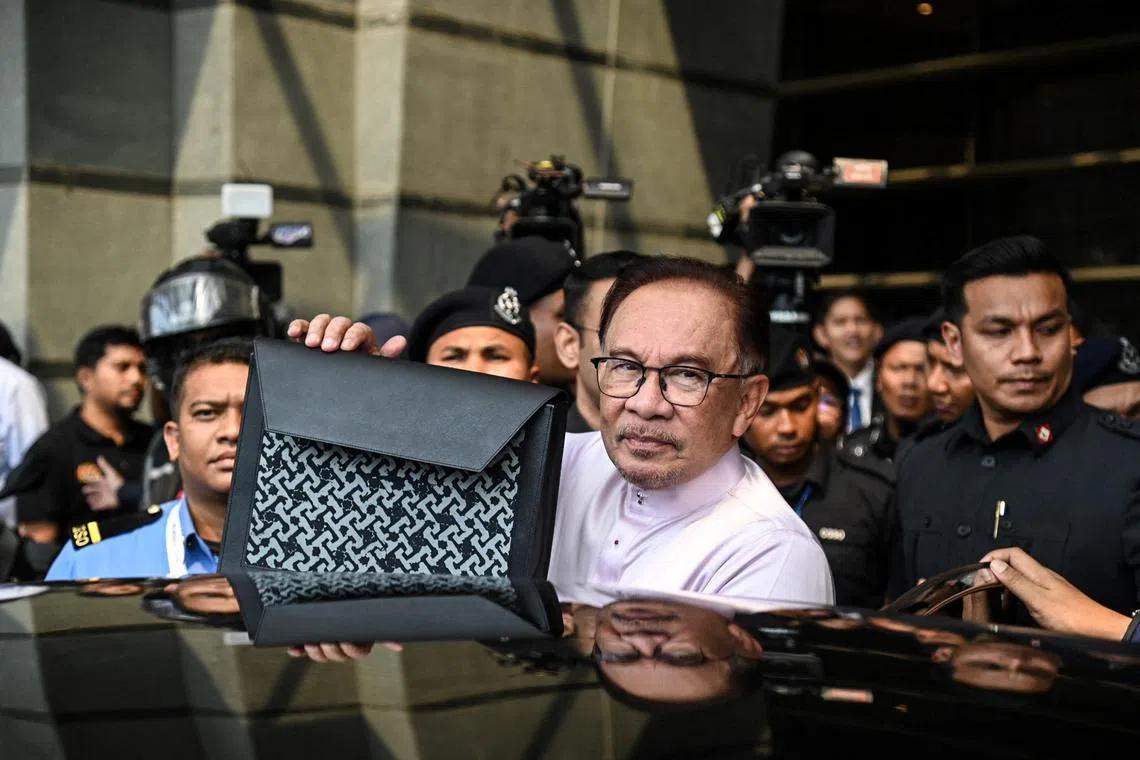
UOB economists Julia Goh and Loke Siew Ting believe that the government will boost spending to alleviate the high cost of living, while supporting economic transformation.
“An expansionary budget will provide the government with a solid rationale for a robust GDP growth forecast of 4.5 to 5.5 per cent in 2025, up from a revised estimate of 5 to 5.5 per cent for 2024,” they said.
Last year, Anwar unveiled a record-high budget with an allocation of RM393.8 billion. Of this, RM303.8 billion was for operating expenditure and the rest for development expenditure.
For 2025, UOB expects total government expenditure to increase to RM404.8 billion, with operating expenditure going up to RM324.8 billion.
This increase is attributed to targeted cash-assistance schemes, salary increases for 1.6 million civil servants, and adjustments in pensions for retirees.
At the same time, development expenditure is expected to decrease by 5.9 per cent to RM80 billion in 2025, from an estimated RM85 billion that may have been used this year, reflecting underspending on public infrastructure projects as the government shifts more responsibility to the private sector.
Priorities on wages, digital economy
A central theme of the upcoming Budget 2025 will be addressing wage stagnation and boosting household income levels, said observers.
With civil servants getting better salaries, observers expect this wage pressure to extend to the private sector at some point.
As wage growth has lagged inflation and productivity improvements, many are watching to see whether the government can successfully implement policies that elevate living standards without undermining competitiveness.
RHB’s Chin expects to see more clarity on the progressive wage policy, which aims to increase the rate of employee compensation to 45 per cent by 2033 in line with productivity.
A report by Lee Hwok Aun, a senior fellow at the Iseas-Yusof Ishak Institute, revealed that the wage share of Malaysia’s income was only 32.4 per cent in 2022. This figure is significantly lower than in South Korea and Japan, where the wage share is around 50 per cent.
In line with global trends, the digital economy will also be a major focus in Budget 2025.
“The next budget is seen as largely market-neutral. It sets a solid fundamental undertone for future economic growth and the equity market, as well as being supportive of the ringgit’s upward momentum,” said Vincent Khoo, managing director (strategy) at UOB Kay Hian Malaysia.
Chin believes that the budget will include measures to expand broadband access, support digital innovation and develop smart cities.
She noted that the ongoing roll-out of Malaysia’s National Energy Transition Roadmap also promises to attract significant investments in renewable energy and modernised energy grids, as the country works towards achieving net-zero emissions by 2050.
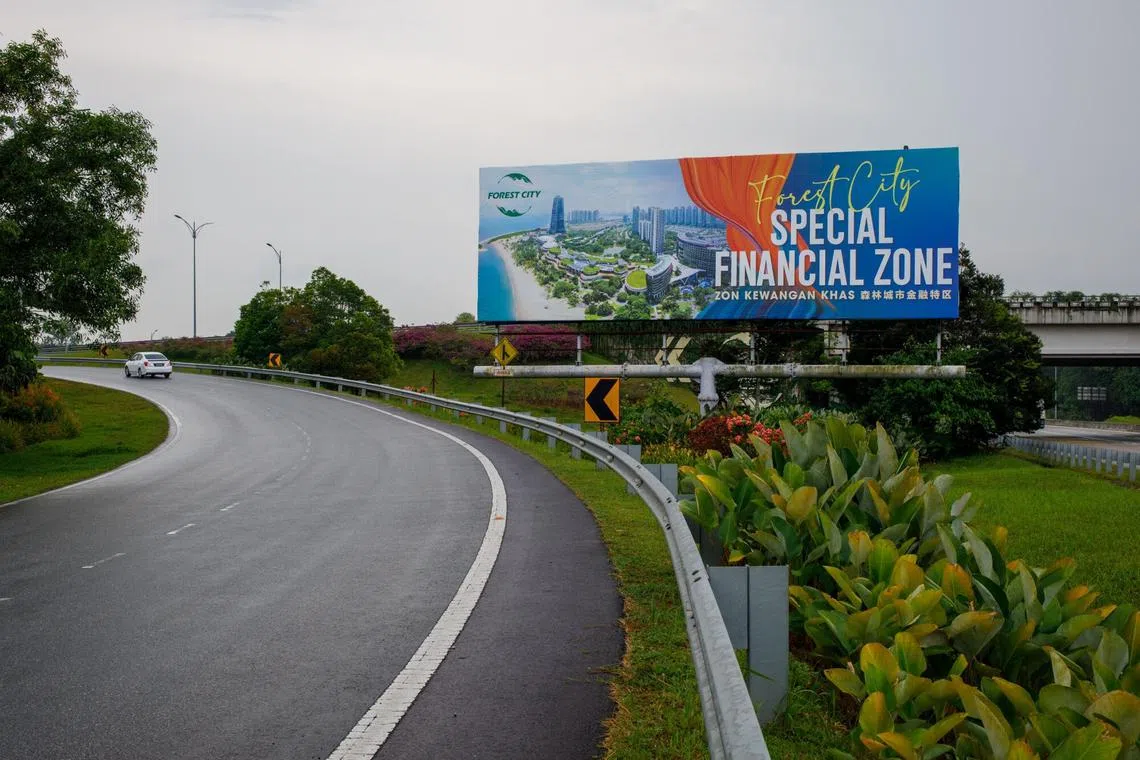
Expectations are also high for further developments in Malaysia’s special economic zones, particularly the Johor-Singapore Special Economic Zone (JS-SEZ).
Singapore and Malaysia are working towards finalising a deal and unveiling the JS-SEZ by the end of the year.
Separately, Malaysia recently launched a special financial zone in Forest City, Johor, with incentives such as reduced corporate tax rates and zero per cent tax for family offices to attract businesses and high-net-worth individuals.