Archipelago International chief eyes growth in Indonesia’s second- and third-tier cities
The region’s largest privately owned hospitality group wants to grow its footprint in Europe and the Americas too, says John Flood
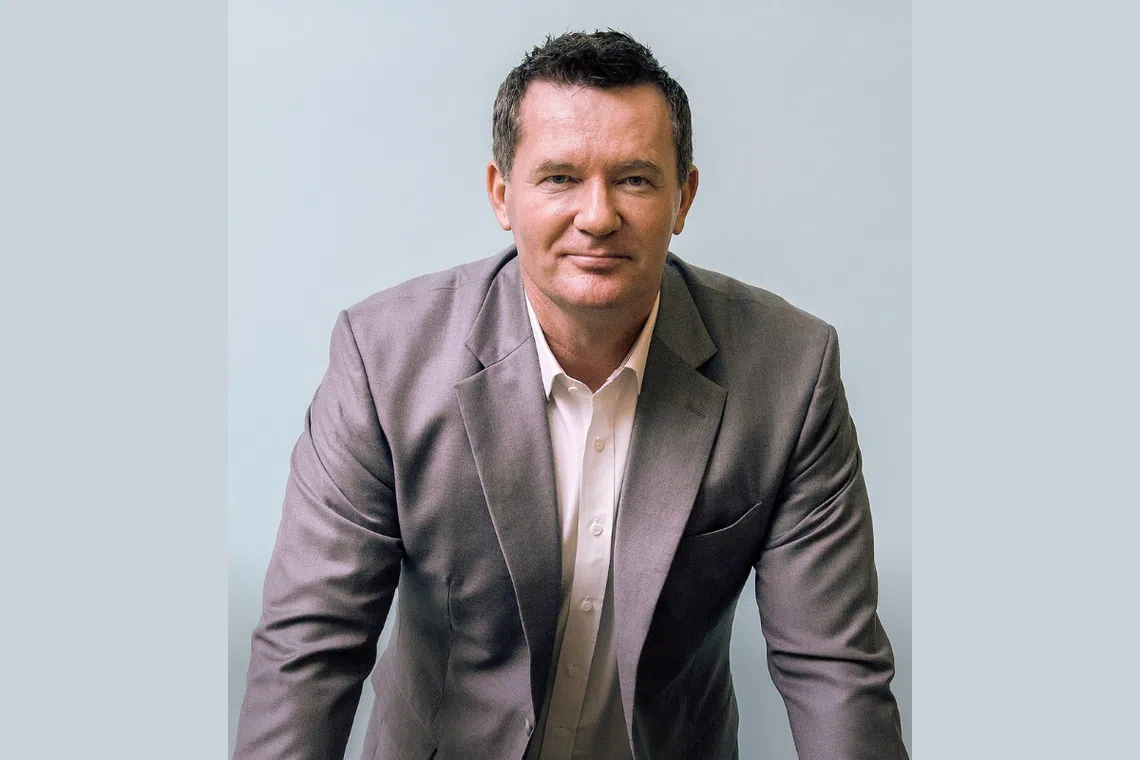
[JAKARTA] When John Flood arrived in Indonesia 24 years ago to conduct research for his master’s thesis on developing a hotel chain, little did the Irishman realise he would get to put his ideas to practice – and on such a grand scale, to boot.
During his time in Indonesia, he met British hotelier Charles Brookfield, who was then a senior executive at Aston, a well-known hotel brand in Hawaii.
The pair hit it off, and over the years, they worked together and built Archipelago International – the largest privately owned hospitality group in South-east Asia.
Today, Jakarta-based Archipelago International operates more than 40,000 rooms and residences in over 200 properties in South-east Asia, the Caribbean, the Middle East and Oceania. The total value of the group’s managed assets is in excess of US$6 billion.
With the worst of the Covid-19 pandemic long over, Flood – the group’s president and chief executive officer – said he expects this year’s revenue to be 40 per cent higher than in 2022.
This is largely due to its in-house property management system, which allows Archipelago to monitor hotel room bookings across all its properties.
This is also the fastest-growing business in the group, with the system even offered to other hotel operators around the world. Flood estimated that within three years, about 60 per cent of revenue will be generated by the system.
“We have hired 25 developers to work on the system. Each of our hotels is now equipped with a state-of-the-art booking engine that will allow us to grow exponentially,” said Flood in a recent interview with The Business Times.
“We are ready for explosive growth in South-east Asia, the Middle East, Europe and the Americas,” he said, although he could not give more details about these plans.


Travel boom
According to the World Travel & Tourism Council’s latest economic-impact research report, the global travel and tourism sector is forecast to reach US$9.5 trillion this year – just 5 per cent below its 2019 peak, the year before the pandemic struck.
The report forecast that the sector will experience average annual growth of 5.8 per cent over the next decade.
But whenever there is growth, there are inevitably new challenges to overcome. A McKinsey & Co report said the hospitality industry will face a prolonged and widespread labour shortage as travel and tourism pick up steam.
After 62 million travel and tourism jobs were lost in 2020 – the first year of the pandemic; the supply and demand of labour continue to be out of balance, the report said.
While Flood is aware that it is impossible to replace the human touch, technology-driven services may offer some solutions for the manpower crunch.
He said Archipelago International was among the first hotel operators to introduce touchless elevator buttons at its properties. Guests also make use of Google Nests in their rooms and use their voices to do everything from speaking to reception or turning on lights.
“There is a lack of talent in this space, so we do have to innovate,” he said.
While he remains focused on growing the company’s global footprint, Flood said that there are extensive plans to maintain a strong presence in its home market of Indonesia.
Most of Archipelago International’s properties – 160, to be precise – are in Indonesia. Only 600 of Indonesia’s 23,000 hotels are branded, with the rest being standalone.
“Indonesia’s domestic tourism and travel market offers massive opportunities, especially in the second-tier and third-tier cities which do not have modern hotels,” he said.
The company will open a hotel in Serang later this year, a city located about 70 km from the capital Jakarta. There are plans to open new hotels in other smaller cities in Indonesia, such as those on the island of Java.
With its strong growth and a positive outlook, Flood said the company has not ruled out an initial public offering in the future, although nothing has been firmed up as yet.
For now, he wants the company and its 20,000 employees to work hard on the philosophy of being the best in class for the segments within which it operates, and to continue to grow without taking on any debt.
“We want to build our expertise in Indonesia and extrapolate around the world, and be recognised as among the top 30 hotel management companies in the world.”
Decoding Asia newsletter: your guide to navigating Asia in a new global order. Sign up here to get Decoding Asia newsletter. Delivered to your inbox. Free.
Share with us your feedback on BT's products and services