Asean Business logo
SPONSORED BYUOB logo

Asean aims to conclude Digital Economy Framework in 2025, attract FDI as bloc

While member nations are in intense competition for foreign direct investments, collaboration is essential, says Malaysian minister


Tan Ai Leng
Published Mon, Sep 9, 2024 · 08:44 PM
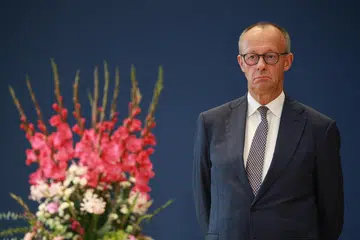
    • Malaysia Minister of Investment, Trade and Industry Zafrul Aziz says Defa will facilitate e-commerce and enable Asean countries to thrive collectively.
    • Malaysia Minister of Investment, Trade and Industry Zafrul Aziz says Defa will facilitate e-commerce and enable Asean countries to thrive collectively. PHOTO: BT FILE

    MALAYSIA Minister of Investment, Trade and Industry Zafrul Aziz is optimistic that the Asean Digital Economy Framework Agreement (Defa) could be finalised next year, when the country takes on chairmanship of the bloc.

    Speaking at the Spotlight on Asean Business: Charting New Frontiers forum in Singapore on Monday (Sep 9), he emphasised that the agreement will facilitate e-commerce and enable Asean countries to thrive collectively, enhancing their appeal as a bloc for foreign direct investment (FDI).

    While Asean nations are in intense competition for FDIs and are aggressively expanding their tech and renewable energy sectors, collaboration is essential, the minister said. This is because investments in one country can have a positive impact on others in the region.

    For instance, in the semiconductor sector, many companies operate in Singapore but may look to other countries within the region when they decide to expand vertically.

    “If they don’t come to Singapore, they may not be in Asean,” Zafrul said.

    He added that Defa, once concluded, will provide a guide or platform for facilitating regional e-commerce activities.

    “My concern is, when you look at the growth (of the semiconductor industry) or any sector in the region, you are right to say that different (countries are at) different stages of growth,” he said. “But we have to make sure that the growth of 4 to 5 per cent is sustainable, inclusive, equitable and (resilient), or you will not see Asean prosper together.”

    Defa aims to integrate South-east Asia as an innovative, interoperable and investable digital region, with the potential to unlock US$2 trillion by 2030.

    In a separate discussion at the forum, Singapore Minister for Digital Development and Information Josephine Teo echoed this sentiment.

    She highlighted that collaboration between Singapore and Malaysia in the Johor-Singapore Special Economic Zone could lead to mutual benefits in artificial intelligence (AI) workload redistribution.

    Although she agreed that competition between countries in the region is inevitable, she noted that the opportunities are vast, and that collaboration will create greater benefits for all.

    She added: “In the digital domain, there are many workloads. Not all need to be physically located at where the compute work is being done. It will be beneficial if such workloads are... distributed to other locations.”

    Teo also highlighted that Singapore began as a manufacturing hub, but has since advanced in the value chain. As the country embraces new challenges in AI and computing development, it will keep evolving and strengthening its capabilities.

    Standard Chartered CEO Bill Winters said Asean is in the demographic sweet spot: US companies are not the only ones adopting the China+1 supply chain strategy – even China companies are diverting their investments to South-east Asia.

    On US-China tensions, Winters noted that while Asean may find it challenging to uphold a neutral stance, its member nations have excelled individually in navigating commercial matters with neutrality. This makes the bloc attractive to both China and the US, he said.

    Zafrul, however, pointed out that even with a neutral stance on trade matters, some industries are still affected by tariffs. For instance, solar-related Chinese businesses in Malaysia and Vietnam are being hit by high US-imposed tariffs.