Asean analysts favour commodities, financial, telecoms sectors on inflation, rising rates
Some counters seen benefitting from higher commodity prices, interest rates if investors know where to look

Singapore
BENEATH the spectre of war and inflation, analysts see potential bright spots in South-east Asian markets, particularly in the commodities, financial and telecoms sectors.
Inflation, already on the rise since last year thanks to Covid-related supply restrictions, is likely to be pushed higher thanks to the conflict between Russia and Ukraine.
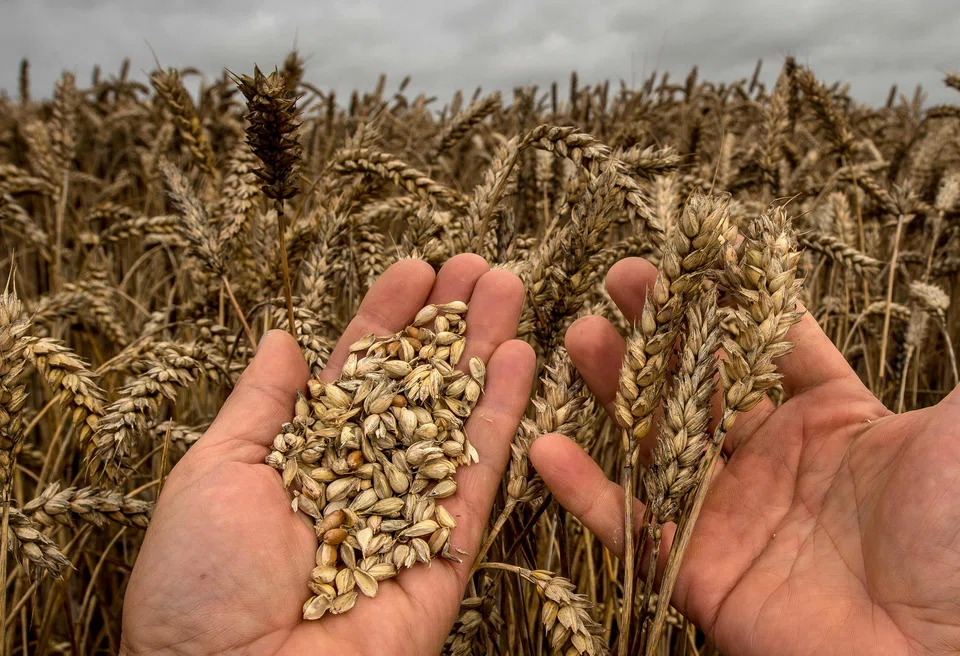
Brent crude, for instance, nearly hit US$140 per barrel on Mar 6. Nickel prices rose to a record of about US$101,000 on Mar 8. And wheat prices rose 6.6 per cent to US$12.09 per bushel on Mar 4.
Morgan Stanley analysts estimated in a Mar 9 report that each 10 per cent rise in food and energy prices would represent an increase in spending burden by about 2 per cent of GDP (gross domestic product).
Against this backdrop, the analysts favour net commodity exporters such as Indonesia and Malaysia as a hedge against potential stagflation resulting from lower growth and higher inflation.
Manulife senior portfolio manager Sarah Lu is also positive on commodity-exporting Asian markets such as Indonesia, Thailand and the Philippines.
"Given weaker economic growth momentum, coupled with ongoing geopolitical uncertainty, we expect equity markets to experience heightened volatility," said Lu, who is a member of Manulife's multi-asset solutions team in Asia. "However, markets with significant exposure to energy and materials and consumer staples may find some insulation thanks to higher commodity prices."
DBS analyst Cheria Christi Widjaja highlighted Indofood Sukses Makmur and Indofood CBP Sukses Makmur as top picks for their superior pricing power and attractive valuation.
Indofood Sukses Makmur is a food solutions company that produces and processes raw materials and consumer branded goods. It partially owns Indofood CBP Sukses Makmur, which produces the popular instant noodles brand Indomie as well as snack foods, food seasonings and beverages. Singapore-listed plantation and palm oil company Indofood Agri Resources is also a unit of Indofood Sukses Makmur.
"Based on our market share analysis, we believe the packaged food and beverage industry will experience less competition than the beauty and personal care industry, especially from new entrants and online players," Widjaja said, noting that this will give them a greater ability to raise prices and defend margins this year.
She also noted that companies will have more room to pass on cost increases to customers in 2022 as consumers' purchasing power and demand gradually recover with improvements to the Covid-19 situation and the economy.
Similarly, both Citi and DBS' analysts also highlighted Singapore-listed agribusiness Wilmar International as being a potential beneficiary of an increase in food commodity prices.
DBS' William Simadiputra noted that crude palm oil (CPO) prices will continue to rise as the war between Russia and Ukraine puts pressure on sunflower oil supplies, which could in turn give Wilmar's share price some room to grow.
"The high sunflower oil price bodes well for soybean oil and CPO, which were both already facing tight supply issues on the back of a poor harvest in South America, low crushing volume for soybean, and Indonesia's domestic market obligation for CPO, even before the outbreak of the war," he said.
On Mar 10, Indonesia required CPO exporters to retain 30 per cent of exports for the domestic market - up from 20 per cent previously.
Thailand's state oil and gas explorer PTT Exploration and Production (PTTEP), was also highlighted by DBS analyst Chanpen Sirithanarattanakul as her top pick within the Thai energy sector in a report released on Mar 4.
She noted that in light of the conflict between Russia and Ukraine, field demand recovery and a global inventory downtrend, strong oil and gas prices would be expected going forward.
PTTEP is also expected to hit higher sales volumes from its stakes in Oman Block 61, the largest tight gas development in the Middle East; Malaysia's Sabah Block H deepwater gas field; and the start up of the Algeria Hassi Bir Rekaiz project, a crude oil field east of Algeria.
Another sector that could be a more defensive play against rising interest rates and inflation is the telecoms sector, with Singapore's Singtel and Indonesia's Telkom cited by Citi analysts as top picks.
In a report published on Mar 6, they observed that mobile revenues of telcos in emerging markets are broadly inflation resistant - with even a mild positive correlation between inflation and telco industry revenue growth.
"For developed markets, concern on inflation is even less relevant as customers are typically locked into post-paid contracts with less volatility attached given spending commitments," they said.
With rising interest rates, the financial sector is also tipped to outperform. DBS' Sirithanarattanakul said Thai banks should benefit from the economic recovery post lockdown, although earnings could fall if the Covid-19 situation gets worse, which would lead to higher credit costs.
She noted that the Bank of Thailand's financial relief measures and proactive loan restructuring should cause non-performing loans at commercial banks to increase gradually rather than sharply.
"So far, the asset quality of most banks has turned out to be better than what the banks had earlier expected, while the outlook of asset quality remains manageable," she said, noting that the sector is still trading at a low valuation.
She likes Kasikornbank for its strong long-term fundamentals and decent earnings growth forecasted for FY2022; and Tisco Financial Group for its effective capital management, which bodes well for its high return on equity and dividend yield.
Jefferies equity analyst Krishna Guha also maintained his "buy" call on Singapore's trio of banks, on the back of slightly higher net interest margins and lower credit costs.
He noted in a report that while credit cost should be lower in FY2022 year-on-year, he believes that some tail risks and credit migration may remain judging from the caution that banks showed with general provision write backs.
Amid the unpredictability of the situation in Ukraine, investors should also try to focus on growth. David Eiswert, a portfolio manager at T Rowe Price, said companies with the potential to improve economic returns over the next few years would include financials, as interest rates rise; and the airlines and hotels, as international travel picks up again.
READ MORE: Soaring pump prices put the squeeze on logistics players