China tech companies draw up war plans for Asean battleground
In the second of a 7-part BT-Lianhe Zaobao series on China and Asean, we look at the strategies adopted and challenges faced by China’s tech companies in South-east Asia



IN MAY 2014, Alibaba Group announced its acquisition of a 10.35 per cent stake in SingPost for S$312.5 million, to accelerate its e-commerce expansion across South-east Asia. This was Alibaba’s first investment in an overseas postal agency, in a prelude to the entry of China tech giants into the region.
Many investors then thought that Alibaba’s technological and financial clout meant that its domination was just a matter of time.
But reality proved otherwise. After 8 years, notwithstanding its continued expansion in the region, Alibaba is facing even fiercer competition.
Many in China are familiar with the BAT – Baidu, Alibaba, and Tencent – and their reenactment of the historical war epic Romance of the Three Kingdoms. These tech behemoths, founded at the end of the 20th century, have been battling for dominance in the fields of search, cloud computing, and data.
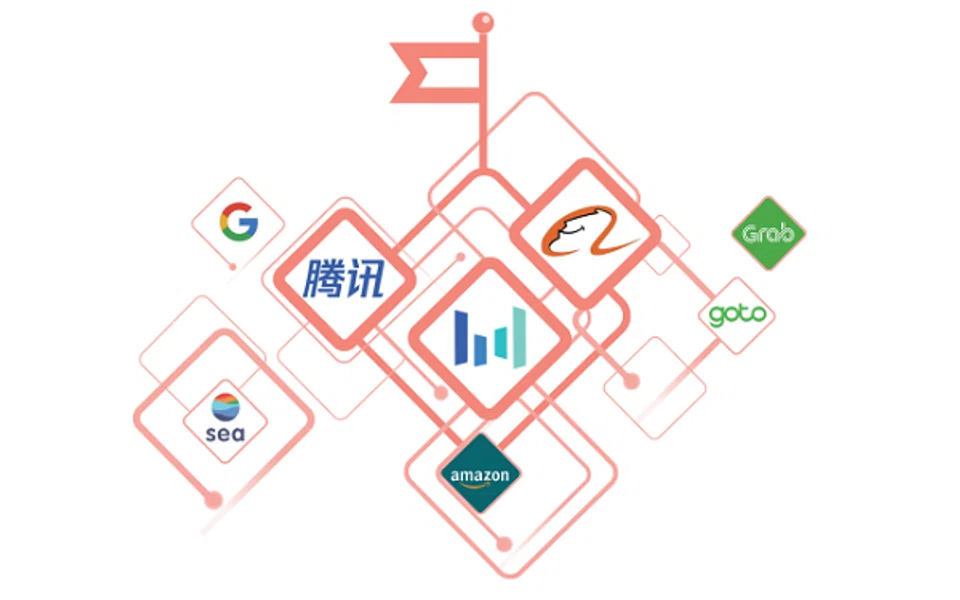
The rivalry has spilled beyond national borders in recent years, as China’s tech companies turn to South-east Asia and set up regional headquarters in Singapore. From first-mover Alibaba, to recently-expanding Tencent, to TikTok’s parent company Bytedance, Singapore has become the next battleground.
American tech titans Amazon, Google, and Microsoft have also made inroads, alongside emerging unicorns such as local companies Sea Group and Grab, and Indonesia’s GoTo and Bukalapak. What Chinese companies face is no longer the three-way fight of Romance of the Three Kingdoms, but the Spring and Autumn period of the Warring States era.
Facing fierce competition from all sides, how will Chinese tech companies plant their flags within the territories of e-commerce, fintech, and cloud computing in South-east Asia, and what strategies do they have?
E-commerce: The disruptive rise of TikTok
In 2022, as South-east Asia recovers from the pandemic, e-commerce competition is heating up. TikTok, a company that started out with user-generated videos, has emerged as a surprise contender.
TikTok’s parent company Bytedance opened an office in Singapore about 4 years ago. In February 2021, it launched video-focused e-commerce platform TikTok Shop in Indonesia, Thailand, Vietnam, Malaysia, and the Philippines.
Capitalising on its strength in short videos and livestreaming, TikTok Shop drew huge swathes of shoppers, chalking up 6 billion yuan (S$1.2 billion) in gross merchandise volume (GMV) last year and aiming for 12 billion yuan in GMV this year.
It is clear that TikTok’s rapid rise in South-east Asian e-commerce has encroached on the market shares of Sea’s Shopee and Alibaba-backed Lazada.
A Bytedance spokesperson told Lianhe Zaobao that the firm sees great growth across its products and hopes to expand new business offerings in the next few years. As for e-commerce expansion, the spokesperson said, “We are always thinking of new ways to bring value to the community and enrich the user experience.”
In the last two years, South-east Asia’s youthful demographics and rapid digitalisation have driven e-commerce growth.
The e-Conomy SEA Report 2021 by Google, Temasek, and Bain & Company estimates that South-east Asia’s GMV reached US$120 billion last year, nearly doubling from the year before.
According to Data.ai, Shopee and Lazada are the most popular retail apps in both Singapore and South-east Asia. Consumer market data agency Statista’s figures show that the two platforms respectively had 16.15 million and 9.21 million visitors per month in the fourth quarter of last year, far ahead of other e-commerce platforms.
Founded in 2012 via German startup incubator Rocket Internet, Lazada was one of the first e-commerce platforms in the region. In 2016, Alibaba acquired a 51 per cent stake in Lazada for US$1 billion, and subsequently injected more funds to expand its stake. Currently, the platform is in effect a wholly-owned subsidiary of Alibaba.
Shopee was founded in 2015, and is a major focus for Sea founder Forrest Li. After renaming the company from Garena to Sea in 2017, Li channelled most of the funds raised into expanding Shopee.
Notably, well before Sea entered e-commerce, Tencent was a key backer and once held a 39.8 per cent stake in the company. Some thus regard the competition between Lazada and Shopee as an extension of the Alibaba-Tencent rivalry.
As Lazada and Shopee lock horns, other e-commerce players were not content to be spectators. China’s JD.com launched JD.ID in Indonesia, while US online retail giant Amazon set up in Singapore in 2017.
Now, with TikTok’s emergence shaking things up, e-commerce competition is truly boiling over.
Alibaba’s Cainiao launches direct flights to Singapore
Megan Ong, director of Nanyang Polytechnic’s Singapore Institute of Retail Studies (SIRS), noted that with over half a billion Internet users in China, e-commerce operators there enjoy economies of scale, lending them significant cost advantages and competitiveness.
“In my view, the rising competitive landscape can only get much more intense as social commerce trends, and we ride the next wave of the digital revolution into the Metaverse and Web 3.0,” she said. “Consumer expectations are already moving beyond commerce into experiential engagements in their purchase journeys – and this spells both an opportunity as well as a challenge to Chinese e-commerce players, as for the e-commerce industry globally.”
An Alibaba Group spokesperson noted that Singapore is a regional operations base for several units such as Alibaba Cloud, Tmall Taobao World, Lazada, Cainiao Network, and Ant Group, adding: “Another focus area for us would be the logistics business in the region via our logistics arm Cainiao Network. The e-commerce and cross-border trade boom in Asia have spotlighted the region as a global logistics hub, with much potential for further growth.”
Cainiao recently started operating direct flights between Kuala Lumpur, London and Hangzhou, shortening flight times and lowering logistics costs by 10 per cent. It will next launch direct flights covering Singapore, Brunei, Australia, and New Zealand.
PwC Singapore tax partner Lennon Lee observed that with their experience and foundation back home, Chinese tech companies have strong synergies and growth opportunities in the region.
But he added: “Existing local, regional and even China competitors with established networks and consumers’ penetration (ie local and regional competitions) poses challenges to these Chinese players to scale up quickly in Asean.”
E-payments: Ant and Tencent’s constrasting strategies
As a vital part of the digital economy, e-payment is a key focus for Chinese tech companies. As early as 8 to 9 years ago, the battle between Ant Group’s Alipay and Tencent’s WeChat Pay had already moved beyond China to South-east Asia.
Besides serving outbound tourists from China by enabling them to pay local merchants in yuan, Ant and Tencent employed different strategies to acquire South-east Asian users.
Ant primarily took stakes in or acquired local e-wallet brands to create local versions of Alipay, such as TrueMoney in Thailand, DANA in Indonesia, and Touch ‘n Go in Malaysia.
Tencent, on the other hand, chose to apply for local mobile payment licences to promote payment on its own platform. In 2018, for example, Tencent obtained approval to launch WeChat Pay My in Malaysia, allowing users to transfer money or make payments in ringgit over WeChat.
However, unlike Alipay and Tencent’s duopoly in China, South-east Asia’s e-wallet scene has many operators, with local banks, tech companies, and telecoms operators also scrambling for a share. Singapore alone has more than 10 e-wallet operators such as GrabPay and FavePay.
Facing such competition, Tencent has been pushing WeChat mini programs to South-east Asian merchants. Built into WeChat, these support retail, reservations, issuing of vouchers, and other functions.
Local merchants such as Mandai Wildlife and Singapore Airlines, as well as major Thai supermarket group Big C, use the mini programs to grow their brand influence and enhance user experience, boosting their sales conversion in China.
A spokesperson for Tencent Group said that with the rising appeal of brand channels, the number of active South-east Asian merchants’ mini programs has grown 10 times in the past 2 years. “The rapid growth is backed by the recent wave of digital transformation and growth in cross-border e-commerce experienced by the retail industry.”
Tham Tuck Seng, PwC Singapore’s China business network and capital markets leader, said that having experience in China’s fast-growing, rapidly changing consumer market has given companies such as Alipay and Tencent “a strong foundation and financial resource” with which to handle the ever-changing consumer environment in South-east Asia.
Cloud computing: China’s 3 clouds lag market leaders
As South-east Asian governments step up their digital economy drive, business demand for cloud computing is also rising. China’s 3 biggest cloud providers – Alibaba Cloud, Tencent Cloud and Huawei Cloud – are taking the chance to expand in the region, deepening their technological and service offerings.
One of the earlier cloud companies, Alibaba Cloud set up its regional headquarters in Singapore in 2015. It now has 10 availability zones in South-east Asia, including 3 in Singapore and others in Indonesia, the Philippines, and Malaysia, as well as a new data centre in Thailand.
Tencent Cloud opened one of its first overseas data centres in Singapore in August 2016. In the past year, it has added facilities in Thailand and Indonesia. In contrast, Huawei entered the fray later, officially launching its data centre in Singapore only in 2019.
Last August, Huawei Cloud announced that it was investing US$100 million over the next 3 years to boost the startup ecosystem in Indonesia, the Philippines, Sri Lanka, and Vietnam. This April, Huawei Cloud’s president of global marketing and sales Jacqueline Shi revealed that a data centre in Indonesia will start operations in the third quarter of this year, with facilities in the Philippines also slated for completion at year-end.
While the 3 Chinese cloud providers are accelerating their expansion overseas, market share will not be easily won, as they face rivals such as global tech giants Amazon’s AWS, Microsoft’s Azure, and Google Cloud.
According to tech research and consulting firm Gartner, the IaaS (infrastructure-as-a-service) cloud computing market grew 41 per cent last year to reach a value of US$90.89 billion. AWS and Azure had the largest market share at 38.9 per cent and 21.1 per cent respectively. Alibaba Cloud came in third with just 9.6 per cent, far behind the leaders. Huawei and Tencent were at fifth and sixth place, each with a market share of less than 5 per cent.
Evan Zeng, senior research director at Gartner, said China’s cloud computing providers still lag Amazon and Microsoft in terms of global scale, but have been expanding in South-east Asia for years and are now a force to be reckoned with. They have been successful at integrating cloud services with consumer-facing Internet services such as Alibaba Cloud’s e-commerce and Tencent Cloud’s games and entertainment.
“Overall, competition between cloud computing companies in South-east Asia will intensify, and Chinese companies still have a long way to go,” said Zeng.
“But I believe the market is large enough to support the growth of these companies. While for the consumers, the competition will help them to get better services and innovative products.”
Each builds its own ecosystem
What does the future competitive landscape look like for Chinese tech companies? The companies interviewed said they would build their own ecosystems.
Tencent said that through its WeChat ecosystem – from video ads, games and entertainment, to cloud computing and fintech – it will help regional companies and merchants connect with Chinese consumers and expand their business.
Bytedance said it will capitalise on TikTok, office software Lark, AI-powered solution Byteplus and other products to bring more added value to corporate users.
For Chinese tech companies to succeed in South-east Asia, localised operations and strategies are vital, according to Wang Joongshik, EY-Parthenon Asean Leader. In the past, many Chinese tech companies invested heavily in local unicorns and high potential startups, and Wang expects them to continue with expanding their investment in the region, boosting mergers and acquisitions and other activities.

South-east Asia remains a land of opportunities, but fierce competition makes it impossible for a single dominant operator to emerge. How to localise quickly and comply with regulations will be important considerations.
What is certain is that Chinese tech companies will continue to accelerate their expansion. Tighter partnerships with local companies are expected and may even become the new norm.
Chew Boon Leong is a senior correspondent with Lianhe Zaobao Business News Desk. This article is part of a collaboration on a series of weekly features translated from the Chinese daily. The original story first appeared on June 19. The next package on July 4 will take a look at the strong competition Chinese tech companies face in attracting talent in South-east Asia.