A ray of light for Cambodia’s ‘Gold Rush’ city
In the 4th of a 7-part BT-Lianhe Zaobao series on China and Asean, we look at the role of Chinese investors in the rise, fall, and recovery of Cambodia’s Sihanoukville province.
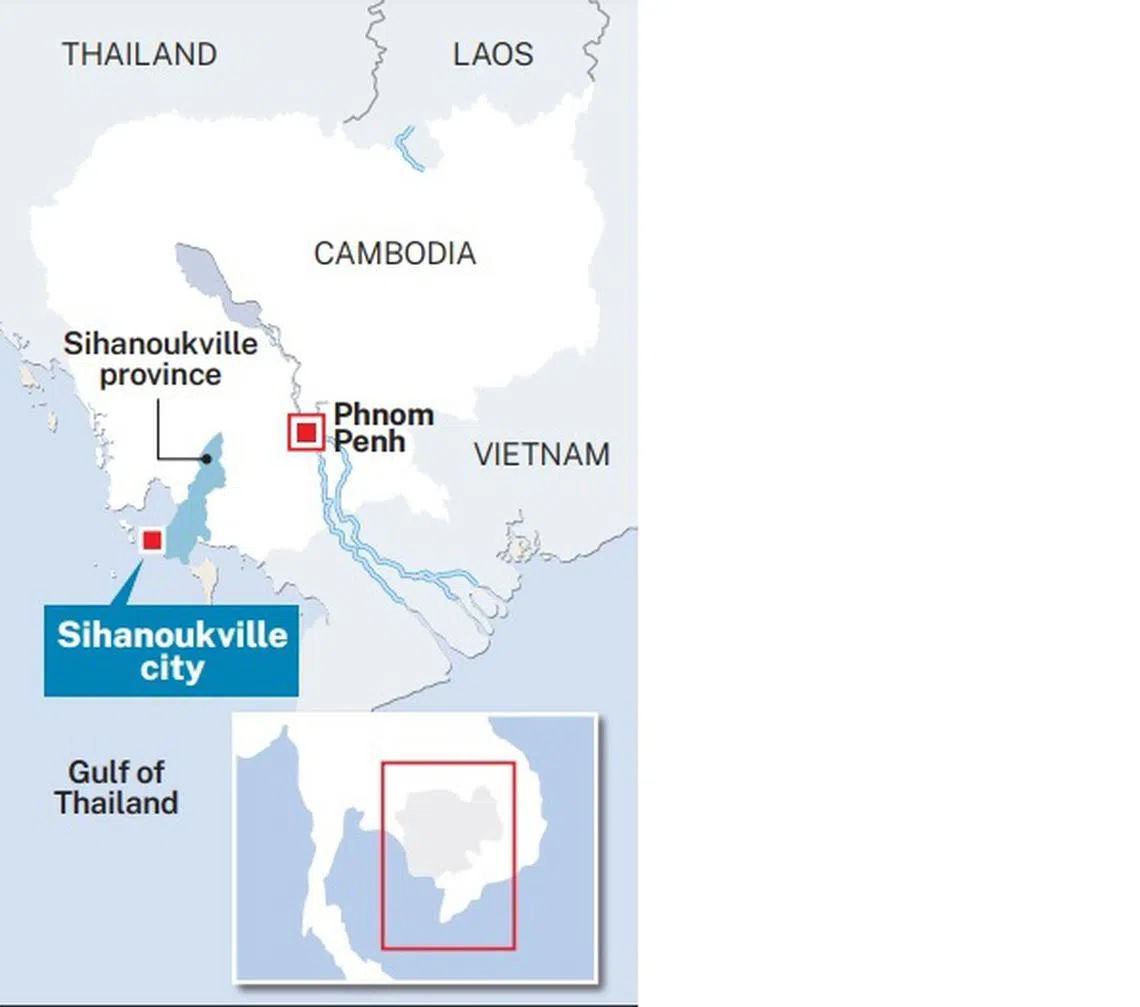
CAMBODIA’S Sihanoukville province is a key strategic location in China’s Belt and Road Initiative. Its Special Economic Zone (SEZ), run jointly by China and Cambodia, has attracted 170 international enterprises and reported a trade volume of US$2.234 billion last year.
The SEZ has transformed Sihanoukville into a hub for textiles, leather goods and construction materials – but also turned the city into casino central.
After a 2019 ban on online and arcade gambling, followed by the Covid-19 pandemic, Chinese capital withdrew from the city. With the former hustle and bustle now a distant memory, is Sihanoukville – once known as the “Gold Rush” city – losing its shine?
The gambling boom… and bust
Some 10 years ago, Sihanoukville’s clear blue waters and white sandy beaches made it a favourite of Western backpackers. That “sleepy” town was roused from its slumber by a flood of Chinese capital beginning in 2013.
Cambodia’s lax financial policies and the legalisation of its gaming industry attracted droves of Chinese investors to open casinos, driving a boom in gaming-related sectors and construction. By early 2019, Sihanoukville boasted nearly 100 casinos, with new buildings sprouting up across the city.
According to Sihanoukville provincial government data, 90 per cent of businesses in 2019 were Chinese-owned and managed, from hotels and casinos to retail and services. Of the US$1.3 billion in foreign direct investment (FDI) from 2016 to March 2018, US$1.1 billion was from China.
But the rise of gaming also brought a wave of crime, plunging the development of Sihanoukville into controversy.
In the name of public safety and order, the Cambodian government banned online and arcade gambling on August 18, 2019, in a watershed moment for Sihanoukville’s development.
With many casinos having held online gambling licences, this prompted an exodus of hundreds of thousands of Chinese citizens involved in the industry. Many returned to China – and decided to stay after pandemic curbs made travel challenging.
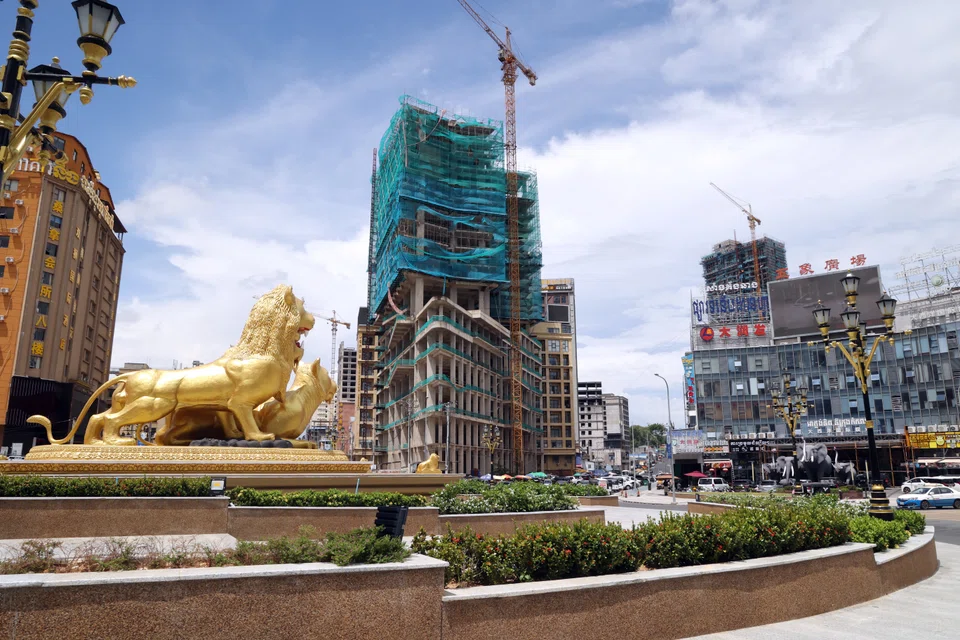
Sihanoukville’s economy was hit hard. Many construction projects linked to the gambling boom were halted after the news of the ban, with hundreds of unfinished buildings dotting the cityscape.
Lawrence Lennon, managing director of CBRE Cambodia, estimates that there are 1,000 unfinished buildings in Sihanoukville. He told Lianhe Zaobao that most were related to the gaming industry, and almost all were backed by Chinese investors. “Some of them were casinos, some for housing the people that were working there, or for some sort of gaming activity.”
Ivan Franceschini, a postdoctoral fellow at The Australian National University’s Australian Centre on China in the World, said that much of the construction could not be completed because the developers had run out of money. Some investors also abandoned their ventures upon realising that the online gambling ban would wipe out any hope of returns.
Not only did the ban cause significant losses for overseas investors, many Cambodian and Chinese workers were owed wages and had to leave empty-handed, said Franceschini, who is studying China’s impact on Cambodian society.
When this reporter visited Sihanoukville in May, faded “for sale” and “for rent” banners hung at construction sites of unfinished buildings. Some sites were abandoned and overgrown with weeds; others had been turned into car parks.
There have been practically no real estate transactions in Sihanoukville in the past 2 years, said CBRE Cambodia’s Lennon: “The market went from a situation of demand to a situation of high supply. I’m sure a lot of people want to exit and sell, but the demand wasn’t there.”
Many residents see the half-built projects as a blight on the city’s image. Undergraduate Marida, 18, said: “These unfinished buildings make people uncomfortable. If Sihanoukville were to develop into a tourism destination, these empty buildings would leave a bad impression on visitors.”
The Cambodian government is reportedly in talks with stakeholders of the unfinished projects, to pave the way for construction to restart.
Return of foreign investment
A Sihanoukville government spokesperson said in May that more and more foreign investors are returning, and some projects have resumed: “In terms of the construction work, we have seen some progress, though not much.”
China is Cambodia’s top trading partner and its biggest source of FDI and inbound tourists. As of 2021, Cambodia has attracted US$41 billion in FDI, with US$18 billion or 43.9 per cent from China – reflecting the hefty role of Chinese capital in Cambodia’s growth.
It is widely thought that once China relaxes its zero-Covid policy and travel curbs, Chinese investors will return and Sihanoukville’s economic engine will restart.
Ross Wheble, country head for Knight Frank Cambodia, said: “We are now starting to see several major local developers launching projects in Sihanoukville as the market is coming back now that Cambodia has fully reopened its borders to vaccinated travellers.
“We are confident the majority of these buildings will be completed once China lifts its zero-Covid policy.”
Daryl Lim is a journalist with Lianhe Zaobao’s Foreign News Desk. This article is part of a collaboration on a series of weekly features translated from Lianhe Zaobao. The original story first appeared on July 3. The next package on July 18 will take a look at Chinese electric vehicle companies and their plans in South-east Asia.