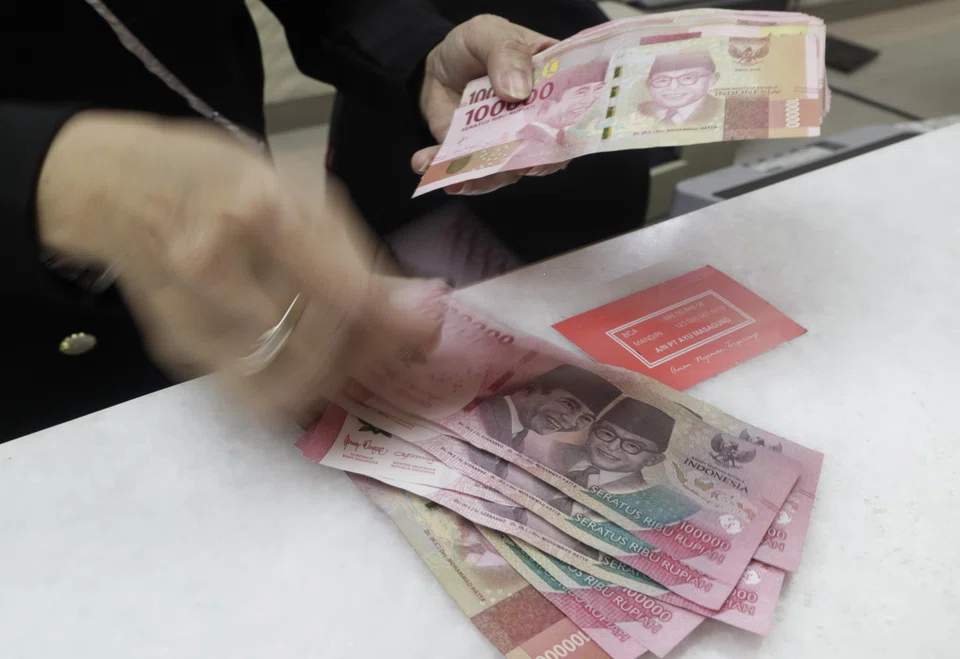
Asean currencies turn the tide against the greenback after a rocky start to the year
Ringgit is region’s top performer as it charts year-to-date gain of more than 3 per cent against US dollar; Thai baht seen as next likely candidate

SOUTH-EAST Asia’s struggling currencies are regaining their footing against the US dollar, following a tough first half of the year that saw some of them plunge to new lows and others hitting multi-year troughs nearly every day.
Economists say Asean currencies have been buoyed by a multitude of factors, including external ones such as concerns of a recession in the United States, weaker-than-expected US data and a repricing of the pace of US rate cuts.
Following the Bank of Japan’s surprise hike on Jul 31 to around 0.25 per cent from a range of zero to 0.1 per cent, debate around additional rate hikes has been marked by an overall hawkish tone, which has driven the yen further upwards and lifted a number of Asian currencies.
Domestically, the region’s central banks have also intervened in various ways to stabilise their local currencies.
Malaysia’s Bank Negara has been urging state-linked firms to repatriate and convert their foreign investment income, while Bank Indonesia, Bank of Thailand and Bangko Sentral ng Pilipinas intervened in the middle of the year to buffer their slipping currencies.
Additionally, from a macroeconomic perspective, the ongoing recovery in the tourism sector and a turnaround in exports have helped to support Asean currencies, said economist Denise Cheok of Moody’s Analytics.
Ringgit strength to continue
The Malaysian ringgit is the region’s top performer, having erased all its losses for the year to gain more than 3 per cent against the US dollar since January, as at Monday (Aug 12).
Recall that the ringgit, crowned the worst-performing currency in emerging Asia last year, had in February weakened past 4.8 to the US dollar – a threshold last breached during the Asian financial crisis in the late 1990s. In April, it again teetered near its record low.
But dovish signalling from the US Federal Reserve and rosier domestic prints on growth and foreign inflows have buoyed the ringgit, which, until last week, was charting its longest winning streak against the greenback in 14 years.
Maybank’s regional head of FX and strategy Saktiandi Supaat believes that the ringgit’s outperformance “can continue, given the better optimism amid bold fiscal reforms, strong growth and rising foreign-investor interest”.
He added: “On balance, USD trajectory aside, assuming an improvement in growth outlook, fiscal position and assuming a stable political environment ahead, we believe it is still generally ringgit-positive into the year end.”
Baht: Up next to recoup losses
The Thai baht, which recently recorded the steepest year-to-date loss among its Asean peers, has since narrowed its losses and is now positioned to follow in Malaysia’s footsteps by potentially reversing its losses for the year.
Compared with its year-to-date loss of more than 8 per cent against the US dollar at the end of April, the baht has now strengthened to around 35.2 per US dollar, translating to a more modest loss of about 2.7 per cent.
MUFG Bank’s senior currency analyst Lloyd Chan believes that the baht has “a good chance” of recouping its losses for the year during the nation’s upcoming peak tourism.
Likewise, Maybank’s Saktiandi foresees a downward trend in the USD-THB pair that will continue into the next year. He remarked that strength in the yen and elevated gold prices are expected to continue bolstering the baht, but also expressed caution about Thailand’s political landscape.
Rupiah: Policy uncertainty caps gains
Leadership transitions and political shifts unfolding in Indonesia are also stirring movement in its currency.
Briefly Asia’s best-performing currency in 2023, the rupiah this year was crumbling to fresh bottoms every other month, hitting a four-year low of 16,450 per US dollar in June, after a shocking breach past the 16,200 threshold in April.
But it started clawing back consistent gains from end-July and soared past the 16,000 mark for the first time since May to land at around 15,972 in the afternoon of Aug 12.
Similar to the ringgit, the rupiah strengthened on the back of favourable domestic conditions and global sentiment.
Although Maybank’s Saktiandi expects the yen’s strength and efforts by Indonesia’s central bank to offer some support to the rupiah, he believes the pair “may still stay elevated and only gradually edge downwards”.
He attributed this to the policy uncertainty surrounding the nation’s transition to its new administration under President-elect Prabowo Subianto.
Philippine peso powers on
The Philippine peso, which was charting a 20-month low in June that was dangerously close to the key 59-per-US dollar benchmark, had soared since the start of August to about 57.3 on Aug 12.
Notable factors buoying the currency include the unexpected uptick in July inflation and robust second-quarter growth prints that were released last week.
The Philippines’ headline inflation grew to 4.4 per cent in July 2024 from a range of between 3.4 per cent and 3.9 per cent in the five months from February till June. Meanwhile, its economy expanded 6.3 per cent in Q2, up from 5.8 per cent in the previous quarter and 4.3 per cent a year ago.
All of this translates into a lower possibility that Bangko Sentral ng Pilipinas will cut rates at its upcoming monetary policy meeting on Thursday.
What’s next?
Economists across the board expect further relief for Asean currencies in the fourth quarter of this year after the Fed cuts rates in September, following which central banks in the region will do the same from the first quarter of 2025.
Noted MUFG Bank’s Chan: “We expect major Asean central banks to keep policy rates unchanged this year to avoid inviting unnecessary currency volatility amid a still highly uncertain global environment.”
A word of caution from Edward Lee, Standard Chartered Bank’s chief economist and head of FX, Asean and South Asia: The greenback’s weakness against regional currencies may well be limited should a refocus on potentially hawkish trade policies amid the elections or a short-term bounce in US economic data emerge.
Remarked Cheok from Moody’s Analytics: “The manufacturing sectors in many of these economies are also expected to pick up in 2025 as global growth gains momentum from rate cuts, and this will also help shore up the Asean currencies.”
TRENDING NOW
Despite the de-dollarisation debate, demand for dollar liquidity in Asia is growing
URA to review guidelines on floor space to give developers more design flexibility: Chee Hong Tat
He built the Vingroup empire. Now South-east Asia’s richest man is handing some key roles to his sons
Can a first-time homebuyer couple earning S$18,000 a month afford a new EC unit?