Asean Business logo
SPONSORED BYUOB logo

Asean growth expected to surpass China in 2022: analysts

Mindy Tan
Mindy Tan

Published Wed, May 25, 2022 · 05:50 AM
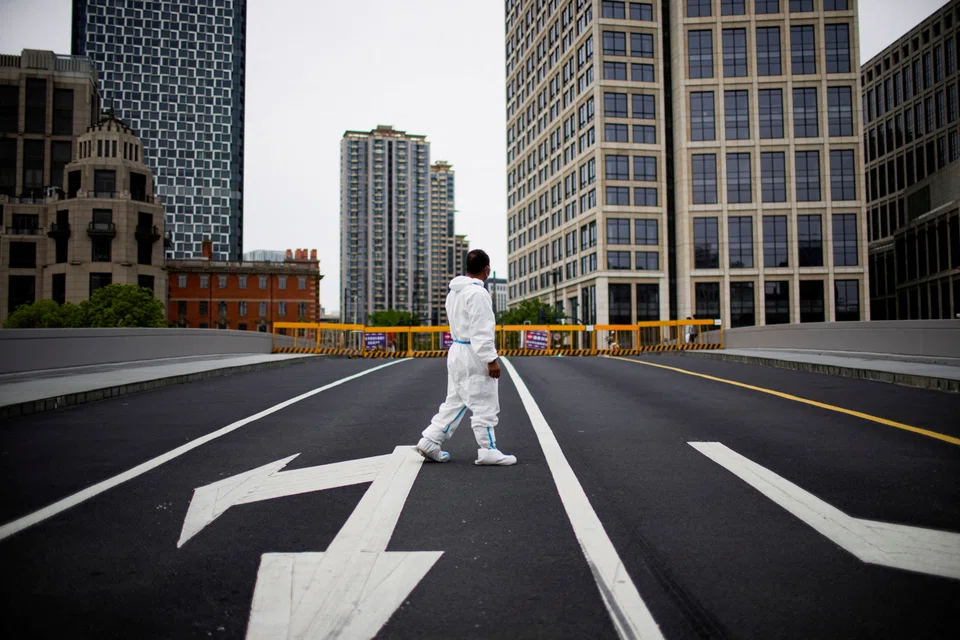
    • Shanghai, China’s financial hub with more than 28 million people, remains in lockdown for almost 2 months, though more residents are recently allowed to go out to shop for groceries. 
    • Shanghai, China’s financial hub with more than 28 million people, remains in lockdown for almost 2 months, though more residents are recently allowed to go out to shop for groceries.  REUTERS

    THE extreme polarity in Asean’s and China’s approach to Covid-19 is making its impact felt, with economists projecting that 2022 could be the first time in 30 years that gross domestic product (GDP) growth of the Asean-6 outpaces China.

    Maybank analysts say they expect Asean-6’s GDP to grow at 4.9 per cent in 2022, faster than China’s 4.5 per cent. Dropping Singapore, which is further along in terms of post-Covid recovery, they expect Asean-5 growth for 2022 to come in at 5.2 per cent.

    The Asean-5 region comprises Indonesia, Malaysia, the Philippines, Thailand, and Vietnam.

    “Asean is adopting a ‘living with Covid’ strategy in a new endemic normal, as opposed to China’s ‘zero-Covid’ strategy,” said the analysts, noting that as a result, mobility indices have largely returned to pre-pandemic levels across Asean and that visitor arrivals are surging from their lows, even as they remain well below pre-pandemic levels.

    China and Hong Kong, meanwhile, are still imposing strict lockdowns and maintaining tight borders.

    “There is no clarity and timeline on when China will shift away from its zero-Covid policy,” Maybank analysts Chua Hak Bin, Lee Ju Ye, Brian Lee and Luong Thu Huong said.

    Asean Intelligence

    Get insights into businesses across South-east Asia

    Get the free report

    “Supply chain disruptions and port delays continue in China’s largest ports including Shanghai and Shenzhen.”

    The International Monetary Fund (IMF), meanwhile, said it expects the majority of these 6 Asean countries to do better than China.

    In its World Economic Outlook published in April, the fund is forecasting Asean-5 to grow at 5.3 per cent, versus China’s 4.4 per cent. A full breakdown of the Asean-6 countries sees the Philippines top the chart at a projected growth of 6.5 per cent, followed by Vietnam (6 per cent), Malaysia (5.6 per cent), Indonesia (5.4 per cent), Singapore (4 per cent) and Thailand (3.3 per cent).

    The Organisation for Economic Co-operation and Development (OECD) in its Interim Economic Outlook published in March this year projected that Asean as a whole would outgrow China this year, at 5.2 per cent versus China’s 5.1 per cent. For the Asean-6 countries, projected GDP growth for 2022 is: the Philippines (7 per cent), Vietnam (6.5 per cent), Malaysia (6 per cent), Indonesia (5.2 per cent), Singapore (4 per cent) and Thailand (3.8 per cent).

    Sian Fenner, lead economist at Oxford Economics, noted that there is “good reason for the more optimistic outlook” this year after activity and spending in the region were disrupted in 2021 due to the Covid delta variant. The standout exception is Singapore, which is already more advanced in the recovery cycle.

    “The region moving to living with Covid and the easing in pandemic restrictions and some release in pent-up demand will support stronger domestic demand this year, even though we expect higher inflation and business costs to dampen the recovery somewhat,” she said.

    “The recovery in domestic demand comes at a time when the external challenges have risen,” Fenner added. “The reopening of borders and easing of travel restrictions will also support a partial recovery in tourism which will further boost growth.”

    Meanwhile, OCBC economist Wellian Wiranto has projected “comfortable” growth for Indonesia and Malaysia, crediting the strength in commodities as playing a big role in supporting the overall growth momentum in both countries.

    “Even if there is always a risk of some unfriendly variant that might throw everything asunder yet again, as it stands, their borders are reopening once more and the economic activities have stepped into the endemic stage on the back of high vaccination rates. That is probably what would set Asean apart from China in terms of economic support factors in the near term.”

    Cai Daolu, a visiting senior fellow at NUS Business School, pointed out that the growth figures reflect the timing of each country’s reopening and are relative to previous bases.

    “China had spectacular growth of 8.1 per cent in 2021 whereas Asean reported modest growth amidst the current pandemic,” Cai pointed out, noting that before the recent lockdowns in Shanghai and other parts of China, IMF’s projections for China were 5.6 per cent growth.

    “The Asean economy is reopening but in contrast, China is now facing challenges with the containment of the virus. In that sense, the varying timings of the reopening pace of these countries (also) reflect the differences in the forecast.”

    Indeed, China was among the first countries to bring Covid-19 under control, resulting in its 8.1 per cent growth rate in 2021, its best since 2011.

    Nanyang Technological University’s Associate Professor Paul Yip Sau Leung said that he expects China’s growth to be weak for quite a while but “sooner or later, it will come back up”, noting that China continues to invest in building blocks such as its foreign direct investment into Africa.

    Tommy Wu, lead economist at Oxford Economics, recently downgraded his growth forecast for China to 4 per cent, from 4.8 per cent when the Shanghai lockdown just started.

    As a result of the lockdowns, China’s economic activity experienced its most severe contraction in April since Q1 2020, during the first wave of the Covid-19 pandemic.

    In particular, the prolonged Shanghai lockdown and its ripple effect through China, as well as logistics delays resulting from highway controls in parts of the country, severely affected domestic supply chains, noted Wu.

    “While Shanghai is starting to reopen and more significant progress will likely be made in June, the disruptions to China’s industrial production and exports will extend well into June,” he told The Business Times.

    Wu expects China’s economy to see a more “meaningful recovery” in the second half, barring a Shanghai-like lockdown in another major city.

    “While the government has prioritised Covid containment, it is also determined to support the economy through more forceful infrastructure spending and targeted monetary easing to support SMEs, the manufacturing and real estate sectors, and infrastructure financing,” he added.

    Decoding Asia newsletter: your guide to navigating Asia in a new global order. Sign up here to get Decoding Asia newsletter. Delivered to your inbox. Free.

    Copyright SPH Media. All rights reserved.