



Asean has benefited from US-China trade war, but it is stuck in a complicated spot
It is exporting more to the world’s largest economy yet growing exports may not necessarily be helping the region

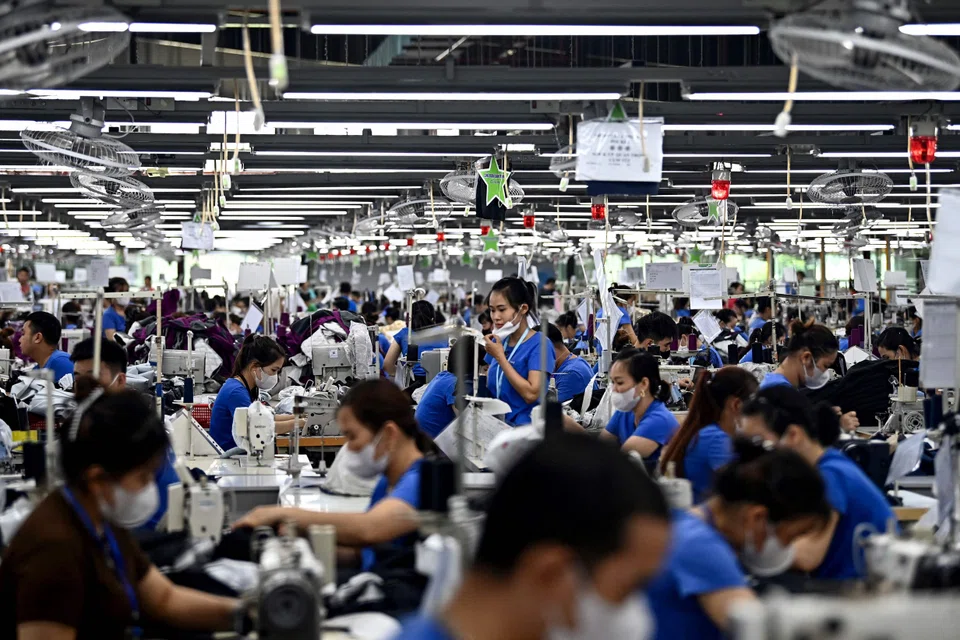
[SINGAPORE] South-east Asia has often been painted as a beneficiary of the trade war between the US and China.
Trade numbers from South-east Asia to the US backs up that sentiment.
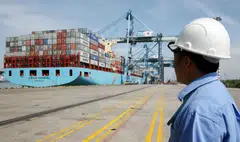
Exports from the region as a whole to the US have increased exponentially since 2017, the year before Washington started the trade war with Beijing during US President Donald Trump’s first term in the White House.
The trade war drove what some analysts termed “friend-shoring”, where businesses that made products in China invested in manufacturing capacity in economies deemed to be more politically aligned with Washington, or even in the US itself. This supply chain restructuring was then further accelerated by the Covid-19 pandemic.
Economies in South-east Asia such as Malaysia, Thailand and particularly Vietnam were on the receiving end of investments from manufacturers, which has subsequently helped bump up exports from those economies to the US, the world’s largest consumer market.
Yet while the region has been painted as a beneficiary due of the trade war, it is stuck in a complicated spot as the increased foreign direct investments (FDI) and surging export numbers have arguably not helped many of the region’s economies move up the value chain, leading to one analyst calling it a “mixed blessing” and another analyst warning that 2026 could pose a risk to the region’s “China plus one” strategy for growth.
“Much of the diversification from China has been Chinese companies diversifying from China, in part to avoid US tariffs,” said Steve Okun, chief executive officer of the Singapore-based strategic advisory firm Apac Advisors. “A US-China trade deal in 2026, which will include tariff reduction, could have a negative impact on South-east Asia.”
South-east Asia’s increasing exports of goods to the US from 2017 has coincided with a trending decline in Chinese exports of goods to the US according to data from the US Census Bureau. South-east Asian economies broadly enjoy lower tariffs to export to the US when compared to China at the moment.
“If the tariff differential narrows, some of these companies that diversified from China because of the increased cost to export from China will return. This is because China’s ecosystem at every level can do what no other country can do,” Okun said, adding that it could affect countries such as Vietnam.

The prowess of China’s manufacturing ecosystem is a point also noted by Priyanka Kishore, director and principal economist at the consultancy Asia Decoded.
She argued that while Chinese businesses have expanded their footprint at a record pace across South-east Asia, Chinese firms often source most inputs and components from the mainland and use South-east Asia mainly as an assembly base.
Beyond sourcing inputs and components from mainland China, Chinese to South-east Asia have also risen over the past few years as Chinese companies look for new markets and consumers.
In 2017, China exported US$43.4 billion more in goods to South-east Asia than it bought from the region according to calculations using data from China’s General Administration of Customs. That surplus rose to US$190.7 billion 2024.
So, while Chinese investments are increasing, and consumers and some businesses in South-east Asia may be benefiting from the new source of cheap inputs and final products, Kishore argued this is a “mixed blessing” for the region as it has raised concerns about the erosion of domestic manufacturing.
Researchers writing for Fulcrum, which is published by the Singapore-based think tank Iseas-Yusof Ishak Institute, noted a similar trend earlier this year as they looked into the impact of China’s investments in South-east Asia.
The report noted that the average annual value of Chinese greenfield FDI in manufacturing in South-east Asia doubled from US$6.1 billion between 2016 and 2019 to US$12.9 billion between 2020 and 2023.
The average annual value of Chinese greenfield FDI in manufacturing was also significantly larger than that from the US, Japan and South Korea over those two time periods.
But while the increasing FDI has resulted in an increase in manufacturing value added across South-east Asia, it has not necessarily brought about higher-value-added processes or spurred transitions to higher-value goods.
The researchers quoted the Economic Complexity Index (ECI), a study by the Growth Lab at the Harvard Kennedy School that measures a country’s productive capabilities by analysing the number and complexity of what the country exports, which can be a proxy for knowledge intensity within an economy.
The report in Fulcrum noted that while the ECI has notably risen in the Philippines, Vietnam and even Myanmar, it has remained stagnant in other developing South-east Asian economies.
Manufacturing has traditionally played a key role in the economic growth of developing countries as it creates numerous jobs, both directly and indirectly.
Manufacturing can also increase value-add, such as by transforming raw materials into finished products, which in turn can also help a country move up the economic ladder.
South-east Asian governments have been trying to develop their manufacturing sectors.
For instance, Indonesia’s export ban of raw nickel ore in 2020 has forced companies to process nickel domestically. Nickel is used in making stainless steel and electric vehicle batteries. Thailand has also dangled incentives to attract electric-vehicle companies to manufacture in the country as Bangkok tries to diversify its vehicle manufacturing ecosystem.
Yet the same Fulcrum report argued that several Asean countries are still struggling to develop their economies to produce higher-value goods.
The report noted five Asean countries – Vietnam, Thailand, Indonesia, Malaysia and Cambodia – ranked among the top 15 global recipients of Chinese manufacturing FDI from 2016 to 2023.
But out of the five, Malaysia and Thailand have seen little improvement in their ECI scores, while Indonesia and Cambodia remain relatively undiversified and less capable of producing sophisticated goods and services compared with the global median.
A report from The Business Times in July also suggested that a surge in Chinese companies and investments flooding South-east Asia may not be the best sign for the region, noting that Thailand’s manufacturing output has continually decreased and Indonesia’s textile sector has been shedding thousands of jobs.
Kishore argued that Asean governments must make manufacturing competitiveness a policy priority to keep benefiting from the trade war between Washington and Beijing.
“Asean’s low labour costs, large reserves of key raw materials like copper, tin and nickel, have made it a key beneficiary of the US-China trade war. But the outlook is increasingly complicated by the shifting tariff landscape under Trump 2.0, US onshoring efforts and the intensifying competition from Chinese manufactures,” Kishore said.
Decoding Asia newsletter: your guide to navigating Asia in a new global order. Sign up here to get Decoding Asia newsletter. Delivered to your inbox. Free.
Copyright SPH Media. All rights reserved.






