Asean an investment sweet spot, Indonesia a ‘sitting jackpot’: UOBAM

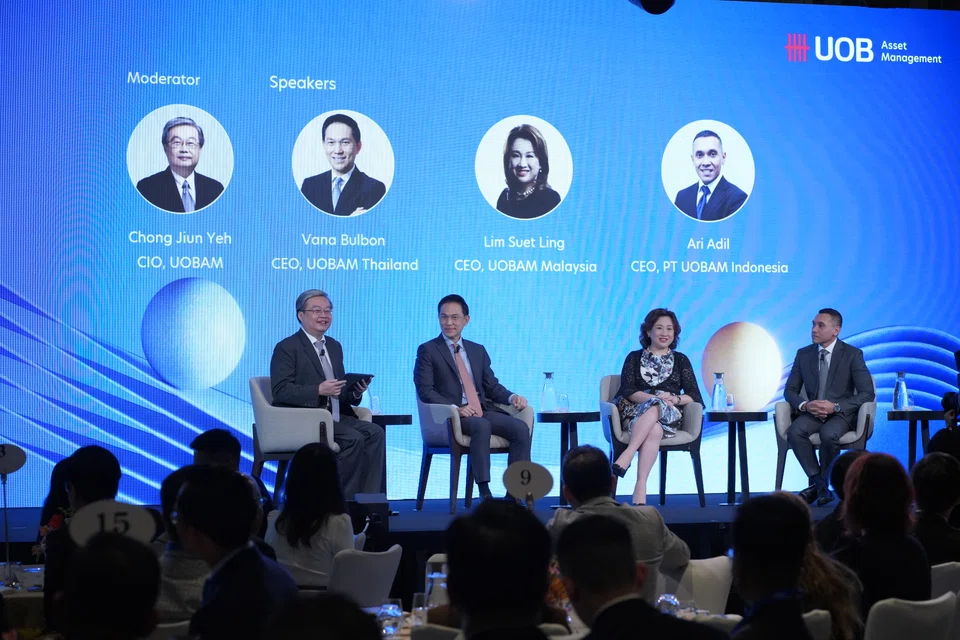
WHEN it comes to investment opportunities, Asean is in a “very sweet spot”, with Indonesia – home to five out of the seven key minerals needed for electric-vehicle (EV) batteries – “a sitting jackpot”, speakers said at UOB Asset Management’s (UOBAM) annual investment outlook conference.
Even though Asean is a trading bloc, the economies are not homogenous. Most are emerging in status and are at different points in their economic cycles. They also have differing interest-rate policies and political considerations. Thus, there are opportunities to be explored, such as healthcare infrastructure and medical tourism.
Vana Bulbon, chief executive officer (CEO) of UOBAM Thailand, noted that US market capital versus gross domestic product is at 1.9, while for Asean, the ratio is 0.6, which implies room for the capital market to grow.
“When I think about Asean’s potential, we are in a sweet spot to become very big, in fact, with the size of assets doubling from US$4 trillion to US$8 trillion in 2030. It will become the world’s fourth-largest economy,” he said.
Francis Eng, chief investment officer (CIO) of UOBAM Malaysia, said that there are big opportunities in the global supply-chain shift as a result of China+1 diversification: “We think the best opportunities are tech-related manufacturing. Venture Corp in Singapore is an example of such a company.”
Lim Suet Ling, CEO of UOBAM Malaysia, was optimistic about wealth management in Malaysia, and the growing demand for syariah-compliant products. She added that clients are looking for stability and capital preservation, as well as climate-related investments.
Asean’s Internet space also presents financing opportunities, when unicorns in the private arena emerge to seek funding from initial public offerings.
Indonesia, South-east Asia’s largest economy, is no longer a mere commodities play. As one of the world’s top producers of battery minerals and the first global producer of nickel, an essential component to produce lithium-ion batteries, the country is at the heart of the EV revolution.
Colin Ng, head of Asia equities, UOBAM, said: ”With five out of seven essential minerals to make EV batteries, Indonesia is almost like a sitting jackpot… When you invest in Indonesia, you are basically investing in the future.”
As income per capita reaches the US$500 level, consumption is expected to take off, creating significant opportunities in the archipelago. Indonesia’s economy grew 5.3 per cent in 2022, back to pre-pandemic growth. It attracted some US$43 billion in foreign direct investment (FDI) last year, the highest in its history.
Ari Adil, CEO of UOBAM Indonesia, expects FDI into Indonesia to grow 50 per cent in 2025 to about US$65 billion. This will be supported by key sectors including commodities, infrastructure development, tourism and manufacturing of high-value products, such as EV batteries.
Looking at Vietnam, Eng expects this year to be better than last year, given that the worst is over for the probe into a case of fraud, in which trillions of dong were allegedly appropriated from investors in 2018 and 2019. Noteworthy themes include industrial estate developers as proxies to the electronics sector, infrastructure and airports.
Watson Li, Ping An Fund Management’s head of equity investment, believes that the macro environment is returning to normal. Global inflation is improving, monetary tightening is moderating and Sino-US relations are de-escalating.
In the mainland, the real estate sector risk is being managed, with housing demand estimated at one billion square metres every year. Elsewhere, the government has effectively managed risks.
The distressed rate in the industrial sector has continued to decline over the last four years. Excess capacity in steel, coal, cement, glass and non-ferrous metals has been falling. Banks’ off-balance-sheet activities have been completed. The risk of high-risk financial institutions, such as Baoshang Bank, has been resolved, while resolution of Huarong is underway.
Li was optimistic that foreign money will return to the A-share market, with the Covid-19 impact diminishing and stock valuations at historic lows.
Anthony Raza, head of multi-asset strategy in UOBAM, believes there is more potential, as well as “underappreciated positive trends”. He noted: “I don’t want to oversell that inflation is going away really quickly. But whether it is headline or core inflation numbers, or underlying data trends, we are getting pretty optimistic,” adding that this is normalising faster than expected.
He expects a soft landing for the US, and suggests that investors should start getting into equities.
UOBAM is cutting the cash levels in its portfolios, which stood at 20 per cent in the last nine months of 2022: “We are getting back closer to what we think of as our strategic asset allocations. We are investing in bonds. We are overweight Asia because we are getting better yields and equities.”
Thio Boon Kiat, CEO of UOBAM, said that priorities for the fund manager this year include meeting investor demand for more income-paying solutions; leveraging Asean opportunities and the China reopening story; and managing liquidity and volatility risks.