Asean Power Grid projects could attract more Chinese investor interest in 2026
Clean-power manufacturers from China have been expanding in Indonesia, could seize more opportunities with cross-border projects

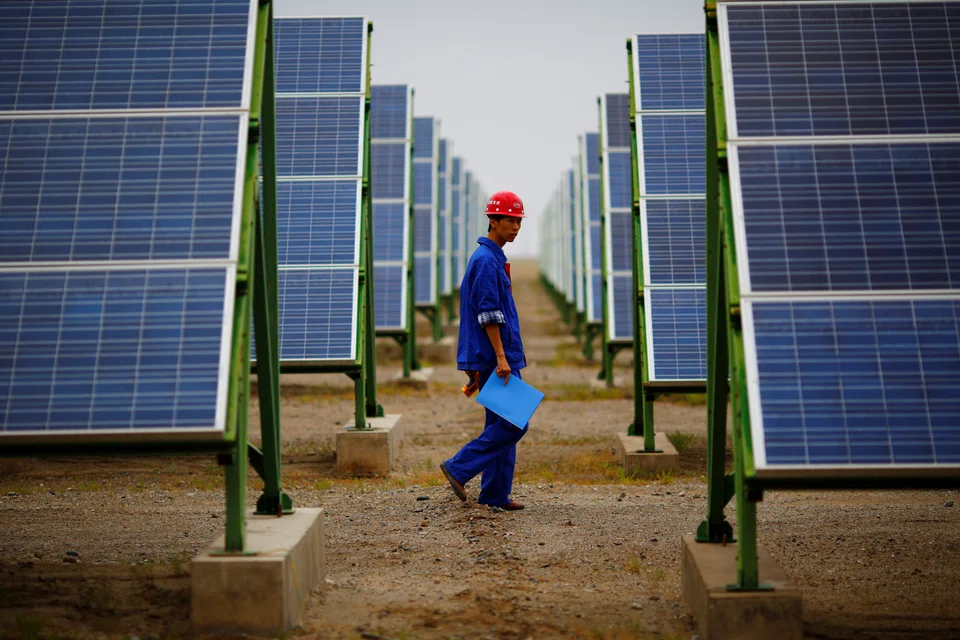
[SINGAPORE] China’s clean-power players and investors are poised to expand their footprint in South-east Asia in the coming year, riding on the momentum of a region-wide effort to build cross-border energy linkages.
The effort, dubbed the Asean Power Grid (APG), aims to link up the power systems of the bloc’s member countries by 2045.
It is a “strategic opportunity” for Chinese players to expand their presence in South-east Asia, said Nevi Cahya Winofa, a renewables and power research analyst at Rystad Energy.
“We have seen this trend in Indonesia, where local content requirement for cross-border projects has led many Chinese manufacturers to establish local manufacturing facilities,” she said.
“These investments not only support Indonesia’s domestic manufacturing ambition, but also allow Chinese firms to diversify their export markets amid geopolitical uncertainties.”
Chinese manufacturers that have done so include solar player LONGi, which in June announced a collaboration with Indonesian state-owned energy company Pertamina to set up a solar panel manufacturing facility.
'%3e%3cpath%20d='M12.1475%2025.5262C13.7713%2025.4295%2014.94%2023.913%2014.94%2021.8832C14.94%2019.5359%2013.474%2018.093%2011.5917%2018.093C11.3745%2018.093%2010.9582%2018.093%2010.8393%2018.1413V25.2086L11.8891%2025.5745C11.8891%2025.5745%2012.207%2025.5262%2012.1475%2025.5262ZM11.4934%2017.6281C13.2567%2017.6281%2014.3843%2016.4292%2014.3843%2014.4501C14.3843%2012.372%2013.275%2011.2973%2011.4339%2011.2973H10.8393V17.6305H11.4934V17.6281ZM6.66078%2025.6482L7.39265%2025.5492C8.02617%2025.4502%208.26403%2025.3053%208.26403%2025.1097V11.6149C8.26403%2011.4193%208.1451%2011.3709%207.23484%2011.249L6.68137%2011.173L6.6219%2010.7588H11.9508C15.7153%2010.7588%2017.0624%2012.0797%2017.0624%2014.1578C17.0624%2015.9666%2015.7748%2017.1909%2013.4969%2017.6305V17.7041C16.111%2017.948%2017.6571%2019.5382%2017.6571%2021.7636C17.6571%2024.3318%2015.8937%2026.0417%2012.1109%2026.0417H6.60132L6.66078%2025.6482Z'%20fill='%232B2B2B'/%3e%3cpath%20d='M20.6287%2025.6505L21.5596%2025.5515C22.1725%2025.4779%2022.4104%2025.3076%2022.4104%2025.112V11.249H21.9346C20.073%2011.3479%2018.982%2013.0095%2018.408%2014.6227L18.1907%2015.5018H17.6555L18.1701%2010.7588H29.3837L29.6421%2015.4787H29.1664L28.9491%2014.6227C28.3728%2012.8645%2027.3047%2011.2743%2025.5002%2011.249H24.9856V25.1856C24.9856%2025.3812%2025.1251%2025.4548%2025.9965%2025.5515L26.7695%2025.6505L26.829%2026.0417H20.5693L20.6287%2025.6505Z'%20fill='%232B2B2B'/%3e%3c/g%3e%3cdefs%3e%3cclipPath%20id='clip0_5242_21648'%3e%3crect%20width='24'%20height='16.8'%20fill='white'%20transform='translate(6%2010)'/%3e%3c/clipPath%3e%3c/defs%3e%3c/svg%3e)
Another Chinese solar panel maker, Trinasolar, is supplying modules to a project to export solar power from the Riau Islands to Singapore. The project is by a joint venture between Singapore-based Gurin Energy and Gentari, a clean-energy player set up by Malaysia’s Petronas.
Chinese state enterprises are also getting in on the action. In October, Singapore’s Equator Renewables Asia announced that it is teaming up with CRE International, a unit of state-owned enterprise China National Nuclear Corp (CNNC), on a separate project to import solar power from the Riau Islands into Singapore.
CNNC is the primary entity responsible for overseeing all aspects of China’s civilian and military nuclear programmes.

Nevi said the deal “illustrates China’s growing appetite to invest directly in APG projects”.
Ella Chen, a senior analyst for power and renewables in Asia-Pacific at S&P Global Commodity Insights, said South-east Asia is a vital market for China’s “Big Five” energy companies: CHN Energy, Huaneng, SPIC, Huadian and Datang.
The region contributes nearly 40 per cent of the five companies’ combined overseas portfolio, in terms of the operating installed capacity, she noted.
Nevi believes Chinese cable manufacturers may also step into the region, thanks to the demand for subsea high-voltage cables for APG projects.
“Chinese EPC (engineering, procurement and construction) contractors with regional experience, including PowerChina and China Energy Engineering Corporation, could play a key role in delivering these large-scale projects,” she said.
For instance, the Monsoon Wind Project, which is set to supply power from Laos to Vietnam, sources turbines from Chinese wind player Envision and lists PowerChina as its EPC contractor, Nevi noted.
She expects that Chinese players could also take on “pivotal” roles in other APG projects, such as the Brunei-Indonesia-Malaysia-Philippines power integration project, and wind and hydropower corridors between Laos and Thailand.
Drawing Chinese investors
The use of Chinese-manufactured components in APG projects could also open up access to Chinese funding, said Mel Chan, a partner at law firm Clifford Chance.
“We expect that a sizeable portion of the financing of these projects will be provided by Chinese export credit agencies and banks,” said Chan.
Multilateral development banks (MDBs), such as the China-led Asian Infrastructure Investment Bank (AIIB), are also set to play a prominent role in financing APG projects.
The AIIB, which is commonly referred to as China’s response to the World Bank, is a lender in the Monsoon Wind Project.
In October, the AIIB also inked a deal with major regional banks – Maybank, CIMB, AmBank and BPMB – to mobilise up to US$6 billion for infrastructure projects, with the APG highlighted as a key focus area.
Earlier this year, it signed a letter of intent with the Asian Development Bank and the Asean Infrastructure Fund to collaborate on regional infrastructure, including the APG.
Vince Heo, associate research director for South-east Asia power and renewables at S&P Global Commodity Insights, said the backing of the AIIB and other Chinese developers could enhance the cost competitiveness of power import projects.
“Currently, importers are facing commercial challenges due to the gap between consumers’ willingness to pay and the project costs, driven by decline in renewable energy certificate prices and high infrastructure and financing costs,” he said.
Heo estimates that the project costs exceed consumer willingness to pay by about 20 per cent, making it challenging to secure offtakers.
“MDBs like the AIIB could play a pivotal role in reducing project costs by mobilising low-cost financing,” he said.
Chan of Clifford Chance said the involvement of multilateral institutions “could also potentially provide cover for some of the political risks involved”.
While the opportunities are promising for Chinese involvement in the APG, Chen of S&P noted that companies are likely to take a more cautious approach due to geopolitics.
“Projects with lower geopolitical uncertainty, a higher level of readiness in terms of regulatory approval process, and reasonable expected returns will be prioritised,” she said.
Melissa Ng, a partner at Clifford Chance, said the “first-in-market” nature of APG projects means that stakeholders will need to work together to agree on the structure of offtake, and transmission and financing arrangements.
“They will also need to navigate infrastructure constraints, conflicting political priorities and complex local regulations and licensing procedures,” she added.
Decoding Asia newsletter: your guide to navigating Asia in a new global order. Sign up here to get Decoding Asia newsletter. Delivered to your inbox. Free.
Copyright SPH Media. All rights reserved.