Asean readies for Trump’s tariff tantrums, trade turmoil
South-east Asian nations have staked their claim in several economic blocs that exclude the US, leaving the world’s largest economy at risk of losing sway over the region’s economic future

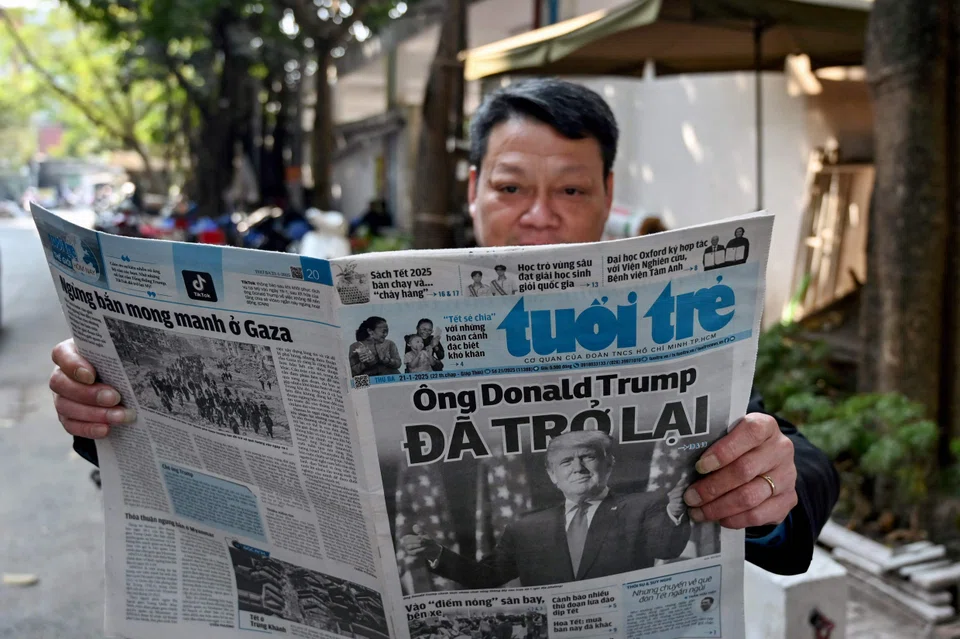
SOUTH-EAST Asia is bracing for impact as US President Donald Trump’s dreaded tariffs make a comeback. But this time, the region is better prepared – armed with stronger trade ties and broader economic alliances to shield itself from a full-blown fallout.
Since the first Trump administration in 2017, Asean member nations diversified their trading partners, intensified ties with other economic blocs and jacked up intra-regional transactions.
“This is exactly what they should be doing,” said Stephen Olson, a visiting senior fellow of the regional economic studies programme at Singapore’s Iseas-Yusof Ishak Institute.
“As the US continues to abdicate its historical role as the leading global force for free trade, it provides both the opportunity and the impetus for others to run with the ball,” he explained.
He added: “While the US continues to be the world’s largest single economy, the Indo-Pacific region is driving global growth, with rapidly expanding middle classes, growing technological sophistication and a continued belief in the benefits of trade.”
Joshua Kurlantzick, senior fellow for South-east Asia and South Asia at the Council on Foreign Relations, believes this “clearly gives South-east Asia more leverage related to the US”.
Though Trump held off on any tariff talk his first day in office, his bluster is not to be taken lightly – as evidenced by Sunday’s (Jan 26) US-Colombia deportation stand-off that ended with Bogota caving in the face of 25 per cent tariffs.
His earlier threats – at best, targeted tariffs; at worst, a 60 per cent levy on Chinese goods and a blanket tax on all imports – are also not off the negotiating table.
Unity rising
Olson believes that South-east Asia’s best defence against the economic turmoil set to be unleashed by Trump is to further deepen regional integration and strengthen ties with global partners.
Take, for instance, the Regional Comprehensive Economic Partnership (RCEP) – the world’s largest free trade pact led by Asean that comprises about 30 per cent of global gross domestic product and a third of the world’s population.
Signed in 2020 by the 10 Asean member nations, Australia, China, Japan, South Korea and New Zealand, the agreement builds on existing Asean+1 pacts and sets out to eliminate tariffs on about 92 per cent of goods traded among members.
“The US might be a big country, but it is not the only country in the world. Others in the world have their own might, and they do not necessarily align with the interests of the US,” said Cedomir Nestorovic, Mannheim Executive MBA Asia-Pacific teaching professor, management department at Essec Business School, Asia-Pacific.
He added: “They do not go against the US without a question, but they can organise about themselves.”
Individual Asean member states have also been claiming new ground.
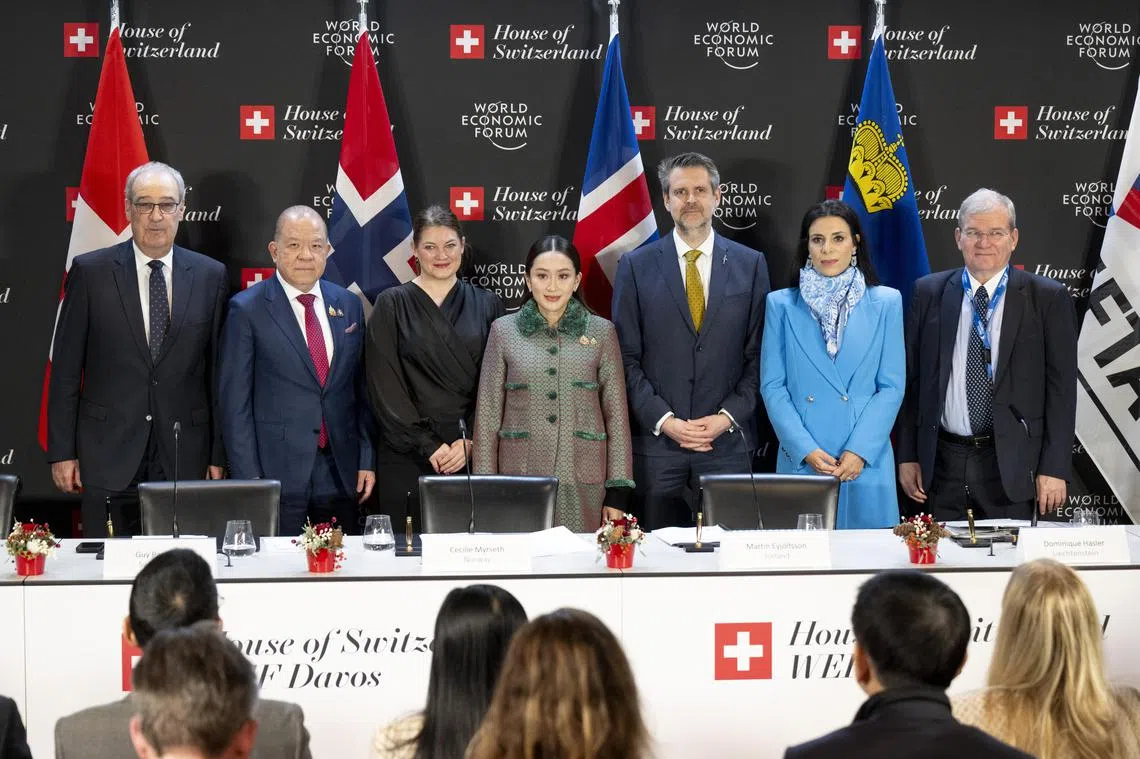
Recently, on Jan 23, Thailand inked a deal with the four member states of the European Free Trade Association – Iceland, Liechtenstein, Norway and Switzerland.
Malaysia on Jan 20 resumed negotiations with the European Union for a free trade pact more than a decade after talks stalled over palm oil disputes.
The Philippines’ free trade deal with South Korea entered into force last December, after it was signed in September 2023.
Another notable example is the Comprehensive and Progressive Agreement for Trans-Pacific Partnership (CPTPP).
Signed in 2018, the 11-member free trade agreement – among Australia, Brunei, Canada, Chile, Japan, Malaysia, Mexico, New Zealand, Peru, Singapore and Vietnam – calls for the elimination of 99 per cent of tariff lines once fully implemented.
With the UK’s accession – the pact’s first non-founding country to join last December – the CPTPP now accounts for about 15 per cent of global GDP.
The CPTPP is the spurned child of what could have been the world’s largest free trade deal – the Trans-Pacific Partnership which covered 40 per cent of the global economy – until Trump withdrew the US from it in 2017.
Prof Nestorovic remarked: “If you are not sitting at the table, you are on the plate – and they will eat you. The US is not sitting on the table for all these organisations.”
Out of the frying pan, into the fire
That said, Asean cannot afford to rest on its laurels.
Bryan DeAngelis, partner and head of stakeholder solutions firm Penta’s Washington office, told BT: “The region is in a stronger position today from expanded trade partnerships and better cooperation, but likely in a more difficult position with Trump… who may view stronger Asean partnerships with other markets as a threat to the US economic position.”
The way he sees it, Trump has a simple frame of mind on foreign policy – whether the US is winning.
“He has a long list of countries and trade issues that have his attention right now,” said DeAngelis, who previously served as communications director and chief spokesperson for former US senator Chris Dodd. “America’s economic competition with China sits high on that list, and Trump will look to the rest of the region through the lens of which nations are allies in that competition.”
Iseas-Yusof Ishak Institute’s Olson, who began his career as an international trade negotiator in Washington DC, noted that South-east Asia’s economic development over the decades is largely due to an orderly, rules-based global trade system.
“Tariff and non-tariff barriers have been steadily reduced and disputes have generally been resolved on the basis of mutually agreed trade rules rather than might and muscle,” he explained.
Thus, Trump’s “might-makes-right approach to trade will further weaken the stable and predictable system that has empowered the trade-dependent countries of South-east Asia”, he added.
“Many of us have taken this system for granted over the years, but we’ll miss it when it’s gone,” he cautioned.
Navigating muddy waters
Then again, it is not all doom and gloom.
Council on Foreign Relations’ Kurlantzick pointed out that Trump has surrounded himself with China hawks – such as new Secretary of State Marco Rubio – who firmly believes in maintaining strong US security ties in Asia, and will resist tariffs targeting key partners.
Prof Nestorovic added that as a contractual businessman, Trump will expect South-east Asia to come to the table with solutions
“Asean has to play this card (and) present the US with a group of countries that are not a threat to the US, but can benefit it in the battle against China and other countries,” he said. “In that case, Asean can position itself as an ally to the US from an economic point of view.”
“If you are not sitting at the table, you are on the plate – and they will eat you. The US is not sitting on the table for all these organisations.”
Cedomir Nestorovic, Mannheim Executive MBA Asia-Pacific teaching professor at Essec Business School
When asked about Trump’s silence on South-east Asia during his campaign, Prof Nestorovic quipped: “When he talks about countries, it means he’ll target them. Let’s take it as a positive thing for South-east Asia.”
Penta’s DeAngelis advises Asean, as he does his clients: Stay focused on the long game; understand Trump and the Republican-controlled Congress; but remember the political pendulum can swing back swiftly.
Simply put, in Olson’s words: “Fasten your seatbelt!”