Asean telecom tower owners draw investors on structural growth, stable cash flows

Yong Jun Yuan
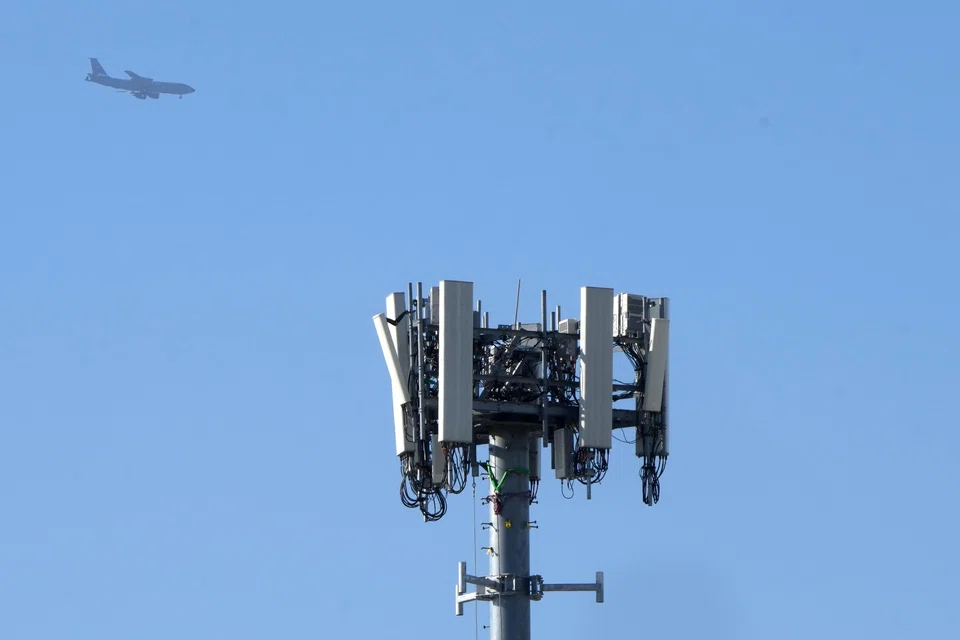
TELECOM tower companies in South-east Asia are attracting investors in search of steady returns amid a volatile market. Such companies also appear well-positioned to benefit from increased mobile data usage and digitalisation in the region.
A Boston Consulting Group (BCG) report published in December 2022 found that telecom infrastructure companies generated an average annual three-year total shareholder return of 16 per cent – above the telco industry median of 9 per cent.
BCG managing director and partner Olivier Rival said tower companies (towercos) are generally stable businesses.
“There’s some investment upfront required to either acquire or build the towers; but after that, you essentially recover those costs through very long-term binding contracts with the operators,” he said, adding that towercos give investors high cash flow predictability as contracts last between 10 and 20 years.
He added that more network operators are selling their towers as a means of generating efficiencies and managing their network investments.
“For a while, (network operators) were considering their towers as extremely strategic assets that they should have full control over.
“While that may be true, actually there’s also a lot of value in just selling those assets to someone else (and) sharing them with others,” he said.
Towercos operating independently of a mobile network operator have other advantages.
Morningstar senior equity analyst Dan Baker noted that their neutrality is prized, as information about where network operators are expanding their networks can be sensitive.
He added that such towers tend to be “a bit of an eyesore”, and governments are reluctant to have more towers taking up land. This could reduce the amount of land available for new tower builds and increase the value of existing sites.
As the Asian telecoms market matures, AlixPartners managing director Sai Tunuguntla noted that there is more room for tower operators to grow alongside demand for more data at higher speeds. This means operating on higher frequencies but shorter ranges, which in turn requires more towers and base stations.
“Whatever towers you can get your hands on, you would like to do that because the network is not going to get leaner; it is only going to get denser,” he said.
Tower operators are taking advantage of the favourable sentiment to raise money and expand.
Edotco, a towerco that is 63 per cent owned by Malaysian telecoms group Axiata Group, raised RM1.4 billion (S$421.9 million) via an Islamic bond offering in September. The offer saw a bid-to-cover ratio of 5.2 times.
Bloomberg reports last year also said Edotco was weighing a US$600 million share sale, and later that it was contemplating raising US$700 million in loans instead.
Edotco operates and manages 55,000 towers across Asia. Its director of group strategy Gayan Koralage said that since its founding in 2012, the company has been able to increase the colocation (or tenancy) ratio of its towers from 1.2 to 1.6.
He added that a lot of data analysis and discipline is needed to find the right locations to build or acquire new towers. The company tries to predict future data traffic over the next 12 to 18 months, and looks for potential hotspots.
Another towerco that raised money last year is Edgepoint Infrastructure. Founded in 2020, it has expanded rapidly to nearly 14,000 towers in Malaysia, Indonesia and the Philippines.
This rate of growth has exceeded the expectations of the company’s chief executive Suresh Sidhu, who was also formerly Edotco’s chief executive.
“We thought that to get to this size, we knew that the opportunities were there, and we thought it would take about maybe four or five years,” he said. He attributes this to telcos optimising their balance sheets and the Covid-19 pandemic spurring a surge in data usage.
“As many countries are getting into the 4G to 5G transition, they will need even more capex…so I think releasing (towers) for cash makes sense,” he said.
In July last year, sovereign wealth fund Abu Dhabi Investment Authority acquired a minority stake in the company with an investment of US$500 million.
As the company scales, Sidhu believes Edgepoint will be able to improve operational efficiencies and secure better financing. Scale will also make the company’s towers more appealing to network operators.
“If you can turn up with a portfolio that is fairly geographically dispersed so that (operators) can have a high degree of matching, they give you colocations,” he said, adding that network operators would prefer working with one towerco over multiple companies.
Rising rates could pressure the towercos, though.
BCG’s Rival noted that many expanded on cheap debt in the past, and may now face margin pressure. As rentals rise for the land on which their towers sit, towercos must also consider whether to acquire the land.
Another risk is the trend towards consolidation of network operators, which could reduce the total addressable market in each country.
“Once operators merge with one another, your number of tenants goes down and your number of revenues go down in proportion,” he said, citing the merger between Hutchison 3 Indonesia and Indosat, the merger of Celcom and Digi in Malaysia, and the merger of True and Dtac in Thailand as some recent examples.
Edotco’s Koralage said the company is making up for this by expanding its service pool, offering, for instance, energy solutions.
In Bangladesh, the power grid may only supply energy for 10 to 12 hours a day. Towers must therefore rely on batteries, rectifiers and generators to stay online – a service Edotco offers to customers.
Edgepoint’s Sidhu believes that with some creativity, towercos can greatly expand their addressable markets beyond mobile network operators.
The company has been trialling remote weather stations that sit on its towers, as well as Internet-of-Things sensors that help manage car parks in Malaysian municipalities. Because towers already have access to power, networking and regular maintenance, they become ideal locations for such use cases.
Added Sidhu: “You have to be more agile and nimble than you might seem, and you have to have a very long-term perspective.”
TRENDING NOW
MAS allocates S$1.45 billion to five asset managers in third EQDP batch: Chee Hong Tat
‘My grandfather’s legacy’: Sherman Kwek lays out three-year plan for CDL to drive returns
‘How many will survive?’: Bubble fears arise as China’s humanoid robotics face reality check
CDL to hire dedicated CEO for fund management as it steps up push into private funds