Asia’s heatwaves are not deterring tourists – for now
Sun-seeking travellers are still coming, but demand may shift towards indoor activities or cooler spots




RECORD-BREAKING heatwaves in South-east Asia have not reduced tourism demand so far, but the growing frequency of such extreme weather may affect longer-term travel patterns, said observers.
“The heatwave has, perhaps, still not crossed that red line yet,” said National University of Singapore Business School professor Lawrence Loh. “But having said that, I think it is natural that travellers will want to consider their well-being in terms of safety and comfort. So if such incidences of heatwaves persist, it will become a significant consideration in the choice of travel destination.”
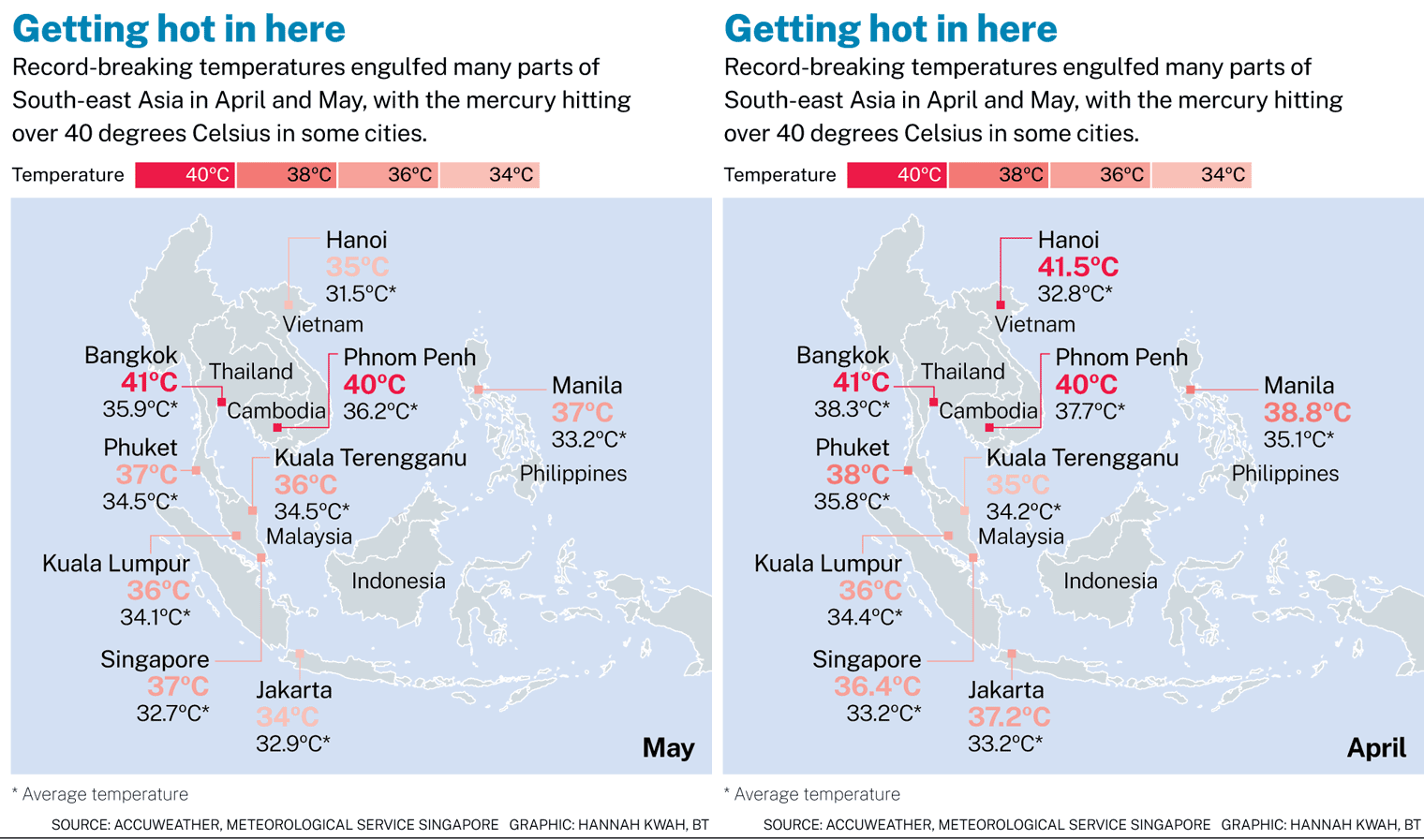
Scorching heat of above 40 degrees Celsius engulfed much of South-east Asia in April and May, with record temperatures in Myanmar, Vietnam, Thailand and the Philippines. The Philippines saw heatstroke deaths and school closures. In Thailand’s capital Bangkok, the heat index – a measure of how hot it feels when humidity is taken into account – rose above 52 deg C in April.
In some areas, heatwaves also meant a lack of rain – and thus a shortage of water, especially for island destinations. Popular Thai resort destination Koh Phi Phi faced a severe water shortage in early May, prompting the authorities to consider shipping water in from the mainland if the dry weather continued. Nusa Penida, a small island south of Bali renowned for its beach resorts and diving sites, has also been grappling with a water crisis since last year, due to a lack of rain.
Demand still hot
Yet, the heat has not thinned crowds at popular beach and resort destinations such as Desaru and Kuala Terengganu in Malaysia, as well as Bali, Indonesia. Malaysian resort operators told The Business Times that occupancy levels remain high, especially during the mid-year school holidays. Peter Wagner, resort manager of Anantara Desaru in Johor, said: “The occupancy levels remained similar to past years with the peaks during holiday and festive seasons.”
At popular diving destination Kuala Terengganu, instructor John Mah said the demand for island trips remains strong. Since the diving season started in end-March, he has brought three groups of tourists on trips, with another four confirmed trips to come.
“Despite the hot weather, tourists’ interest in island trips has not been deterred, as they typically factor in weather conditions before planning their trips,” he added.
Unlike record highs elsewhere, hot weather in Bali has not been as severe as last year, said tour operator Christine Nababan. Clients are therefore still choosing to enjoy activities such as surfing and snorkelling.
Travel agencies suggested that one reason demand has not eased is that it is costly and challenging for travellers to make last-minute changes, given that holidays are normally booked months in advance.
Samantha Tng, executive director of Singapore travel agency Dynasty Travel, said: “Currently, we have not observed any significant changes in inbound tourism arrivals.
“Tours are typically booked 60 days in advance, allowing any weather-related issues to be addressed upon arrival, rather than leading to trip cancellations.”
Escaping the heat
But while sun-seeking globetrotters still head to beaches, others are seeking indoor activities or cooler destinations.
Balinese tour operator Nababan has observed more tourists, particularly families, heading to the island’s mountainous and cooler north. This shift is also driven by the development of tourism facilities in that region in recent years.
On travel-booking platform Klook, reservations by Singapore travellers have risen 10 per cent year on year for cooler South-east Asian destinations such as Cameron Highlands and Genting Highlands.
Beyond the region, Dynasty Travel has seen growing interest in destinations with cooler climates such as Australia, Europe and Japan. It has also received more enquiries about weather-related concerns.
In Singapore, visitors to indoor attractions have risen some 15 to 20 per cent, said Kevin Cheong, managing partner of Syntegrate Tourism and Destination Development Consultancy. He foresees more collaborations between hospitality and retail operators to set up attractions within shopping malls. “These mall-based attractions have sprung up tremendously, especially after Covid, not just in Singapore but places such as Thailand and Hong Kong.”
Wyman Poon, honorary secretary-designate of the Society of Tourist Guides Singapore, said its members have observed a “slight uptick” in indoor and evening tourist activities.
If extreme heat eventually reduces the appeal of beach destinations, Singapore’s indoor air-conditioned spots could become relatively more attractive, noted Coface Asia-Pacific economist Nouri Chatillon. Yet at the same time, as a pit stop for South-east Asia tourism, Singapore may suffer if travellers from beyond the region choose to stay away, he added.
Planning for the future
Some watchers believe the heatwaves will have to get far worse, and much more frequent, to make a big dent in travel demand.
Jesper Palmqvist, area director for Asia-Pacific at hotel industry research firm STR, said: “It would need to consistently be at a level where services don’t work, and I don’t see us there yet.”
Wong Yew Hoong, director of Singapore travel agency EU Holidays, does not expect regional tourism to dwindle unless heatwaves happen every year – much like how the haze from Indonesian forest fires used to deter travellers.
“If it’s a one-off event, it won’t have a big impact. But if every year it happens, then people will avoid travelling to places which cannot cope,” he added.
Lasting damage
Yet, while the heat has not yet hurt tourist arrivals, it could do more lasting damage.
Terengganu resort and diving centre Ocean’s 11 is fully booked for the school holidays.
But its operator, who wanted to be known only as Hao, is worried that rising temperatures will lead to coral bleaching, damaging the very reefs that bring tourists there. “This will affect the aesthetic appeal, which is fundamental to reef tourism,” he said. “People may not want to revisit the island if they are not satisfied with their trips this year.”
As climate change causes more extreme heat events, travel patterns may change and hospitality players may have to adapt, said observers.
Chatillon noted that operators have focused on short-term solutions such as increasing air-conditioning, and few have implemented long-term strategies.
“Given that the deleterious effects of climate change are gradual and take time to be felt, companies find it difficult to implement long-term measures that could imply high fixed costs and for which they will be able to enjoy only delayed benefits,” he said.
Infrastructure-wise, operators may have to beef up or revamp their spaces to have more shelters and natural ventilation, said Dr Cheong.
But beyond infrastructure, said NUS’ Prof Loh, sunny destinations “have to really re-evaluate their offerings”. Even the beach resorts may have to create more unique indoor or food and beverage offerings, he added.