Ayala’s Acen slows funding push after profit slump, shelved rights offer
The clean-energy player is shifting from rapid expansion to disciplined execution
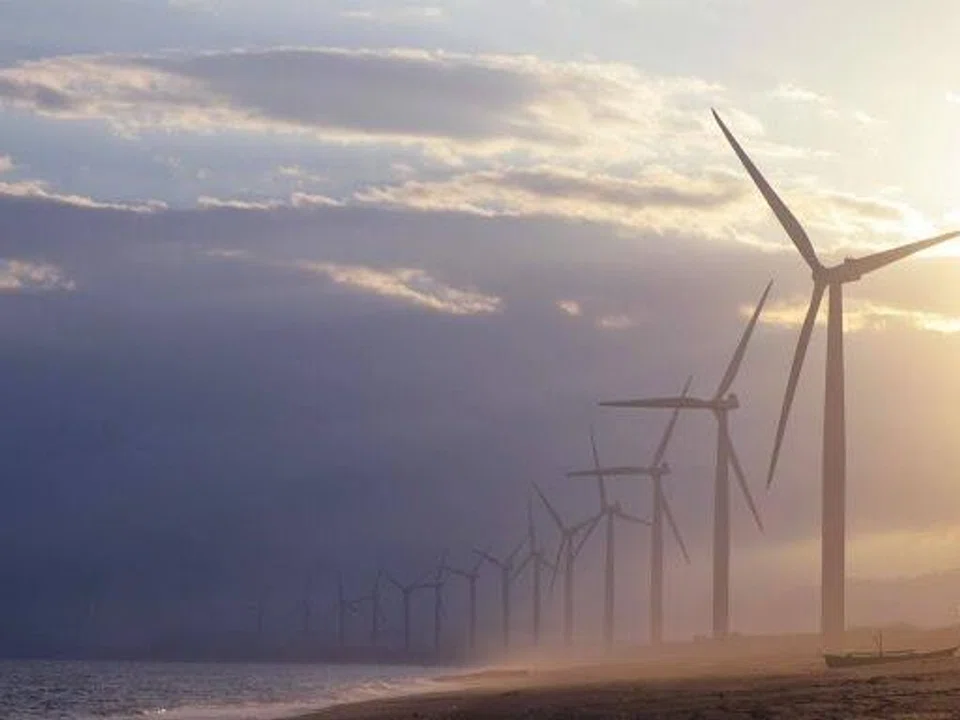
[MANILA] Ayala-backed Acen Corp is reassessing ways to raise fresh equity over the next six to 12 months after shelving a 30 billion peso (S$621.1 million) rights offer, as weaker earnings, volatile markets and rising financing costs force one of South-east Asia’s major clean-energy players to slow its expansion push.
The Philippines-listed company, with a market capitalisation of about 110.7 billion pesos, will maintain a “measured approach” to capital growth to “ensure flexibility and optimal execution”, president and CEO Eric Francia said at its recent annual shareholders’ meeting.
Acen’s shift from rapid expansion to operational tightening comes after a 60 per cent drop in profit to 3.8 billion pesos, led by plunging spot electricity prices and the temporary shuttering of key wind assets in the northern Philippines.
Revenue slid 14 per cent from 37.3 billion pesos to 32 billion pesos.
“We didn’t grow as significantly last year, so it allowed us to stretch the available capital we have,” Francia said, adding that the timing and structure of any equity raise would depend on market conditions.
He added: “Financially, 2025 presented a more challenging operating environment. Weather-related disruptions, including typhoons in the Philippines, affected asset availability.
“Lower irradiance in key markets and softer spot market conditions also weighed on generation and revenues.”
Francia said Acen will evaluate a “broader range” of funding options to maintain a “strong and resilient balance sheet”, as it weighs any equity raise against a subdued share price after a difficult year.
Acen’s stock has traded between 2.13 and 3.13 pesos over the past year. In the year to date, the counter has slid roughly 9.6 per cent, significantly underperforming the benchmark Philippine Stock Exchange Composite Index’s 5.7 per cent decline over the same period. The broader Philippine energy sector has retreated 8.8 per cent this year amid regional volatility.
That weakness comes even as the country’s clean energy story remains compelling – it is the world’s third-largest geothermal producer and has significant undeveloped solar and wind resources, particularly in offshore wind.
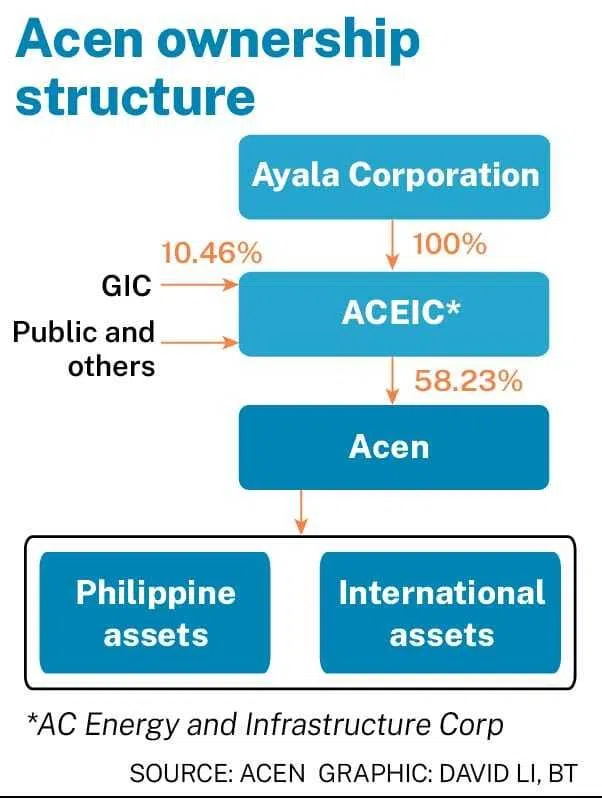
Treading cautiously
Acen’s cautious stance mirrors a broader trend across the renewable energy industry as high interest rates and infrastructure bottlenecks are forcing industry players to rethink aggressive expansion.
Aaron Daniels, CEO of Singapore-based Kairos Renewables, which develops and invests in clean-energy projects across South-east Asia, said the volume of projects announced in the Philippines is increasing rapidly but this comes with a caveat.
“Pipeline growth does not always translate into delivered capacity,” he cautioned.
“The market is moving beyond headline megawatt targets towards quality, deliverability and system value,” he said, stressing that grid access, financing and execution discipline will determine which projects reach commercial operation.
Daniels noted that for both investors and developers, the priority has shifted away from mere scale. He said the real value now lies in a company’s ability to drive projects all the way to commercial operation while securing credible offtake and ensuring they are fully integrated into the grid.
Acen has a 7 gigawatt (GW) renewable-energy capacity spanning projects in operation, under construction and with signed agreements. The portfolio features solar, wind, geothermal and battery energy storage systems, anchored in its home market of the Philippines and in key hubs in Australia, India, Vietnam, Indonesia, Laos and the US.
The company has earmarked 80 billion pesos to reach 8 GW of capacity by end-2026.
De-risking the pipeline
Investments in the Philippines’ clean-energy sector rose from US$2.6 billion to US$3.4 billion between 2015 and 2024, said Alnie Demoral, Asia analyst at global energy think tank Ember.
Although investment rose only modestly over the decade, BloombergNEF said clean-energy investment jumped 57 per cent in 2024.
BloombergNEF’s 2025 Climatescope ranked the Philippines as the second most attractive renewable-energy investment market in Asia-Pacific and fourth among emerging markets globally, with a power score of 2.64, above the regional average of 2.17.
The research provider cited the country’s comprehensive policy framework, including its green-energy auctions and the allowance of 100 per cent foreign ownership, which helped drive the surge in clean energy investments.
While peers such as Vietnam and Indonesia are also racing to hit ambitious 2030 targets, analysts suggest these liberalised policies have given Manila a competitive edge in securing private capital.
Still, the sector relies heavily on policy support to make renewable projects bankable. Key drivers such as the Department of Energy’s green-energy auction (GEA) help by locking in long-term contracts, while the feed-in tariff allowance provides the steady revenue needed to keep renewable projects viable.
State support, however, has its limits. “Agencies must continually assess whether these support measures adequately cover developer risks without disproportionately passing costs onto consumers,” Demoral said.
“While GEA helps support and partially de-risk renewable-energy projects, it remains the responsibility of developers to conduct thorough due diligence to ensure prudent capital deployment,” she said.
Diversifying renewable energy portfolios and integrating battery storage will also be crucial in managing both financial and operational risks, Demoral said.
Spot market exposure could turn favourable
While plunging spot prices hampered Acen’s performance in 2025, recent regulatory shifts could turn that exposure into an advantage.
Following the declaration of a national energy crisis, the Energy Regulatory Commission suspended trading on the country’s centralised marketplace for electricity – the Wholesale Electricity Spot Market (WESM) – and shifted to an administered pricing framework.
Prices on the WESM fluctuate based on real-time supply and demand. The suspension aims to protect power companies with a large exposure on the spot market from high generation costs.
Acen will therefore likely see an “upside for the duration of the implemented pricing strategy”, said Willie Yu, equity research analyst, and Genevieve Pecana, head of investment services, at Metrobank’s Trust Banking Group.
The administered pricing framework replaces historically low WESM prices, potentially turning Acen’s spot-market exposure – one of the factors that dragged down last year’s earnings – into a revenue driver.
Acen’s fully renewable portfolio could also benefit from priority dispatch, Yu and Pecana said. Solar, wind and hydro are considered “must-dispatch” resources, meaning they are given priority access to the grid when available.