Bali bets big on new US$3b airport and LRT to tackle overtourism challenges
The airport project in the north of the island has attracted significant attention from international investors and airlines, says key executive

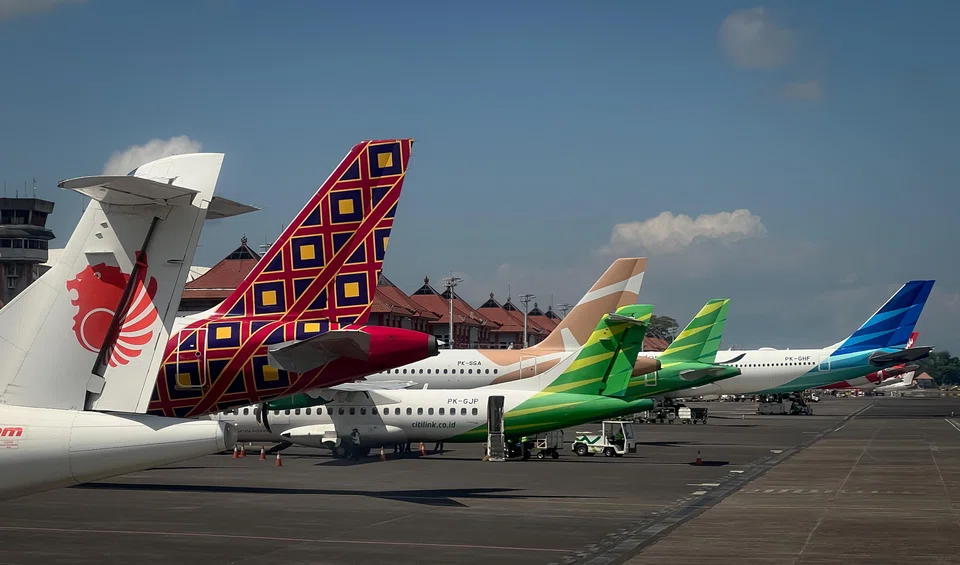
[JAKARTA] Bali, famed for its beaches and vibrant culture, will break ground this month for a US$3 billion eco-friendly airport in the north, with the aim to ease the strain on the overburdened southern gateway – Gusti Ngurah Rai International Airport – while spurring economic growth in the less-developed northern districts.
Erwanto Hariwibowo, president-director of Indonesian company Bibu Panji Sakti, told The Business Times that the ambitious project, expected to generate 200,000 jobs, has already drawn strong interest from foreign investors and airlines, particularly from Australia and Singapore. He declined to elaborate.
Bibu Panji Sakti, in partnership with China’s ChangYe Construction Group, is spearheading the development of Bali’s new airport, which marks a significant milestone for the island’s infrastructure development. ChangYe Construction recently signed a US$3 billion funding agreement with the Indonesian company.
“We aim to begin groundbreaking (in December), with the first runway expected to be completed by 2027,” said Hariwibowo, noting that the ceremony is pending a scheduling agreement with President Prabowo Subianto, underscoring the strong support for the project’s long-term success.
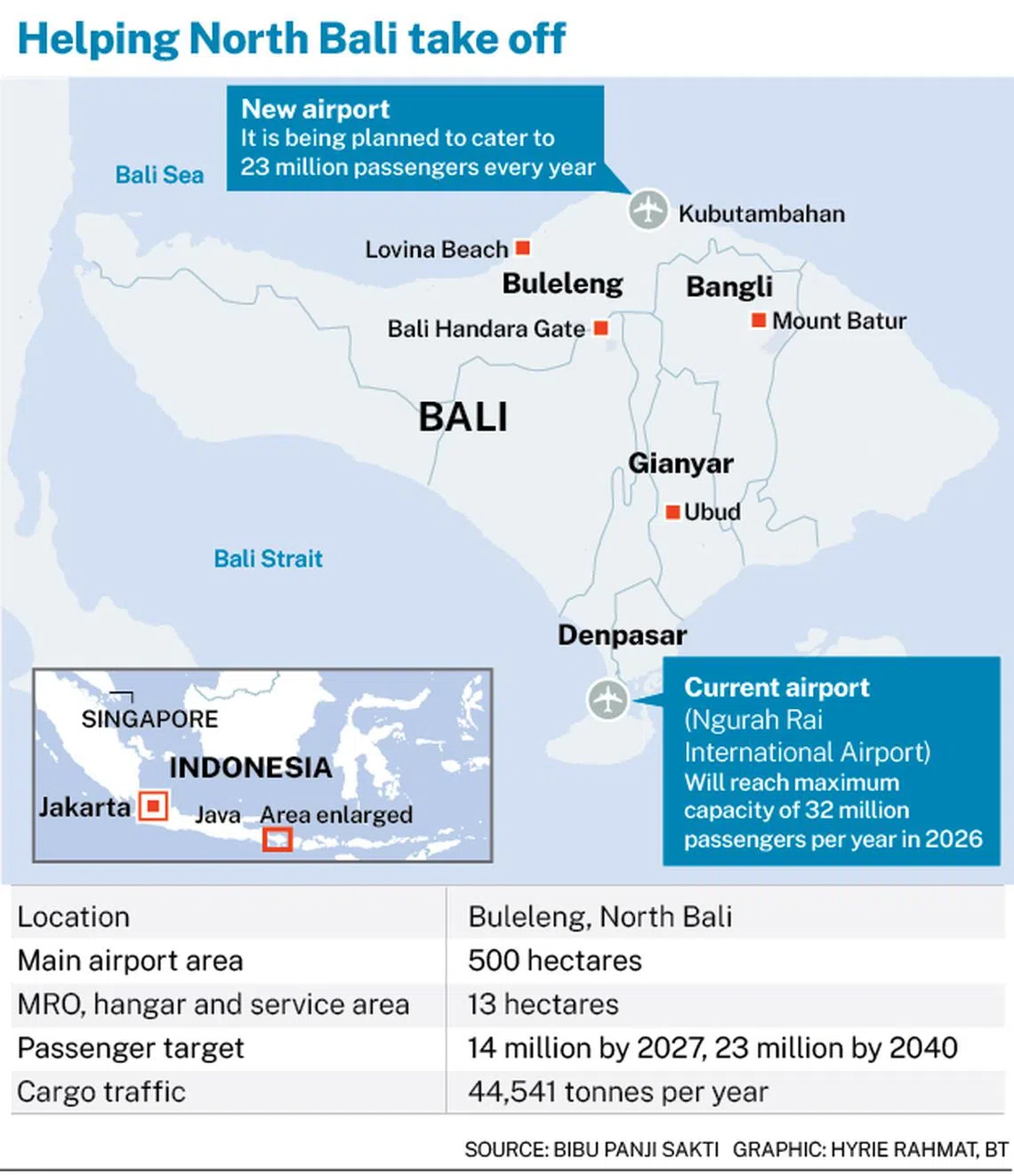
Total investments for the new airport in Buleleng Regency, North Bali, could reach 50 trillion rupiah (S$4.2 billion), added Hariwibowo, with the 500-hectare (ha) facility featuring three runways planned across two construction phases.
Ambitious plans
Last year, Bali welcomed 5.2 million foreign tourists, a staggering 144 per cent increase from 2022, reflecting a robust rebound in international travel.
Between January and August 2024, the resort island welcomed 4.2 million foreign tourists, a 22 per cent increase compared with the same period last year, according to Indonesia’s statistics agency. This further highlights the island’s longstanding appeal as a premier global tourist destination.
The government is rolling out plans to boost tourism in North Bali, particularly in regions such as Gianyar and Buleleng, with the aim to balance tourist traffic and alleviate pressure on the overcrowded southern areas.
The Buleleng airport will be constructed offshore, embracing an eco-friendly design powered by solar energy and utilising reverse-osmosis technology to process clean water.
In addition to the airport, the company plans to develop an integrated economic zone with two “aerocities”, which will include an industrial zone, hotel and park. These are planned on a 100 ha site on the west side, and a 200 ha site on the east side of the facility.
The airport is envisioned as a major international hub, capable of accommodating wide-body aircraft such as the Airbus A380, and catering to an expected 14 million passengers by 2027 – a figure that could rise to 23 million by 2040.
“We hope that the development of this airport will boost the economy in North Bali, which is still far behind compared to the south. We estimate that around 200,000 jobs will be created for the people of Bali,” noted Hariwibowo.
During his visit to Bali last month, Prabowo expressed strong support for the ambitious airport project, envisioning it as a transformative development that could elevate Bali to a global aviation hub on a par with Singapore and Hong Kong.
Hariwibowo said: “We have been proposing this (project) to previous administrations for almost 10 years and have consistently pushed for it because this airport is indeed a necessity. Studies show that Ngurah Rai airport has already exceeded its capacity.”
The idea for an airport in Buleleng originated in 2015 during former president Joko Widodo’s administration, but faced opposition from Megawati Sukarnoputri, former president of Indonesia and chairperson of the ruling PDI-P party. She had argued that the project would not adequately benefit the local Balinese community.
Ngurah Rai airport, one of Indonesia’s main gateways, is the second-busiest airport in the country after Soekarno-Hatta airport in Jakarta, handling an average of 23 million passengers and approximately 100,000 flight movements annually.
Bali’s growing prominence as a host for high-profile international events, including the Group of 20 and Asean summits, has frequently led to Ngurah Rai airport being overwhelmed as it struggled to handle the surge in air traffic.
Consequently, several visiting state aircraft have been forced to park at neighbouring airports in Java’s Surabaya, and Lombok in West Nusa Tenggara.
The flip side of being popular
Bali’s rising popularity as a global tourist destination has sparked concerns over overtourism, with escalating traffic congestion in southern hot spots such as Kuta and Canggu.
Since the island reopened after the Covid pandemic, foreign arrivals have surged, but incidents of misbehaving tourists frequently going viral have fuelled frustration among locals and drawn strong reactions from social media users across Indonesia.
In response to these growing challenges, a plan is under way to address traffic woes with a 167 trillion rupiah Light Rail Transit (LRT) network. Spanning 29 km, the LRT will connect Ngurah Rai airport to Nusa Dua. The project’s groundbreaking ceremony was held in September.
However, Bali tourism expert Nyoman Sukma Arida from Udayana University believes that the new airport in North Bali is unlikely to address existing issues, such as the island’s persistent traffic congestion.
“Building an airport in North Bali will only replicate the situation in South Bali. It will distribute the problems, not promote equitable prosperity,” he said.