Bangkok floods bring instant pain to debt-laden households
The capital and its surrounding provinces generate roughly half of Thailand’s economic output
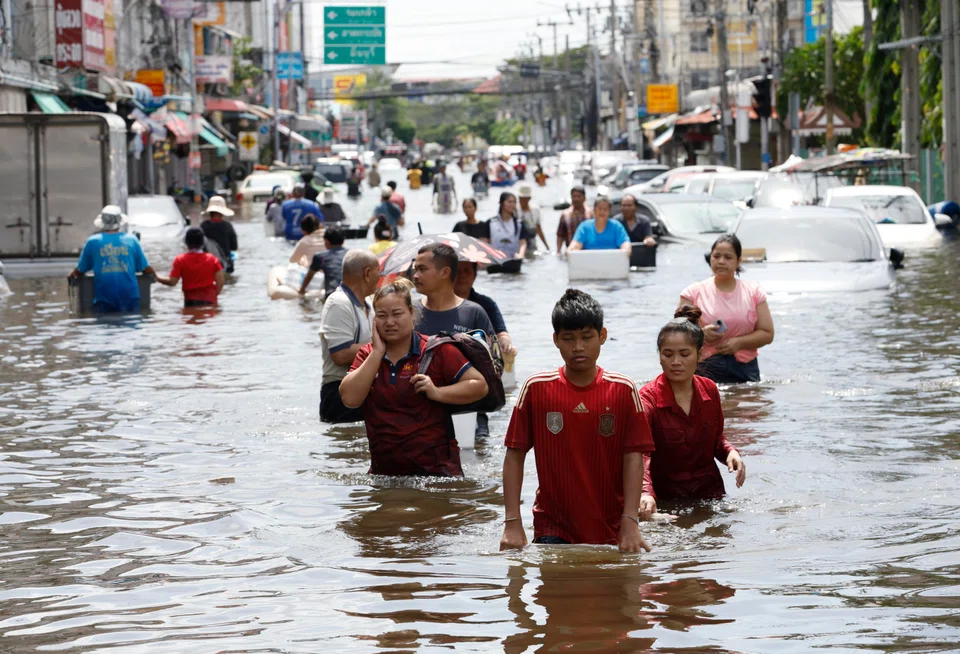
BANGKOK’S severe flooding is hitting Thailand’s fragile economy where it’s most vulnerable, wiping out incomes for small businesses and workers already burdened by high debt and stretching the government’s finances.
The disruption has been immediate for thousands of street vendors, drivers and other informal workers who don’t get paid if they can’t get to work. Nearly a week of flooding has brought parts of the capital’s informal economy to a standstill, even as initial estimates suggest only a modest hit to national growth.
That matters because Bangkok and its surrounding provinces generate roughly half of Thailand’s economic output. Thai Airways cut flights and suspended cargo intake, while automakers including Honda Motor and Toyota Motor halted some production.
For smaller businesses and workers paid by the day, the losses can be harder to absorb. Restaurants in flood-hit areas have reported losing as much as 80 per cent of their revenue, as customers, employees and delivery drivers struggle to reach them.
“My income has fallen to zero,” said Somchai Onsarn, a street vendor who typically makes about 3,000 baht (US$89) a day selling cosmetics. The area where he usually sets up his stall remains flooded. “I couldn’t go out to sell anything.”
Initial estimates paint a less severe picture at the national level. The University of the Thai Chamber of Commerce estimates flooding in Bangkok and dozens of provinces could shave about 0.07 percentage point off economic growth, equivalent to as much as 12.3 billion baht in losses. The damage could double if flooding persists and disrupts more activity.
“The estimates may not yet capture the full extent of the damage,” said Tim Leelahaphan, a Bangkok-based economist at Standard Chartered. “They can also mask the impact on more vulnerable groups, with low-income households likely to be hit hardest.”
Kae, a tuk-tuk driver, said being trapped at home meant losing the fares he depends on for his livelihood. “When I couldn’t leave my home, I couldn’t earn anything,” he said. “The economic impact feels very different on the ground from what the estimates suggest.”
The floods are hitting an economy with little cushion. Thailand is expected to grow only about 2 to 2.5 per cent this year. It also has one of Asia’s highest levels of household debt, which constrains consumption and leaves many families with limited capacity to withstand even a temporary loss of earnings.

“Small businesses and vulnerable groups could face a heavier debt burden,” said Chayawadee Chai-anant, an assistant governor at the Bank of Thailand. “Successive economic shocks are weakening their balance sheets. That is quite worrying.”
Prime Minister Anutin Charnvirakul’s government has approved about 4 billion baht (US$119 million) in immediate flood relief, but it has its own borrowing constraints. The budget deficit is running at about 4 per cent of GDP, and public debt was already forecast to climb very close to the self-imposed ceiling of 70 per cent, limiting room for large relief programmes.
Climate change threatens to make demands for such efforts more frequent.
Thailand doesn’t include climate in its annual fiscal-risk reports, according to Athiphat Muthitacharoen, a budget policy specialist. More frequent floods, droughts and other extreme weather could require greater spending on relief and reconstruction even as an aging population puts increasing pressure on health and welfare budgets. BLOOMBERG
Decoding Asia newsletter: your guide to navigating Asia in a new global order. Sign up here to get Decoding Asia newsletter. Delivered to your inbox. Free.
Share with us your feedback on BT's products and services