


Belgium-based Desmet opens new Malaysia R&D centre to meet rising Asia demand for edible oils
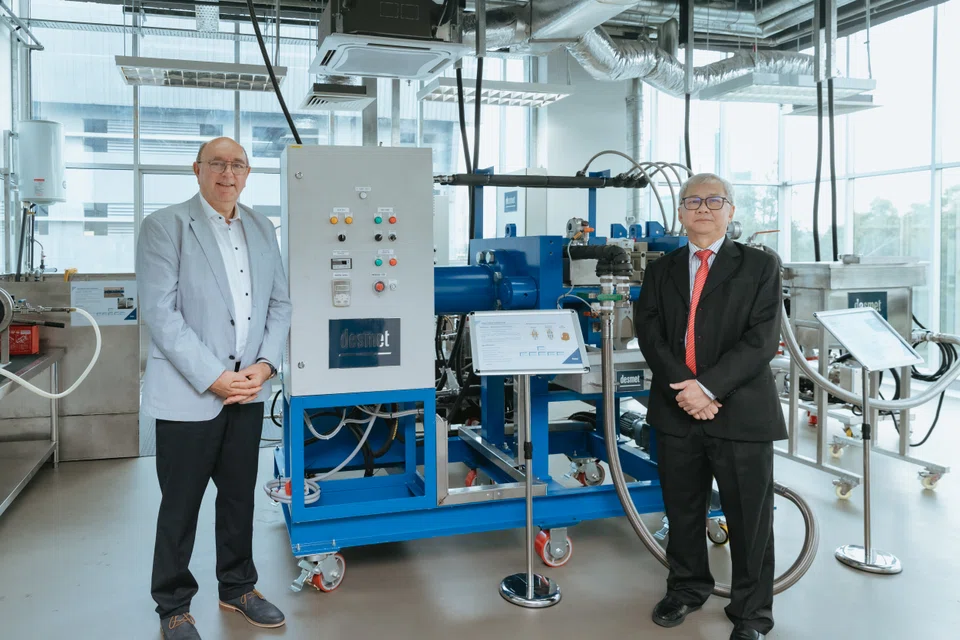
[KUALA LUMPUR] Belgium-based engineering company Desmet has established a new research and development (R&D) centre in Malaysia, with the company hoping this investment – its first facility outside of Europe – can cater to the growing demand for edible oils and fats in Asia.
Desmet, which builds customised plants for the food, feed and biofuels industries, has operated a full office in Malaysia since 1978 and serves industry leaders including Wilmar International and IOI Group.
The first phase of the new centre – located in Shah Alam, near Kuala Lumpur – will cost in the region of 500,000 euros (S$721,737). Previously, the company’s research activities were conducted in Belgium and France.
Khoo Kiak Kern, Desmet Malaysia’s managing director, said the expansion is a logical step for the company, given that Asia is a major vegetable oils producer and consumer. Malaysia, along with Indonesia, are the two largest producers of palm oil in the world today.
“We are very excited about this R&D centre. It is built with the aim of bringing the innovation facility closer to our customers so that they can test their products here, and we can customise our technologies to meet their specific needs, “ he said in an interview with The Business Times.
“Moreover, Asia is known for its fast-paced development, entrepreneurial spirit and manufacturing capabilities. An R&D centre in this region can certainly benefit from the region’s manufacturing and supply chain infrastructure to scale up our innovations and collaborations,” he added.
Without having to rely on its Europe headquarters for technical support, Desmet will be able to respond faster to the customer’s demands in this part of the world, Khoo said. Desmet currently holds about 70 patents in oils and fats processing technology.
For a start, the R&D centre in Malaysia will be equipped with pilot-scale plants of Desmet’s patented technologies in fractionation, for specialty fats applications.
There are plans to expand the scope of the centre over three phases in the next three years. The first phase will focus on fats modification, the second on oil refining, and the third on oleochemical processing.
The centre will eventually cover the entire upstream and downstream processing of oils and fats, said Marc Kellens, Desmet’s global technical and R&D director.
“We noticed that many Asian companies are more opportunity-oriented and move quickly with innovations as compared to the Europeans, who are more risks-minded,” he said.
“When our research centre is concentrated in Europe, sometimes it takes years for an idea to come into fruition and we always had more ideas than we can develop. With the additional resources dedicated in an R&D centre in Asia, we hope to be able to bring more ideas to life,” said Kellens.
At an event to officially open the facility in late May, Augustine Ong, president of the Malaysian Oil Scientists’ and Technologists’ Association, said there are opportunities to study the potential of using palm oil in carbon sequestration.
That refers to a process of capturing and storing atmospheric carbon dioxide, the most commonly produced greenhouse gas.
Countering the deforestation claims against palm oil production in Europe, Ong said the tropical oil remains one of the highest-yielding and affordable vegetable oils, making it an essential edible oil to meet the world’s growing demand.
TRENDING NOW
Deal between tycoon friends sparks scrutiny of Philippine power sector
Canada is upping oil flows to Asia, but South-east Asia’s refineries aren’t ready to handle them yet
Grab CEO’s wife Chloe Tong on life with Anthony Tan and finding her purpose
China got cool for foreigners. But can they find a job there?



