



Berjaya founder Vincent Tan denies casino plan in Malaysia’s Forest City
Anwar also denies report government is mulling over a second casino licence to revive the beleaguered US$100b development

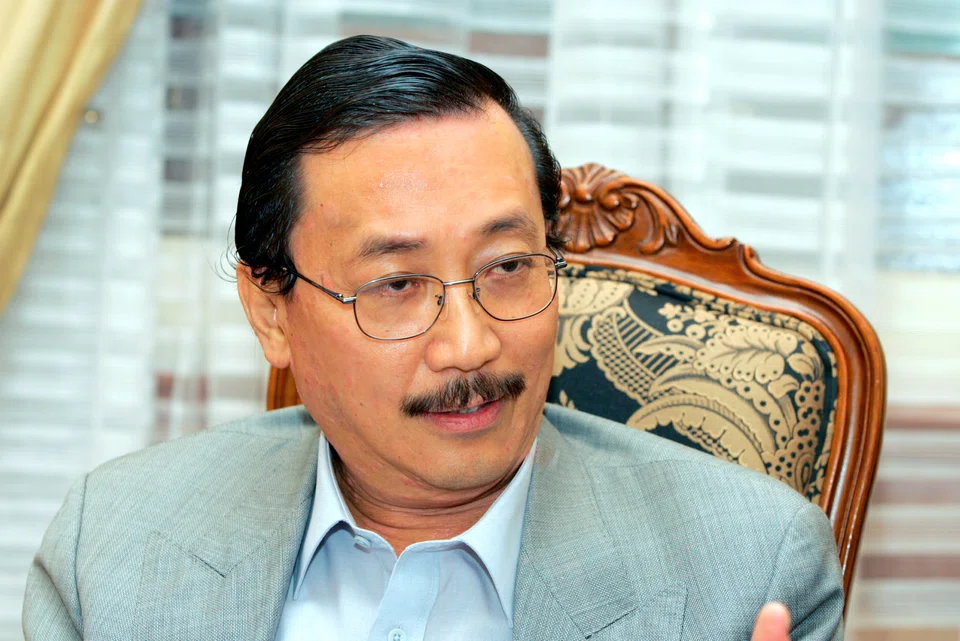
[KUALA LUMPUR] Berjaya Corp denied that company founder Vincent Tan was in talks to build a casino in Johor’s Forest City, as reported recently.
The response came after Malaysia’s Prime Minister Anwar Ibrahim on Thursday (Apr 25) denied a recent news report that the government is mulling over a second casino licence to revive the beleaguered US$100 billion development in the southern state of the country.
Bloomberg reported on Thursday that Berjaya and Genting Group were in early discussions with the Malaysian government on opening a casino in Forest City, Johor.
The report said that Tan and Genting Group chairman Lim Kok Thay discussed the plan in a meeting with Anwar, who is also the finance minister, in mid-April. Malaysia’s King, Sultan Ibrahim Iskandar was also at the meeting.
Quoting sources, the report said the casino project has the potential to revive the RM478 billion (S$136.2 billion) Forest City project in the southern state, which has been seen as a “ghost city” for its isolated location and challenges to attract residents.
In a statement on Friday, Berjaya refuted the claims, noting that the report included inaccurate information that misrepresented the company’s supposed involvement in discussions with the prime minister.
“We would like to make it clear that Vincent Tan has not participated in any such discussions,” it said.
Tan is one of the 50 richest people in Forbes Malaysia list. The company applied for a licence to operate a casino in Berjaya Hills, Pahang, in 2004, but it was rejected due to protests from the locals.
Despite denials from both sides, rumours about a second casino in Malaysia’s Forest City, Johor, have stirred lively debates on its potential economic benefits, social impact and religious concerns, especially in a country with a Malay-Muslim majority.
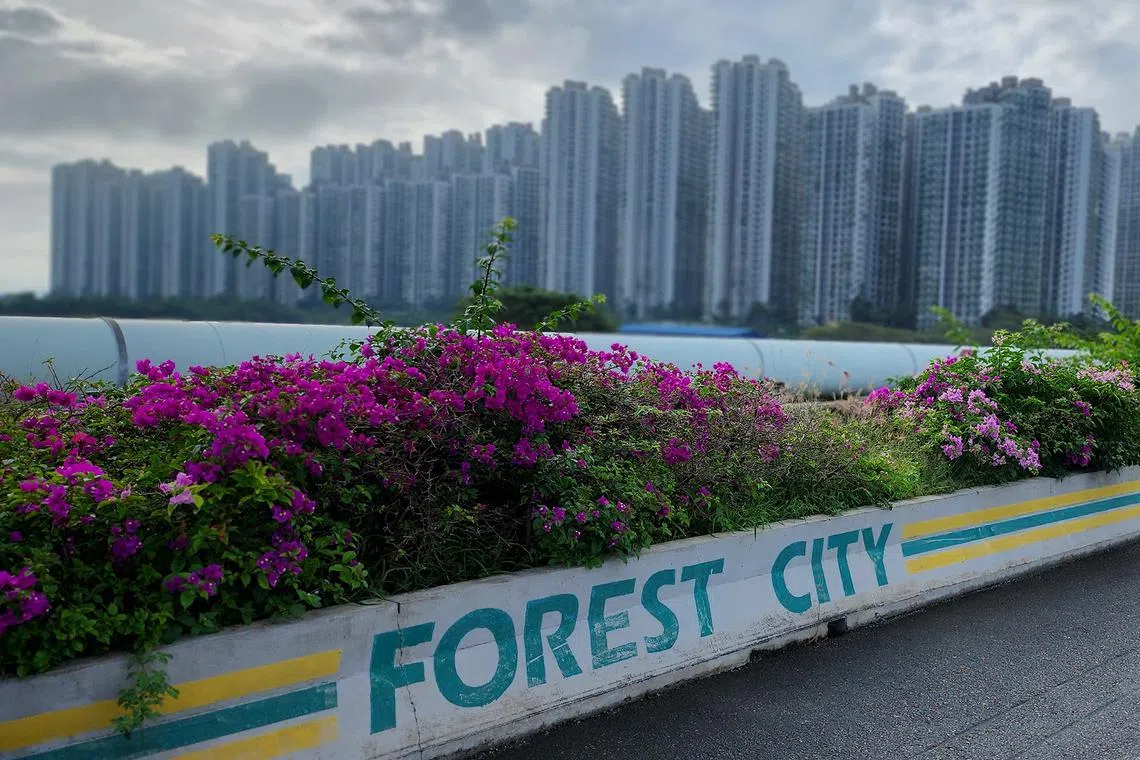
Chua Hak Bin, regional co-head of macro research at Maybank Research, suggested that a second casino, envisioned as an “integrated resort” with non-gaming attractions, could be a viable strategy to boost tourism, increase government tax revenue, and attract investment.
Using Singapore as an example, its two integrated resorts, Marina Bay Sands and Resorts World Sentosa, generate about S$6 billion in annual gaming revenue. The Singapore government likely collects around S$1 billion from gaming and income taxes, showing that these resorts can be lucrative for public finances.
“Higher tax revenue from gaming, tourism and retail spending can help reduce the fiscal gap without relying on other forms of taxation, such as further hikes in sales and service taxes or income taxes,” Chua told The Business Times.
He noted that Singapore’s integrated resorts have introduced measures such as casino entry levies and entry restrictions to address potential social issues, providing a model for balancing economic and social concerns.
However, Chua acknowledged that Malaysia’s decision regarding a new casino might not be purely economic.
“The government will have to weigh the potential economic benefits against the social costs and politically sensitive issues surrounding religion,” he added.
Samuel Tan, executive director at KGV International Property Consultants (Johor), highlighted the potential economic advantages of the casino plan, noting that developing a casino in Forest City could rejuvenate not only the area but also Johor’s tourism sector.
“If implemented, this plan could provide a much-needed boost to the beleaguered US$100 billion project, create new jobs and attract occupants to the vacant apartments,” he said.
Forest City, built on four reclaimed islands in Iskandar Puteri, is developed by Country Garden Pacificview, a joint venture between China’s financially troubled property giant Country Garden Holdings and Malaysia’s government-backed Esplanade Danga 88.
The 1,370-hectare development is projected to house 700,000 residents by 2035. However, it has gained a reputation as a “ghost town”, with the first phase of more than 20,000 residential units less than half-occupied.
Tan warned of the social issues that could accompany a new casino. To mitigate these risks, he proposed strict regulations, such as allowing some foreigners to enter the casino free-of-charge, while Malaysians and permanent residents pay a daily entry fee of at least RM300.
Carmelo Ferlito, chief executive officer of the Center for Market Education, offered a different perspective, suggesting that decisions about building a casino should be driven by market forces, not government mandates.
“If a company is willing to take the risk, they’ve likely done their due diligence and should be free to pursue the venture, bearing both profits and losses,” he said.
TRENDING NOW

Once staunchly pro-China, Malaysian Chinese businesses are now distancing themselves from Beijing

Singapore’s wealth management success should extend to everyday families
Stocks to watch: Jardine Matheson, Frasers Property, Advanced Systems Automation, Southern Alliance Mining

‘Wasting money, spending tokens’: Companies still in search of AI use cases with worthwhile ROI, says Broadcom’s Hock Tan

