Beyond weak Q4 earnings, analysts sanguine over Malaysia’s earnings growth in 2024
Better macro conditions, robust infrastructure development and resilient consumer spending could hold up FBM KLCI stocks

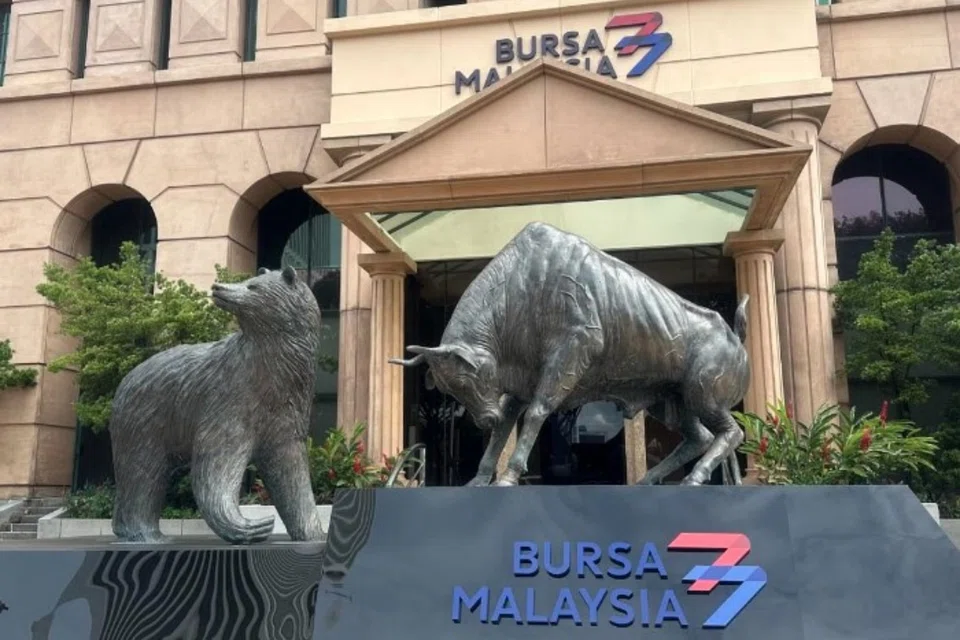
[KUALA LUMPUR] THE earnings momentum of the heavyweights on the Malaysian bourse’s key index may have eased up by over 11 per cent in the final quarter of last year from the same period in 2022, but analysts are not harping on that.
Given improving macro conditions, coupled with the country’s robust infrastructure development and resilient consumer spend, analysts are sanguine over banking, consumer services and tech-related stocks this year, not least because the key players put up a good showing in the fourth quarter of 2023.
Domestic-driven sectors are already delivering healthy double-digit growth, said CGS International research head and strategist Chehan Perera.
“The earnings catalyst is starting to come through and is gradually being reflected in individual share prices,” he added.
Most listed companies on the Bursa Malaysia released their Q4 FY2023 report cards last month.
The aggregate reported earnings of the 30 constituents on the FTSE Bursa Malaysia Kuala Lumpur Composite Index (FBM KLCI) for the final quarter came in at RM17.7 billion (S$5.02 billion) – 7.4 per cent lower compared with the previous three months, and 11.2 per cent lower than in 2022.
A majority in the utilities, consumer products and services as well as telco and media sectors recorded sterling performance. On the other hand, plantation, gloves, manufacturing and automobile companies experienced a decline in earnings.
Softening consumer demand – both at home and abroad – and the prolonged geopolitical tensions in the Middle East presented strong headwinds.
AmBank senior investment analyst Alex Goh remarked that glove makers are one of the casualties of the Red Sea conflict owing to shipment delays which hurt bottom lines over the October-to-December period.
Oil and gas companies fared poorly as oil prices fell over the period.
However, MIDF Research expects the oil market to stabilise following the gradually diminishing effect of the Red Sea blockades, de-escalation of the ongoing war in Ukraine, and an increase in global demand for crude and petroleum products.
“We are also expecting clean energy and renewables to have more significance in the market moving forward, following the higher demand for such sustainable and green solutions within the sector,” said MIDF.
Maybank Investment Bank’s head of equity research Wong Chew Hann noted that banks and construction companies under their coverage have recorded higher-than-expected core full-year earnings.
Construction players under Maybank’s coverage saw full-year earnings improve by 11 per cent year on year while banking stocks under the house’s coverage saw earnings grow by 13 per cent.
Among the big-caps, telco Axiata and developers SP Setia and IJM surprised on the upside.
However, Telco Maxis, integrated chemicals producer Petronas Chemical, utility companies Tenaga, as well as aviation company Airasia X surprised on the downside with full-year earnings missing estimates by between 22 per cent and 87 per cent.
Wong observed that emerging signs of a turnaround in the global electronic cycle will drive Malaysia’s tech sector and related service sectors, such as port and logistic players.
She said rising approved foreign direct investment, renewable energy transition and tourism recovery will fuel the market sentiment towards stocks related to the renewable energy, construction, aviation, consumer and gaming-casino sectors.
“The tail-end of the interest rate hike cycle globally will draw attention back to yield stocks, while ESG (environmental, social and governance) will remain a relevant investment focus,” said Wong.
CGS’ Perera has set a target for the FBM KLCI at 1,755 points by end-2024; the index has risen about 7 per cent year to date and crossed the 1,550 point mark in February.
“Our bullishness on Malaysian equities is underpinned by our belief that three key headwinds – policy, currency and earnings – that affected the market between May 2018 and July 2023 could collectively turn into tailwinds in 2024,” he said.
Perera noted that the policy momentum should pick up in the next few months, with more clarity on medium-term plans to consolidate the fiscal deficit and raise the country’s medium-term growth profile through development spending.
But Malaysia’s battered currency could hurt corporates, although there are upsides – better export competitiveness as well as improved attractiveness of ringgit-denominated assets.
Ambank’s Goh said the weakening ringgit has attracted foreign investors, with foreign buying gaining momentum, rising 91 per cent month on month to RM1.3 billion in February. Much of this was ploughed into utilities, and the rest into finance, telco, transport and technology stocks.
In the year to date, the ringgit has depreciated over 2.4 per cent against the US dollar to RM4.70 on Friday (March 15), while the FBM KLCI rose 6.7 per cent and closed at 1,558.8 points last Friday. Blue-chip stocks from Sime Darby and Maybank to YTL Power, IHH Healthcare, TM and MISC garnered strong buying interest.
MIDF expects the FBM KLCI’s uptrend to continue, supported by positive market sentiment and anticipation of US Federal Reserve rate cuts in the second half of 2024.
The research company maintains its FBM KLCI year-end target at 1,665 points. This values the index at around 14.5 times its price-to-earnings (PE) ratio.
Maybank Investment Bank anticipates the rollout of projects under the macro blueprints – the New Industrial Master Plan and the National Energy Transition Roadmap – will give a boost to the market and further lift the FBM KLCI’s levels.
Currently, the bank maintains its FBM KLCI year-end target at 1,610 while noting that a re-rating is possible as economic and institutional reforms are executed to facilitate new growth drivers, leading to improved risk-reward ratios.