



BI holds key rate at 4.75% as rupiah tumbles to record low
Governor Warjiyo says that BI is prepared to use its ample foreign exchange reserves to defend the currency

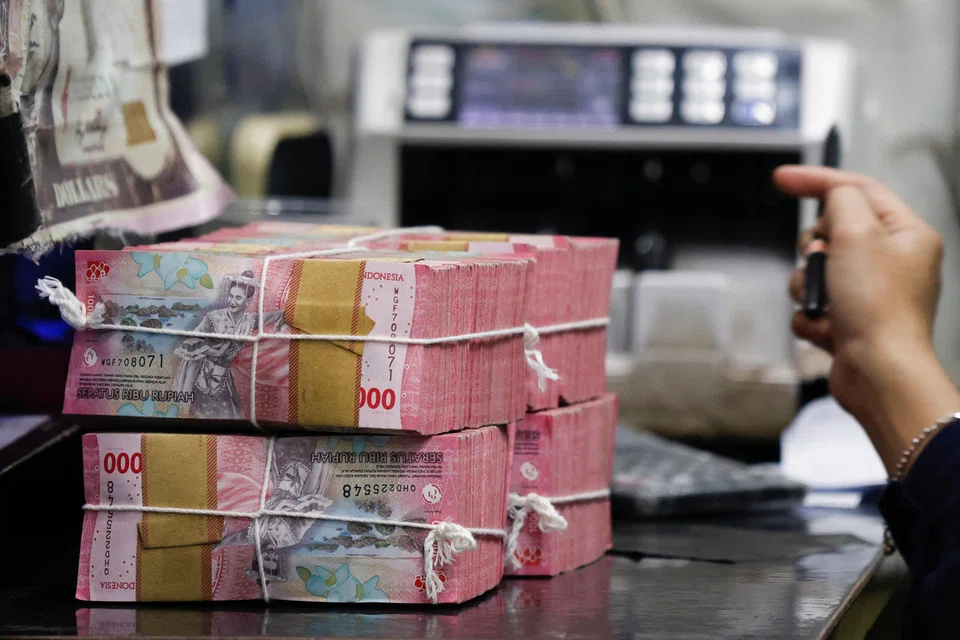
[JAKARTA] Bank Indonesia (BI) kept its benchmark interest rate unchanged on Wednesday (Jan 21), seeking to support economic growth while stabilising the rupiah, which slid to record lows a day earlier.
The central bank held its seven-day reverse repo rate at 4.75 per cent for a fifth consecutive month, in line with market expectations compiled by Bloomberg. It also left its overnight deposit facility and lending facility rates unchanged at 3.75 per cent and 5.5 per cent, respectively.
Governor Perry Warjiyo said the central bank is currently focused on maintaining rupiah stability as the currency comes under pressure from heightened global volatility. He added that BI is prepared to use its ample foreign exchange reserves to defend the currency, noting that Indonesia’s reserves stand at around US$156 billion.
“We believe the rupiah will remain stable and even tend to strengthen going forward,” Warjiyo said in a briefing.
The rupiah briefly strengthened 0.13 per cent to 16,934 per US dollar after the policy decision was announced. The currency had earlier slipped to a fresh low of 16,985 per US dollar on Tuesday, pressured by concerns over Indonesia’s fiscal outlook.
The government unveiled last year’s Budget deficit at 2.92 per cent of gross domestic product, close to the legal ceiling of 3 per cent, as higher spending was not matched by a corresponding rise in revenue.
Rupiah pressure has also been fuelled by questions over central bank independence after Thomas Djiwandono, President Prabowo Subianto’s nephew, was nominated for a vacant deputy governor post, sparking concerns about BI’s autonomy.
The move comes as markets remain mindful of last year’s burden-sharing policy, under which the central bank agreed to help finance selected government priority programmes aimed at boosting economic growth.
Addressing the issue, Warjiyo said the appointment process would not affect the central bank’s mandate or its independence in carrying out monetary policy.


The rupiah has weakened more than 1.53 per cent since the end of December, making it the second-worst-performing currency in Asia after the Indian rupee.
Investor sentiment has also deteriorated in the bond market, with demand for Indonesian government bonds falling to its lowest level in 10 months at a recent auction as the rupiah sell-off deepened.
Radhika Rao, senior economist at DBS, expects the authorities to put up a strong resistance to arrest rupiah depreciation.
“Monetary easing will be opportunistic in 2026 and deferred to the second half, subject to FX market conditions,” she wrote.
She noted that markets are closely watching MSCI’s upcoming changes to its index methodology, expected by the end of the month, which could lead some offshore index funds to trim their exposure.
This comes alongside seasonal pressures from dividend repatriation and rising dollar demand ahead of the festive-season surge in imports, which may add further volatility.
The central bank kept its economic growth forecast for this year at 4.9 to 5.7 per cent, broadly encompassing the government’s official target of 5.4 per cent. Inflation is also expected to remain low, projected in a range of 1.5 to 3.5 per cent.
Finance Minister Purbaya Yudhi Sadewa has said growth of around 6 per cent could be achievable, which would support the government’s ambition to lift growth to 8 per cent by 2029.
Decoding Asia newsletter: your guide to navigating Asia in a new global order. Sign up here to get Decoding Asia newsletter. Delivered to your inbox. Free.
Copyright SPH Media. All rights reserved.
TRENDING NOW

Once staunchly pro-China, Malaysian Chinese businesses are now distancing themselves from Beijing

Looking beyond looming CEO succession, should UOB potentially pursue a transformative merger?

Could stablecoins be the future of money?

Grab CEO’s wife Chloe Tong on life with Anthony Tan and finding her purpose

