Big believer in ‘profit and purpose’: CEO of Ayala’s healthcare arm builds ‘ecosystem’ in Philippines
Ayala Corporation’s healthcare business unit is back in the black again and looking to expand

The strategies and stories that shape today’s leaders.
[MANILA] Ayala Corporation’s healthcare business unit, AC Health, has swung back to profitability – for the second time in its 10 years of operation. Its 48-year-old chief executive officer and president Paolo Borromeo is now looking to take the business into its next phase of growth.
Borromeo joined Ayala in 2012 as head of strategy. His pitch to the Ayala board was that the conglomerate could leverage its reach and resources to fill gaps in what he views as a fragmented healthcare system in the Philippines. In that way, AC Health would provide what he called “womb-to-tomb” services – essentially healthcare services at every stage of life.
Ayala Corporation in the Philippines is probably the oldest family conglomerate in South-east Asia. Jaime Augusto Zobel de Ayala, the current chairman, hails from the seventh generation. It was founded in 1834 and became a publicly listed company in 1976. It now has holdings in various sectors, including real estate, banking and telecommunications.
Its property development and banking arms, Ayala Land and Bank of the Philippine Islands (BPI), currently contribute the majority of the conglomerate’s revenue. In recent times, one of its newer business units has joined in as well.
In its most recent report released on Mar 13, Ayala said AC Health achieved a net income of 34 million Philippine pesos (S$724,545) for 2025. This was only its second time in the black since its founding in 2015, and a turnaround from a loss of 607 million pesos in the year before. AC Health was last profitable in 2022.
The turnaround was driven by expanded hospital and clinic operations; prior KonsultaMD losses were also no longer booked. KonsultaMD, a telehealth service, was sold in February 2025.
Ayala’s core net income, which excludes one-off items, rose 7 per cent to 48.3 billion pesos, driven by higher earnings from BPI, Ayala Land and a collective turnaround of current non-core business units.
“Over its 190 years of history, Ayala has always prided itself in staying relevant and in building businesses, incubating new ideas, and seeding new ventures that will eventually become major pillars of growth,” Borromeo told The Business Times in an interview in his office at the Makati Stock Exchange Center, which is owned by Ayala Land.
When Borromeo joined Ayala, the group had already established its real estate, banking and telecommunications businesses. In his terms, those were all “hard infrastructure”, and his “not so brilliant idea” was that the company should start investing in social infrastructure such as education and healthcare to cater to the more than 100 million people in the Philippines.
“It’s a reflection (of) this group. They harvest ideas from different people and places, and then they trust you and give you the mandate to build out your idea into a business. And that’s how they’ve stayed relevant for 190 years,” he noted.
“I’m very thankful to our principals and the board for trusting us, and letting us run with the idea.”
Network of drugstores, clinics and hospitals
AC Health was subsequently founded in 2015 as a wholly owned subsidiary of Ayala Corporation. Today, its healthcare ecosystem comprises the Healthway Medical Network; its retail pharmacies Generika Drugstore and St Joseph Drug; and its pharma importation and distribution network consisting of IE Medica and MedEthix.
“It’s very difficult for Filipinos to get quality healthcare,” Borromeo said, citing a mix of factors: an overburdened public healthcare system, high cost of medicine and considerable out-of-pocket costs.
Based on the World Bank’s latest data, out-of-pocket expenditure amounted to about 44 per cent of healthcare expenditure in the Philippines in 2023. This was higher than in neighbouring countries such as Vietnam, Singapore and Malaysia.
Borromeo’s vision that he pitched to Ayala was to create an integrated ecosystem starting with a network of pharmacies that would serve as the primary points of contact for Filipinos. St Joseph Drug, which is a branded drugstore chain, and Generika, which sells generics, are currently located in high-density areas such as Metro Manila and Cebu.
Combined, there are currently nearly 1,000 pharmacies – giving AC Health some leverage when negotiating with drugmakers, which could help it bring in more affordable medicine and options.
“Imagine these drugstores are supported by a chain of clinics and hospitals that provide access to high-quality consultations, diagnostics, laboratory services, and so on,” Borromeo said.
He shared that in the Philippines, people often seek help at the pharmacy and turn to clinics and hospitals as a last resort.
AC Health currently has a network of around 310 clinics catered for corporate firms, 18 multi-speciality clinics and seven hospitals. This means that it can tend to the needs of different customers, from individuals who need more specialised help, to corporates sending their employees for regular health checks.
Thrust into Covid-19 front line
Growth was not linear for AC Health. The CEO recounted a period of experimentation in what he calls the “first phase” between 2015 and 2019.
AC Health started with a chain of primary care clinics called FamilyDoc and a telehealth company to go with the drugstores during that period. AC Health eventually closed down FamilyDoc and the telehealth company was sold.
“We were losing too much money,” Borromeo admitted.
Despite setbacks, AC Health tweaked its strategy. In 2019, it acquired Healthway in the Philippines, which at that time operated a chain of seven multi-speciality clinics, and integrated its primary care clinics into the broader network.
Unlike primary care clinics, these multi-speciality clinics offer a range of services including cardiology and X-rays. While these clinics are more expensive to maintain, Borromeo said there was better demand as AC Health could now cater to corporate clients that needed to send employees for annual health checks or drug tests.
In 2021, at the height of the Covid-19 pandemic, AC Health acquired QualiMed Health Network, which operates four hospitals outside Metro Manila, thrusting them into the national front line.
Working with the government, these hospitals and the larger AC Health ecosystem became crucial nodes for testing, vaccine administration and taking in Covid patients – fundamentally testing part of the “womb-to-tomb” services that Borromeo had envisioned.
During the early months of the pandemic, AC Health led a consortium to invest and scale Covid-testing capacities. As the pandemic continued, its clinics also carried on operations to triage and attend to non-Covid-related issues.
Borromeo estimated that AC Health, as a private vaccine administrator, also administered more than 800,000 doses of Covid vaccines.
“We were kind of forced to (go to) the front line during the pandemic, and at the same time we were accumulating assets which were helpful during the pandemic. That was the second phase – growth through a pandemic,” he said.
As they were on the front line, he and his team saw the desperate need for timely, quality care, cementing “malasakit” – the Filipino value for empathy – as a core value for AC Health.
Keeping patients within the system
Borromeo noted that AC Health is currently in phase three and is working on integrating all its healthcare assets, and making acquisitions or building capacities in cities with a high population density that will support the AC Health ecosystem.
Ideally, this ecosystem will have an AC Health hospital supported by multi-speciality clinics, corporate clinics and pharmacies. The intention is to be self-supporting. While patients are free to visit a non-AC Health hospital or pharmacy, the aim is to keep patients within the system through its referrals.
AC Health also leverages its connection to Ayala, and its medical ecosystem supports around 60,000 employees that are hired throughout all of Ayala’s businesses.
This means that employees of Ayala-linked companies are encouraged to use AC Health facilities for services ranging from annual health checks to treatments for various chronic illnesses.
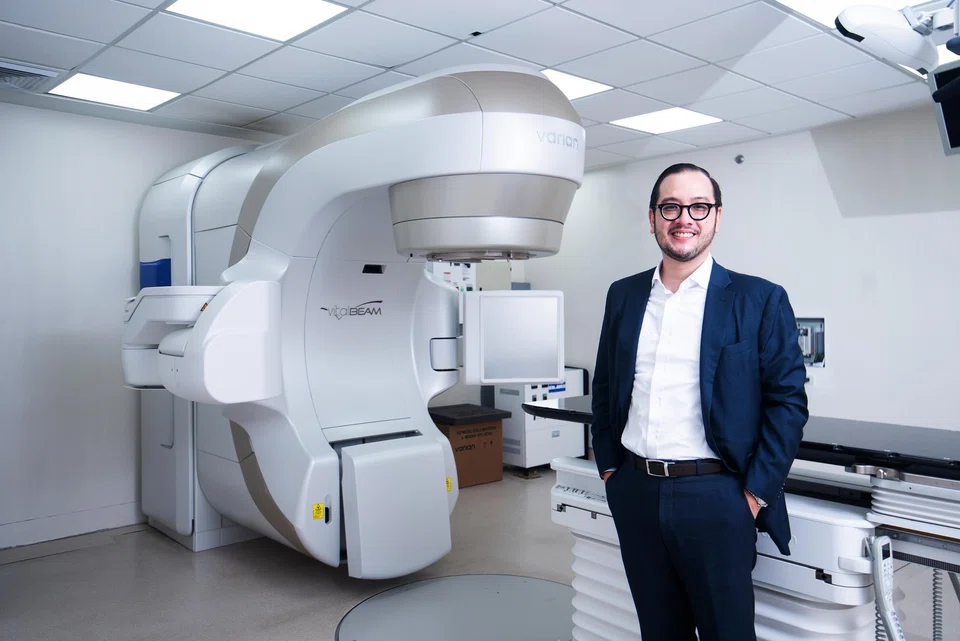
The healthcare company is expanding its portfolio in its current phase as well. AC Health’s seventh hospital, which was inaugurated in late 2023, aims to provide world-class cancer care and diagnostics to Filipino patients.
The Philippines has lower rates of cancer screenings than its neighbours in South-east Asia. The new cancer hospital is also in line with the government’s direction to improve cancer care.
Borromeo claimed AC Health has managed to bring down the cost of cancer screening in the Philippines due to lessons from engagements with other cancer hospitals globally. They taught AC Health how to lower the costs of expensive PET-CT scans by viewing them through the lens of higher utilisation and larger volume of patients.
The company currently collaborates with the National Cancer Centre Singapore and Chang Gung Memorial Hospital in Taiwan for its cancer care.
AC Health also sold a 16 per cent minority stake to ABC Impact, a Temasek-linked Asia-focused impact investor, in September 2025 as part of its growth phase. Borromeo said such partnerships will help bring world-class expertise to AC Health and elevate its levels to meet the global standard.
The capital from the ABC Impact partnership is expected to help fuel AC Health’s expansion. By 2027, it aims to expand its network to at least 10 hospitals, 300 clinics and 1,150 retail pharmacies across the Philippines.
“It has been encouraging to see the progress the team has made in strengthening operations and expanding the provider network,” David Heng, CEO of ABC Impact, told BT. “We value the opportunity to work alongside Paolo and the AC Health team to support the company as it continues growing the platform.”
Three questions with AC Health CEO Paolo Borromeo
Q: Was there a pivotal moment in your career or personal life that changed your approach to leadership?
I think the pandemic was impactful in so many ways.
Before Covid, my concept of leadership was largely about vision and strategy, execution, capital allocation, and all the other traditional aspects. But during the pandemic, (and) especially in a sector such as healthcare, one (realised) that transformational leadership is really about empathy and being human.
For us at AC Health, the pandemic was not something we observed from the outside. We were front-liners, right smack in the centre of it. We saw first-hand what happens when access is limited – when hospital beds are scarce, when diagnostics are delayed, when medicines are difficult to obtain. But we also saw the opposite: how timely, quality care can restore not just health, but (also) dignity, stability and hope for entire families.
This was when I really realised that what we were doing in AC Health was so important and so purposeful. Because at the core of it, the business of healthcare is so deeply personal and so human. And I realised how important it was to lead and work with empathy – in Filipino we call it “malasakit”. This became a core value across AC Health, even after the pandemic, and one we continue to hold very, very dear.
Q: What is one piece of “unconventional wisdom” you swear by that most business schools would tell you is wrong?
I am a big believer in the power of business to equally deliver both profit and purpose, and the power of business to do good. Traditionally, we would look at the two as different extremes – you are either purely capitalist, or definitively philanthropic. But I am a big believer in holistic impact.
I see this in our healthcare business, and the positive effect we have had on our communities and the country, and yet we have the ability to operate sustainably and return capital.
I see this in our other businesses around the Ayala Group as well, where we are able to proactively balance both profit and purpose, and sustainably develop businesses, products and services aligned with the national agenda.
Q: When you feel burnout creeping in, what’s your non-business-related “panic button” activity or routine that reliably resets your focus?
Every time burnout starts to creep in, or stress levels increase, I always find it so refreshing and rewarding to come back home. All I need is to get a hug from my three children, and all the problems in the world go away!
TRENDING NOW
Grab CEO’s wife Chloe Tong on life with Anthony Tan and finding her purpose
Income Insurance appoints former Manulife Singapore top man as new CEO
Incidence of civil servants buying property near unannounced MRT stations ‘a concern’, but may not establish misconduct: PSD
Three ex-employees of Envy group join Ng Yu Zhi in bankruptcy