



Brics: What you need to know about the bloc
Status check: Within South-east Asia, Malaysia and Thailand have formally submitted their applications; Laos officially expressed interest at the recent leaders’ pow-wow, and Vietnam and Indonesia have signalled readiness to cooperate

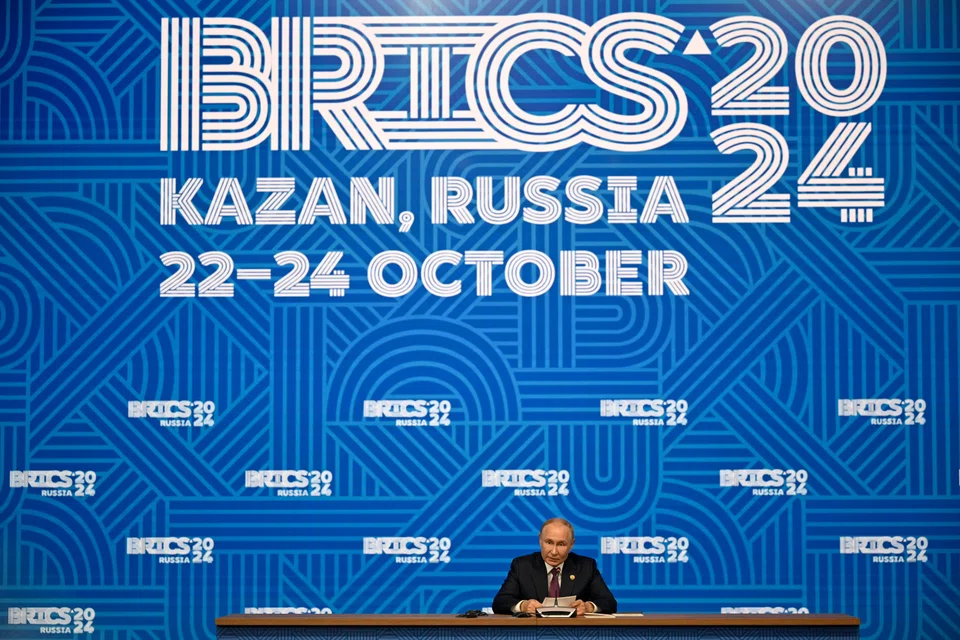
BRICS – the name of the five-country alliance formed by the first letters of its early members, Brazil, Russia, India, China and South Africa – is gaining prominence as a strategic counterbalance to the political and economic power of the West.
The Business Times brings you everything you need to know about the bloc, and its implications for the South-east Asian region.
At the beginning
The acronym was coined more than two decades ago by a former Goldman Sachs chief economist in a research paper on the growth potential of the four countries, excluding South Africa.
Under Russia’s initiative, informal discussions transpired in 2006. The club birthed three years later held its first summit in Yekaterinburg, one of the federation’s major industrial centres.
In 2010, the bloc expanded to include its smallest member, South Africa, which chaired last year’s summit in Johannesburg.
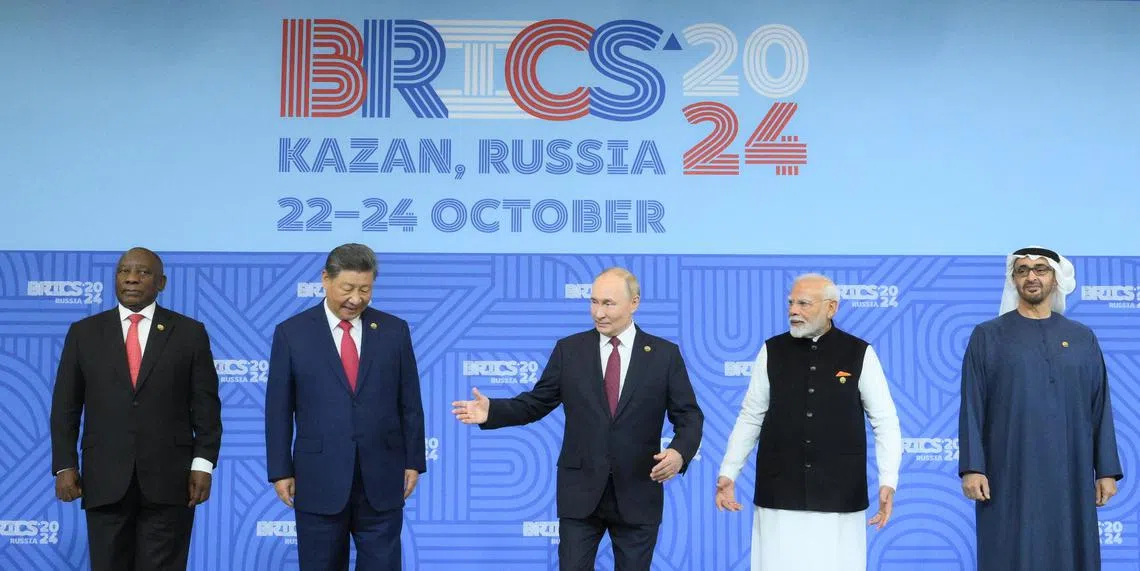
At the summit, Brics leaders invited Argentina, Egypt, Ethiopia, Iran, Saudi Arabia and the United Arab Emirates to join the grouping, in what several leaders hailed as a historic move.
Argentina backed out last December, after its new president took over. Saudi Arabia has thus far not formally responded to the invitation, although it took part in the Brics Plus meetings this month.
Together, the five founding nations and its four newest members are estimated to account for about 40 per cent of the world’s gross domestic product.
Brics goals
The group aims to foster greater economic cooperation and integration among its member countries, and is also viewed as a “hedge against the US, and for developing countries to caucus ahead of important meetings”.
Sharon Seah, senior fellow and coordinator at the Asean Studies Centre of Iseas-Yusof Ishak Institute, wrote in a blog post: “Another view is that for countries like Thailand, Laos, Cambodia and Myanmar that cannot escape China’s orbit, Brics affords a cover for them to diversify their relationships with India, Brazil and other Global South countries, and thus hedge against China.”
The Global South is broadly used to refer to countries that are generally less economically developed, and lie largely in the southern hemisphere in Africa, Asia and Latin America.
How to apply?
There exists no formal application process thus far to join the club, but new additions must be unanimously approved by the existing members.
Who’s the boss?
The bloc is not formally headed by any one country.
Chairmanship in the club rotates yearly among its member countries, with Russia presiding this year. South Africa was last year’s chair, and next up is Brazil, which currently holds the Group of 20 presidency.
What happened this year under Russia’s helm?
At this year’s three-day summit in Kazan from Oct 22 to 24, the four latest additions to the bloc participated for the first time as members.
Russian President Vladimir Putin, who has been in power for more than two decades, also held the traditional Brics Plus meeting and invited countries across all continents to it.
In all, delegations from 35 countries and six international organisations, including the United Nations, participated.
Putin revealed that Brics leaders have decided upon a list of countries that will be invited to join as partner countries (but not as full members) – a new category endorsed by the bloc in its joint communique.
Brics will dole out the invitations, but until a positive response is received, the list will not be made public, said the Russian premier.
Asean-Kremlin ties
Several South-east Asian leaders showed up at the summit this year.
Vietnamese Prime Minister Pham Minh Chinh, Lao President Thongloun Sisoulith, Thai Foreign Minister Maris Sangiampongsa and Indonesia’s new foreign minister Sugiono were in attendance.
The Lao leader said in a speech at this year’s summit that the country was formally expressing its interest to join the bloc.
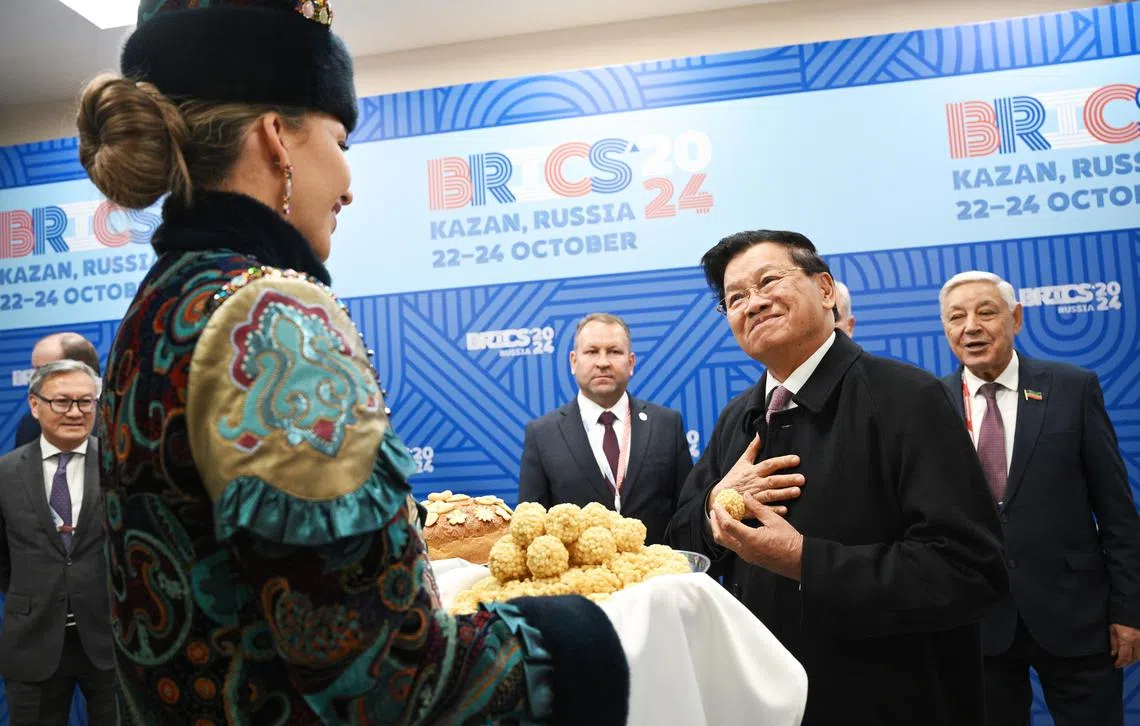
Vietnam’s Chinh said that the socialist republic “stands ready” to work with Brics’ countries, but stopped short of elaborating.
Indonesia’s Sugiono said in an Instagram post that Indonesia “is ready to join (and) ready to support Brics efforts to advance the interest of the Global South”.
Putin held talks with Laos’ Thongloun and Vietnam’s Chinh on the sidelines of the meeting on Thursday (Oct 24).
At the Asean Summit earlier in October, Russian Foreign Minister Sergey Lavrov also held chats on the fringes of the event with the two Indo-Chinese nation heads.
Chinh greeted Putin on Thursday with a hug, a belated birthday wish and “a gift (of) two dragons”, said the Kremlin.
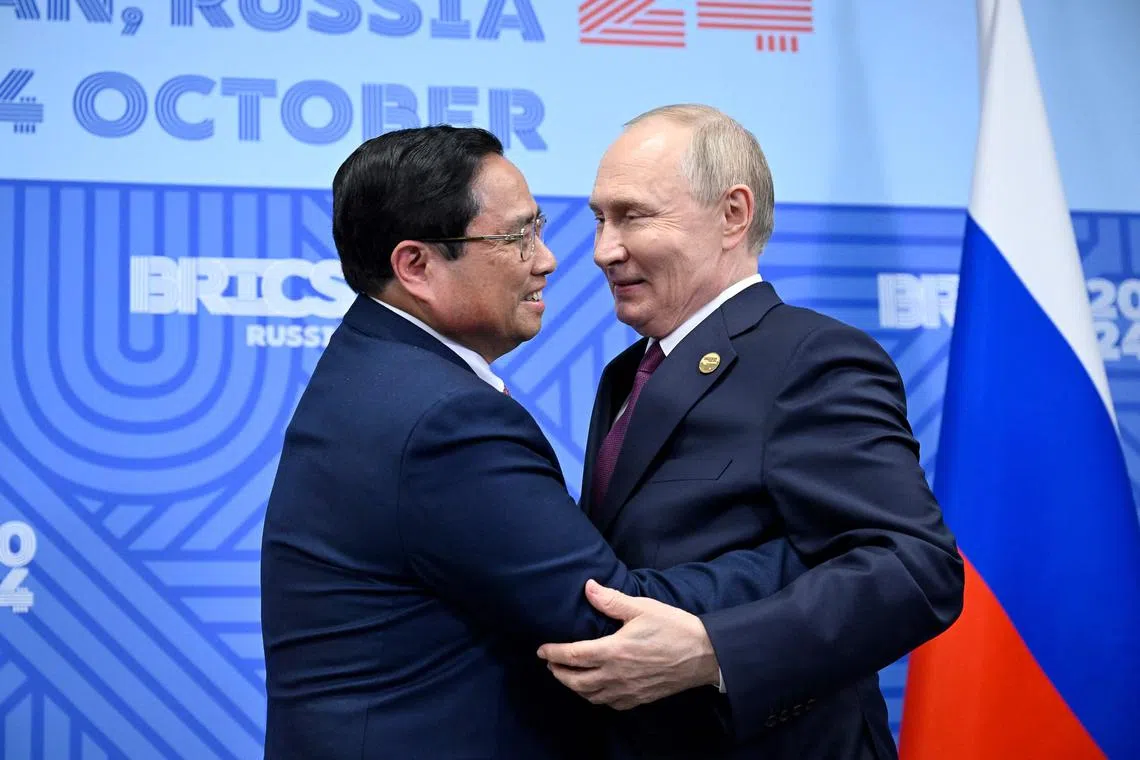
The Kremlin quoted Chinh as having said: “In Vietnam and in Asia, dragons are believed to be the supreme authority. So, the small dragon symbolises your authority within Russia while the big one is a symbol of your influence outside the country, around the world.”
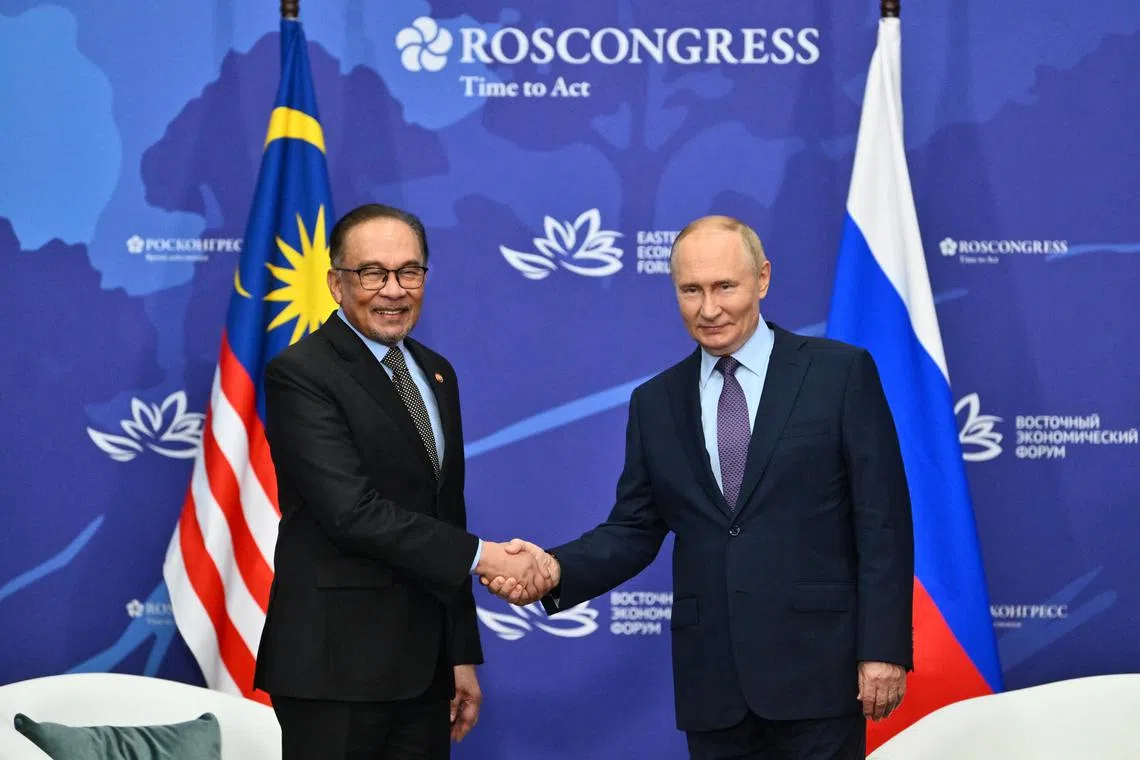
Although Malaysian Prime Minister Anwar Ibrahim did not show up at the Brics meetings, he had earlier invited Putin to attend next year’s Asean Summit hosted by Malaysia.
The Thai foreign ministry said it has been named a partner country, reported local news website The Nation.
Additional reporting by Elisa Valenta
TRENDING NOW

Two Singapore-listed palm oil firms named in Greenpeace report on Indonesian plantation fires
Singapore Airlines flight returns to San Francisco after ‘unruly’ passenger incident

Singapore looking into which companies responsible for haze-causing fires: PM Wong
Deluge IPO 3.86 times subscribed ahead of SGX debut

