Asean Business logo
SPONSORED BYUOB logo

Vietnam pins semiconductor ambition on robust workforce training

The country’s large, low-cost labour force makes it an attractive destination for cost-conscious manufacturers
Published Fri, Aug 2, 2024 · 05:00 AM
    • Vietnam is forging partnerships with global chip powerhouses and enhancing workforce quality, aiming to send about 1,500 engineers abroad for chip design roles and another 5,000 for other chipmaking jobs within the next six years.
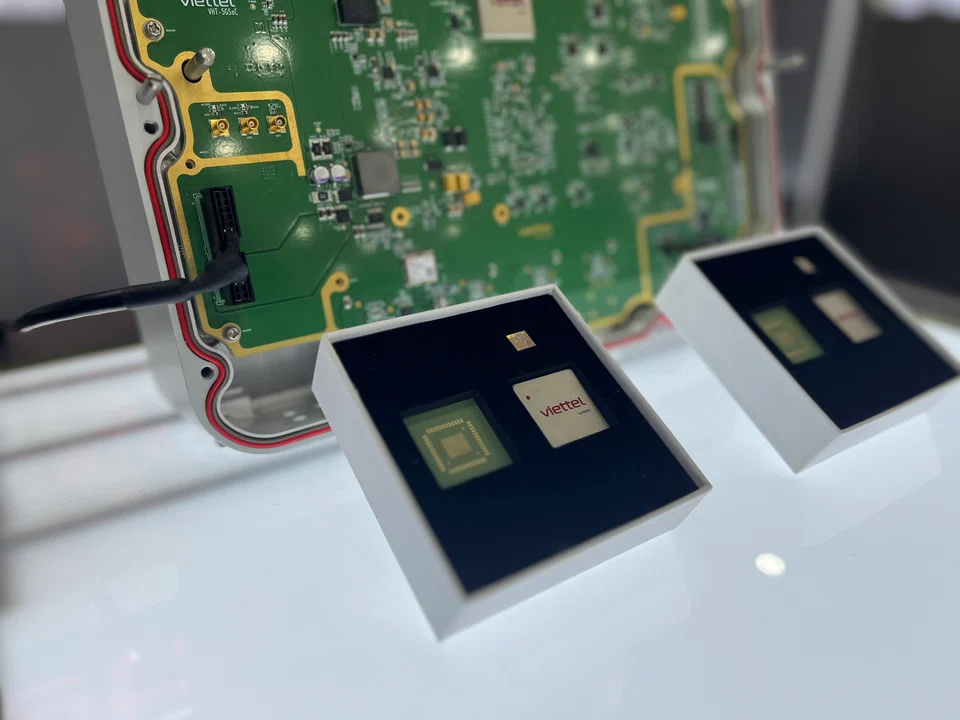
    • Vietnam is forging partnerships with global chip powerhouses and enhancing workforce quality, aiming to send about 1,500 engineers abroad for chip design roles and another 5,000 for other chipmaking jobs within the next six years. PHOTO: JAMILLE TRAN, BT

    [HO CHI MINH CITY] Vietnam, the third-largest Asian exporter of semiconductors to the US, after Malaysia and Taiwan, is betting big on its sector ambitions by focusing on its most valuable yet currently scarce asset – a skilled workforce of engineers, designers and technicians.

    Vietnam is forging partnerships with global chip powerhouses and enhancing workforce quality, aiming to send about 1,500 engineers abroad for chip design roles and another 5,000 for other chipmaking jobs within the next six years, according to a document from the country’s investment ministry reviewed by The Business Times.

    This effort is part of Vietnam’s broader goal to groom 50,000 semiconductor professionals by the decade’s end. Central to this strategy is becoming a global workforce hub, with 6,500 Vietnamese engineers expected to be working overseas by 2030.


    The investment ministry estimates that Vietnam could house about 10 packaging, assembly and testing factories, and 15 equipment-producing plants for the semiconductor industry by 2030, requiring a supply of 30,000 engineers.

    Several major chipmakers, including Intel, Amkor Technology and Hana Micron Vina, have established a presence in Vietnam, with five factories focusing on the back-end stage of chipmaking. Nine other companies are producing semiconductor devices in the country.

    In 2022, Vietnam ranked among the top 10 global exporters of semiconductor devices and integrated circuits, placing 6th and 10th, respectively, according to the Observatory of Economic Complexity. The main export destinations were China and the US.

    Vietnam’s large and relatively low-cost labour force has made it an appealing location for manufacturers seeking to cut costs, the ministry added.

    In the next six years, Vietnam could also see its semiconductor ecosystem expand, with 100 fabless companies employing around 13,500 chip design engineers by 2030.

    This figure is 2.5 times the size of the current workforce employed by 40 chip design companies operating in Vietnam today, of which 34 are foreign-invested enterprises, statistics from the Vietnam Microchip Community showed. 

    “Some of them are already capable of handling complex chip design tasks,” said Dr Le Quan, senior lecturer of engineering at Fulbright University Vietnam. “Replicating and expanding on such exemplary successes is challenging without the backing of state policies.”

    He also highlighted an opportunity for Vietnam to participate in the fledgling market of artificial intelligence (AI) accelerators – types of chips optimised for AI workloads increasingly used in digital applications and smart devices. 

    “The sector is advancing at a similar pace across the world, so Vietnam should not miss out,” he said.

    According to the draft plan of the national programme, Vietnam also aims to prepare around 5,000 AI specialists to serve the semiconductor industry by 2030. 

    The government is set to approve the activities funded by the programme to realise these manpower goals over the next six years, with a budget of about 26 trillion dong (S$1.4 billion). The state budget will provide 17 trillion dong, with an additional nine trillion dong from social sources.

    Nguyen Thanh Yen, general director at South Korean chip design company CoAsia Semi’s Hanoi branch, emphasised the importance of measures aimed at fostering the growth of local semiconductor companies and encouraging collaborations with international enterprises to absorb the trained workforce.

    “This is primarily a job-related issue rather than just a training issue,” he said. “It requires investment promotion schemes and a macro policy for the semiconductor industry.”

    Blown opportunities

    In another document dated Jun 29, the investment ministry noted that Vietnam missed out on several major investment deals in the semiconductor sector due to the absence of timely support policies, especially following the country’s adoption of the cross-border tax rule.

    US chipmaker Intel proposed a US$3.3 billion chip factory project in Vietnam and requested 15 per cent cash support from the country. However, the company ultimately chose to locate the facility in Poland.

    AT&S, a semiconductor manufacturer headquartered in Austria, turned to Malaysia after being unable to secure the needed support for investment costs and high-tech worker supply in Vietnam.

    Unstable electricity supply has also been a concern for companies in energy-intensive industries such as semiconductor manufacturing, as rolling outages due to an intensely hot summer and an unprecedented drought last year interrupted factory production in some northern industrial zones in Vietnam.

    John Rockhold, head of the power and energy working group of Vietnam Business Forum, a consortium of business associations, said that even just a few minutes of a blackout could cost semiconductor fabs millions of dollars.

    “For high-tech industries like chipmaking, those are not ideal conditions (for coming) in to invest,” he said.

    The country’s leadership pledged to prevent another power crunch this year to accommodate economic growth, and no such events have been reported during the peak summer period thus far.

    In April, the government outlined a list of priority projects to develop its power sources and transmission grids, aiming to realise the country’s ambitious targets under the national power plan through 2030 issued last year.

    “If Vietnam can implement that, it will go into 2030 with a good power supply” and start attracting energy-intensive chip businesses, Rockhold said.

    Government incentives

    To retain the country’s attractiveness as an investment destination, the government is working on a draft decree regulating the management of an investment support fund using the money from the top-up tax revenue and other appropriate sources.

    The fund will be established to grant cash support to eligible firms, be they local or foreign-invested enterprises, in high-tech industries such as AI and semiconductors. This will cover expenses related to human resources training, research and development, fixed asset investments, social infrastructure system development, and high-tech product manufacturing.

    Semiconductor-related research projects can also receive grants through the country’s other science funds.

    The financial assistance is crucial, as Vietnam aspires to establish the first semiconductor fabrication plant by the end of this decade, said industry insiders.

    A wafer fab, which typically represents the highest-value and most expensive part of the semiconductor manufacturing process, necessitates an investment of anywhere between US$10 billion and US$50 billion.

    Chipping into the talent pool

    Speaking at an industry seminar in April, Minister of Information and Communications Nguyen Manh Hung said that turning Vietnam into a global semiconductor workforce hub could attract foreign players to invest in research and production projects in the country. 

    “Human resource training must also be based on market signals, especially agreements with enterprises and countries,” he added. 

    Last September, Vietnam signed a deal with the US to expand the capacity of its semiconductor ecosystem, in support of the US’ industry.

    In particular, Washington pledged to provide seed funding of US$2 million to train Vietnamese workers in chip assembly, packaging and testing.

    Over the past year, major US chip players such as Intel, Qualcomm, Synopsys, Qorvo, Cadence and Marvell have engaged in various partnerships and programmes to provide workforce training in Vietnam.

    “The global demand for specialised workers in semiconductors is substantial, and Vietnam could export high-quality engineers and provide human resource services to suitable countries and economies,” the investment ministry noted in the plan, citing interest from the US, Japan, South Korea and Taiwan for workforce collaborations.

    So far, Singapore, Malaysia and Japan are the top three countries recruiting Vietnamese engineers for chip design positions, with approximately 50 professionals going to work abroad per year.