BT Explains: How a greater pivot towards domestic investments will impact Malaysia’s EPF

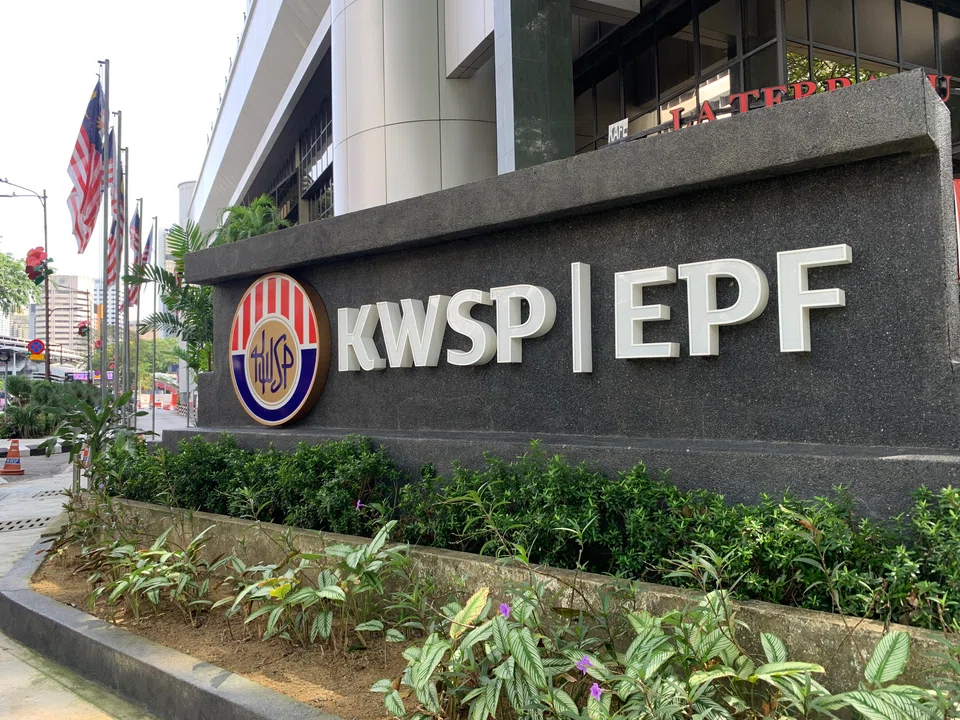
[KUALA LUMPUR] Malaysia’s Employees Provident Fund (EPF) – one of the world’s oldest and largest retirement funds – is looking at ways to pivot its investment strategy by channelling more funds domestically to aid the country’s economy.
This was sparked by Prime Minister Anwar Ibrahim’s call last month for EPF to boost its domestic direct investments to 70 per cent of its total investment assets by the end of this year, from about 64 per cent in 2022.
This, said Anwar, will help support Malaysia’s capital markets, strategic industries and infrastructure investments over the long term.
Last Friday (Jun 9), EPF reported that its overall investment assets as at March 2023 grew to RM1.04 trillion (S$302.7 billion), of which overseas investments make up 37 per cent of the total assets.
EPF’s overseas investments, which were mainly in equities, continued to outperform and added value to the fund’s overall return as they generated RM7.04 billion in income, representing 46 per cent of the total investment income recorded.
The fund said that domestic investments currently account for 63 per cent of total assets, mainly invested in held-to-maturity fixed-income instruments.
Since its establishment in 1951, EPF has played a key role in Malaysia’s economic growth through its investments in the equity market and major companies such as RHB Bank, Malaysia Airports and Sime Darby Plantations.
Here are some burning questions that EPF contributors and observers have posed as they continue to debate the potential shift in EPF’s investment strategy.
What is the rationale behind Anwar’s request?
Anwar, who is also Finance Minister, is keen to drive more fund inflows to Malaysia’s domestic market, be it by investing in the equity market or via direct investments to companies or infrastructure developments.
Other than higher domestic investment, Anwar wants EPF to review its investment direction to reflect the government’s aspiration to focus on areas such as food security, startups and engaging the youth.
Analysts say that with more inflows into the capital market, this could lead to a strengthening of the ringgit and possible changes in local corporate dividends.
Who will benefit the most from this move?
Some estimates suggest that an additional RM60 billion will be channelled to the Malaysian market if EPF manages to boost its domestic portfolio to 70 per cent.
In 2022, EPF allocated 89 per cent of its investment on fixed income instruments and equities, with the rest going to money-market instruments, real estate and infrastructure.
In terms of investment return, the equities asset class contributed 55 per cent (or RM30.5 billion) of EPF’s total investment income of RM55.3 billion.
The fixed-income instrument – comprising Malaysian Government Securities and their equivalent, as well as loans and bonds – is the second-largest income contributor to EPF, generating RM18.2 billion or 33 per cent of its total income.
With this, EPF would most likely be channelling more funds to these two asset classes to ensure a steady income return. In turn, this will spur investors’ interest in Malaysia’s capital market and give a much needed boost to the trading on the local stock exchange.
What about Malaysian startups?
Malaysian startups will also likely benefit from the higher domestic participation by EPF, given that Anwar has urged EPF and sovereign wealth fund Khazanah Nasional to channel more investment to startup companies.
In his Budget speech in February this year, Anwar announced that EPF will invest RM1.5 billion in local startups with strong growth potential.
In addition, EPF has been exploring the potential of venturing into the private equity space since last year. It was reported that EPF has set aside RM1 billion to work with venture capital funds to look for opportunities to invest in companies that are in the pre-initial public offering stage.
Will a reduced foreign portfolio affect EPF members’ dividend rate?
From just 11 per cent in 2011, EPF’s foreign asset portfolio is now 37 per cent of its total assets under management.
Overseas investments, mainly in equities, outperformed and contributed RM7.04 billion in income, representing 46 per cent of the total investment income in the first quarter of 2023.
Within the equities asset class, foreign-listed equities yielded a return on investment (ROI) of nearly 9.3 per cent in 2022, higher than the retirement fund’s overall ROI of 6.5 per cent.
From 2015 to 2022, EPF has maintained a dividend payout rate of above 5 per cent (ranging between 5.2 per cent and 6.9 per cent). Its dividend rate for 2022 was 5.35 per cent with a total payout of RM45.4 billion.
Last Friday, EPF said it continues to be optimistic despite the projected slowdown in growth for advanced economies compared to emerging and developing markets.
Looking ahead, EPF acknowledges the projected slowdown in growth for advanced economies compared to emerging and developing markets. The fund said it will stay focused on performing sectors that can contribute to its goal of providing a consistent dividend to its members.