Budget-hotel platform RedDoorz set to knock on SGX’s door for 2027 IPO
It plans to use the proceeds to fund acquisitions across Asia-Pacific, including in Australia and India

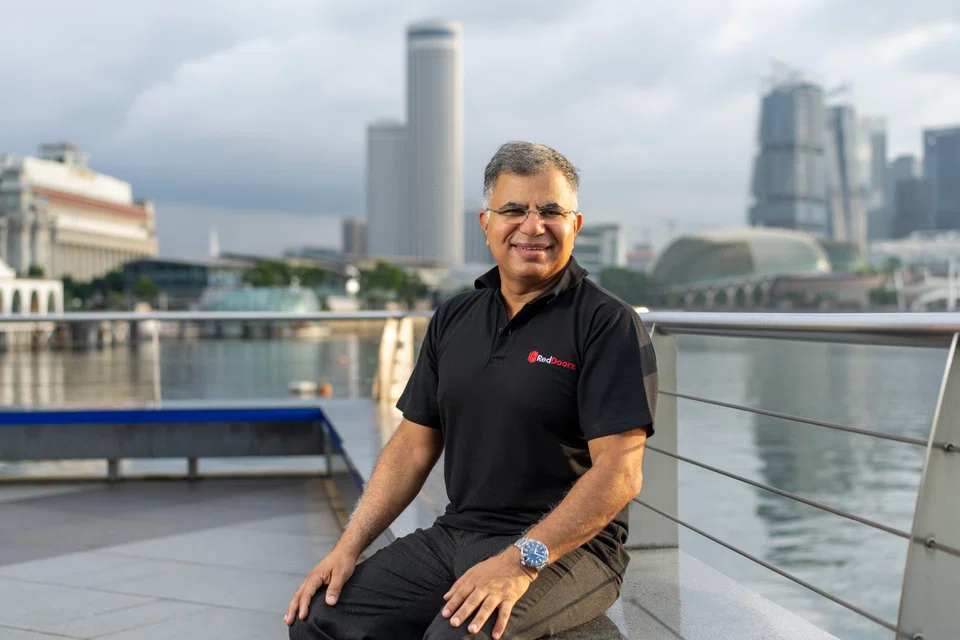
[JAKARTA] Singapore-based hotel management platform RedDoorz is preparing for a 2027 mainboard listing on the Singapore Exchange (SGX), as it seeks to raise between US$50 million and US$100 million to fund an acquisition-led push across Asia-Pacific, said its top executive.
The company – one of South-east Asia’s largest tech-enabled budget-hotel management platforms – expects to begin laying the groundwork within weeks for the listing plans by appointing investment banks, legal advisers and auditors, RedDoorz CEO and founder Amit Saberwal told The Business Times in an interview.
“We have the opportunity to deploy US$50 million to US$100 million of funds through our M&A (mergers and acquisitions) pipeline and we want to aim for a similar range (for the initial public offering),” he explained.
“But it is still early to say. We will get more information once we kick off the IPO process,” he noted, adding that the exact timing would depend on market conditions.
“We’re working very hard to get to that outcome,” he said. “The sooner, the better. But it’s a volatile world right now, and every company would like to go public when market sentiment is positive.”
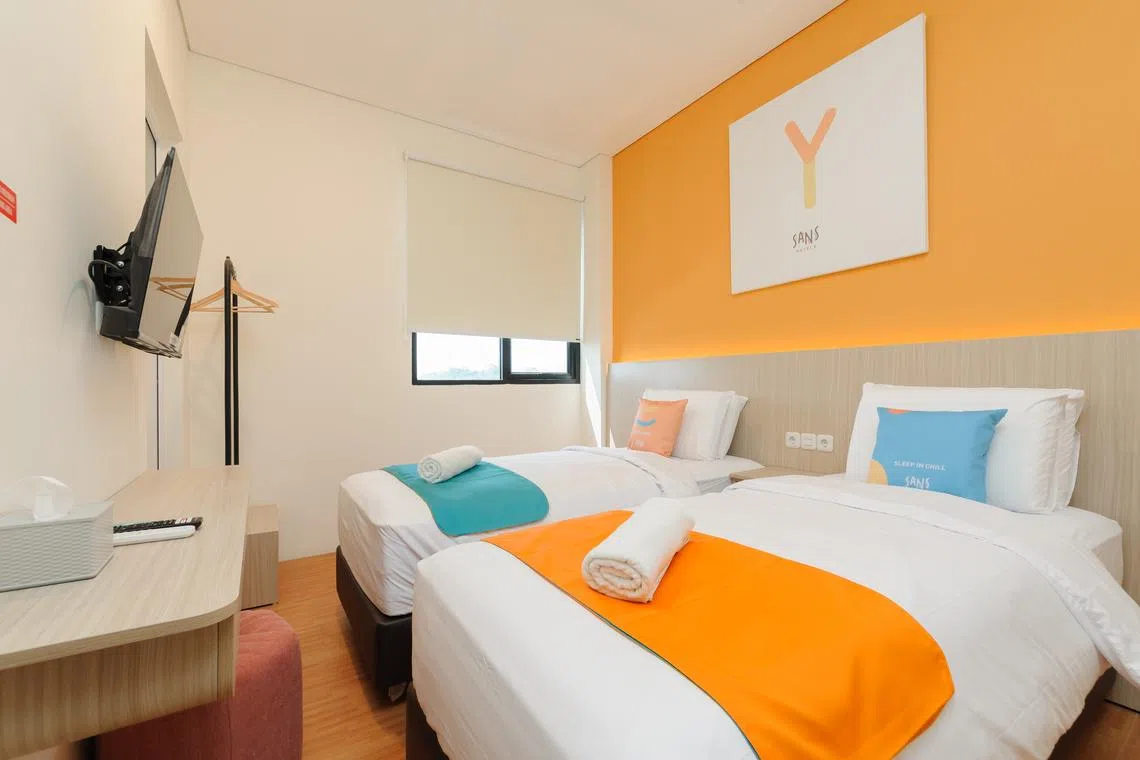
The company, which counts Indonesia as its core market, operates more than 4,400 properties across 257 cities under seven brands, including in the Philippines. It provides hotel management software and revenue management services to independent budget hotels.
Backed by venture capital firms Asia Partners, Mirae Asset Venture Investment, Jungle Ventures, SIG Asia Investments, Qiming Venture Partners and Mirae Asset, RedDoorz plans to float 25 per cent of its shares in the IPO.
Lower-risk route
The funds raised from the IPO will primarily finance M&A rather than organic expansion, as Saberwal believes acquiring established businesses offers a lower-risk route into new markets.
RedDoorz plans to acquire profitable hospitality businesses across Asia-Pacific, including in Australia, India and other South-east Asian markets, before integrating its proprietary hotel technology platform into those operations.
Beyond traditional hotels, RedDoorz sees opportunities to acquire villa management companies, extended-stay accommodation providers and professional hotel operators that lack modern technology platforms.
It generates the bulk of its revenue through a revenue-sharing model with hotel partners, who use the company’s technology platform to manage reservations, pricing, distribution and operations.
More than two-thirds of its income come from commissions on bookings made through partner hotels, while the remainder is derived from ancillary services sold to travellers through its platform, such as travel insurance and other value-added products.
The company expects 2026 revenue to grow to around S$50 million this year from S$41 million in 2025, supported by stronger occupancy and the addition of more hotel partners. It has been growing revenue by roughly 20 to 25 per cent annually.
Indonesia continues to drive RedDoorz’s growth despite a softer macroeconomic backdrop, with its business there expanding 24 per cent year on year in 2025 to become the company’s largest and fastest-growing market, Saberwal said.
“Our customers are value-seeking travellers and independent hotel owners. Both demand and supply remain robust,” he added.
The company believes focusing on domestic travel rather than international tourism has made its business more resilient to geopolitical uncertainty and global economic volatility.
Dual-listing goal
Although most of RedDoorz’s business is generated outside Singapore, Saberwal said that SGX was the natural choice for the listing as the company is headquartered in the city-state. He added that Singapore’s favourable regulatory environment and recent government initiatives to revive the bourse further strengthened its appeal.
Saberwal noted that the planned SGX listing would not necessarily be the company’s final capital markets destination. As RedDoorz scales its business across Asia-Pacific, it would consider a future dual listing on Nasdaq to tap a deeper pool of global technology investors. “We want to keep all our options open,” he added.
The company became profitable in 2024 after deploying artificial intelligence across its operations to improve productivity while containing costs.
Saberwal said that AI is increasingly being used to automate software development, quality control and internal processes, allowing RedDoorz to expand without significantly increasing headcount.
Get back on the horse
The IPO marks a renewed attempt by RedDoorz to tap public markets after earlier plans were delayed by the Covid-19 pandemic, which severely disrupted the hospitality industry.
Saberwal said that the company has since reached a level of operational maturity required for a public listing, with governance, bookkeeping and audit processes largely in place.
Before founding RedDoorz in 2015, Saberwal spent nearly nine years at India’s largest online travel company MakeMyTrip, where he built the company’s hotel business and later served as chief business officer. During his tenure, MakeMyTrip went public on Nasdaq in 2010 before expanding into Singapore.
RedDoorz initially experimented with several business models before identifying a gap in South-east Asia’s fragmented budget hotel market. Instead of competing directly with online travel agencies, the company built software to help independently owned hotels manage bookings, pricing, distribution and operations.
That strategy was tested during the pandemic, when global travel collapsed and many hospitality startups either shut down or dramatically scaled back operations.
RedDoorz survived by working closely with hotel partners, offering operational support while conserving cash, a strategy that strengthened customer loyalty but forced the company to withdraw from markets such as Vietnam and Thailand. “What looked catastrophic at the time actually made us a much more resilient company,” Saberwal shared.