



Bursa Malaysia pivots to larger IPOs as it plays down MSCI-related risks
The exchange’s Q4 net profit is down 11.7% at RM60.8 million amid muted market sentiment

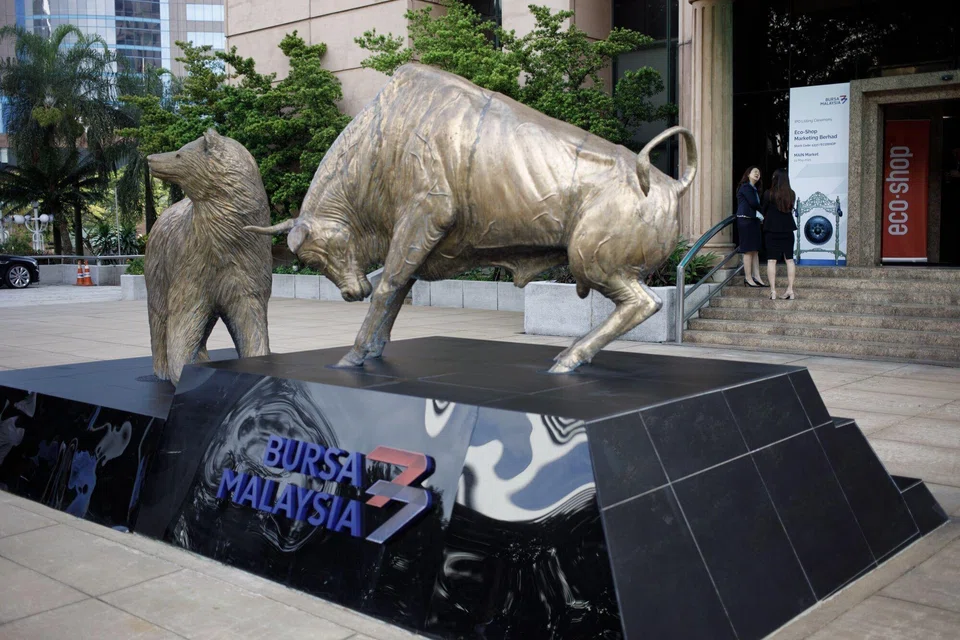
[KUALA LUMPUR] Bursa Malaysia is pivoting towards larger, higher-quality initial public offerings (IPOs) to deepen market liquidity and attract global investors, as the exchange plays down concerns that recent MSCI actions elsewhere pose risks to Malaysia’s capital markets.
The exchange is targeting RM28 billion (S$9 billion) in IPO market capitalisation in 2026, up from RM27.4 billion last year, as it shifts emphasis away from headline listing numbers towards deal size and investability, chief executive Fad’l Mohamed said.
“Our focus for 2026 is really on the quality and size of IPOs. Numbers still matter because they help companies raise capital, but from a KPI perspective, market capitalisation is the key metric,” Fad’l told the media on Thursday (Jan 29) during its financial results briefing.
Bursa Malaysia solidified its position as South-east Asia's most active IPO market by hosting 60 listings in 2025, up from 55 in the previous year. While the number of offerings grew, the capital raised totalled nearly RM6 billion – a decrease from the RM7.4 billion recorded in 2024.
To-date, six IPOs have already been completed, keeping the exchange broadly on track to match last year’s pace.
Still, Fad’l said the exchange was increasingly prioritising larger main market listings, particularly companies valued at RM1 billion and above, to meet the investment thresholds of foreign institutional investors.
He added that while the ACE Market remains a strong funding platform for growth-stage companies, Bursa Malaysia’s priority now is to attract more substantial main market listings.
Foreign inflows and stabilising conditions
The strategy comes as Malaysia sees renewed foreign investor interest, with net inflows of about RM1.1 billion year to date, driven largely by financial stocks.
Fad’l noted that capital rotation into Asean markets has accelerated as investors reassess geopolitical and policy risks in developed markets. “Investors like certainty, and Malaysia offers policy clarity and economic stability,” he said, pointing to growth expectations of between 4 and 4.5 per cent this year.

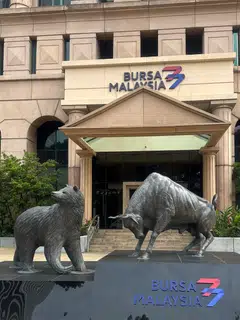

Some companies that delayed IPO plans, such as MMC Port Holdings’ multibillion ringgit IPO, during periods of heightened volatility in early 2025 have since returned to the pipeline as market conditions stabilised, he added.
“The most challenging period was around March and April last year, when uncertainty was at its peak,” Fad’l said, adding that market sentiment improved by the second half of 2025 as clarity improved, and companies began to re-engage with the market.
Free-float framework defended
Fad’l also played down concerns that Malaysia could face scrutiny similar to Indonesia, which was downgraded by MSCI from emerging-market to frontier-market status partly over free-float issues.
“MSCI’s recent action is very Indonesia-specific… Malaysia’s minimum public spread requirement of 25 per cent is already relatively high and robust,” he said.
While some large IPOs have been approved with free floats below the standard threshold, he said these were assessed against clear regulatory parameters based on market capitalisation and had not triggered negative feedback from MSCI.
“MSCI evaluates multiple investability criteria, including liquidity and free-float-adjusted market capitalisation – not free float alone,” he said.
Subdued FY2025 performance
Bursa Malaysia ended 2025 with lower revenue and profit as muted sentiment and decreased daily trading dampened securities market performance, the company said in a bourse filing on Thursday.
The stock exchange operator registered a net profit of RM60.8 million in Q4, down 11.7 per cent from the RM68.9 million booked for the same period a year earlier.
However, quarterly revenue was higher at RM190.9 million compared with RM185.9 million previously.
Consequently, full-year net profit fell 19.3 per cent year on year to RM250.2 million for FY2025, from RM310.1 million.
Full-year revenue was down 7.2 per cent at RM727.7 million, from RM784.3 million. Earnings per share decreased to 30.9 sen in FY2025 from 38.3 sen in the previous year.
The board of directors declared a final dividend of 14 sen per share for the year. Combined with the previous interim dividend, this brings the total dividend to 28 sen per share, equal to a total payout of RM226.6 million and a payout ratio of around 91 per cent.
Declining daily trading
Bursa Malaysia reported that securities trading revenue fell to RM308.2 million in FY2025 from RM381.5 million in FY2024.
The nearly 20 per cent decline was driven by lower average daily trading volumes and muted investor sentiment amid heightened global uncertainty.
As for the derivatives market, its trading revenue saw a marginal dip of almost 1 per cent to RM112.8 million from RM113.8 million, as a result of lower collateral management fees.
Trading velocity slipped seven percentage points to 32 per cent in FY2025 because of three fewer trading days.
As at end-2025, Bursa Malaysia’s total market capitalisation stood at RM2 trillion, down nearly 1 per cent from a year earlier.
Bursa Malaysia chairman Abdul Farid Alias said the exchange remained resilient in 2025 despite uneven market conditions, supported by strong domestic demand and continued capital-raising activity.
“Malaysia’s resilience was reflected not only in financial outcomes, but also in sustained market participation despite volatility,” Abdul Farid said during the results briefing.
He added that growth in non-trading revenue was helping to stabilise earnings across market cycles, while the board remained focused on governance, regulatory readiness and system reliability.
Decoding Asia newsletter: your guide to navigating Asia in a new global order. Sign up here to get Decoding Asia newsletter. Delivered to your inbox. Free.
Copyright SPH Media. All rights reserved.
TRENDING NOW

Grab CEO’s wife Chloe Tong on life with Anthony Tan and finding her purpose

US trade chief to consider trade deal tariff caps in excess capacity probe
Bee Cheng Hiang customers’ e-mail addresses exposed in Singapore’s first case of AI-related data breach
DFI Retail to take over Starbucks business in Asia from Maxim’s Caterers

