



Bursa Malaysia sees IPO boom as investor demand soars and share prices surge
Strong showing of new listings is attracting more interest among investors, including institutional funds

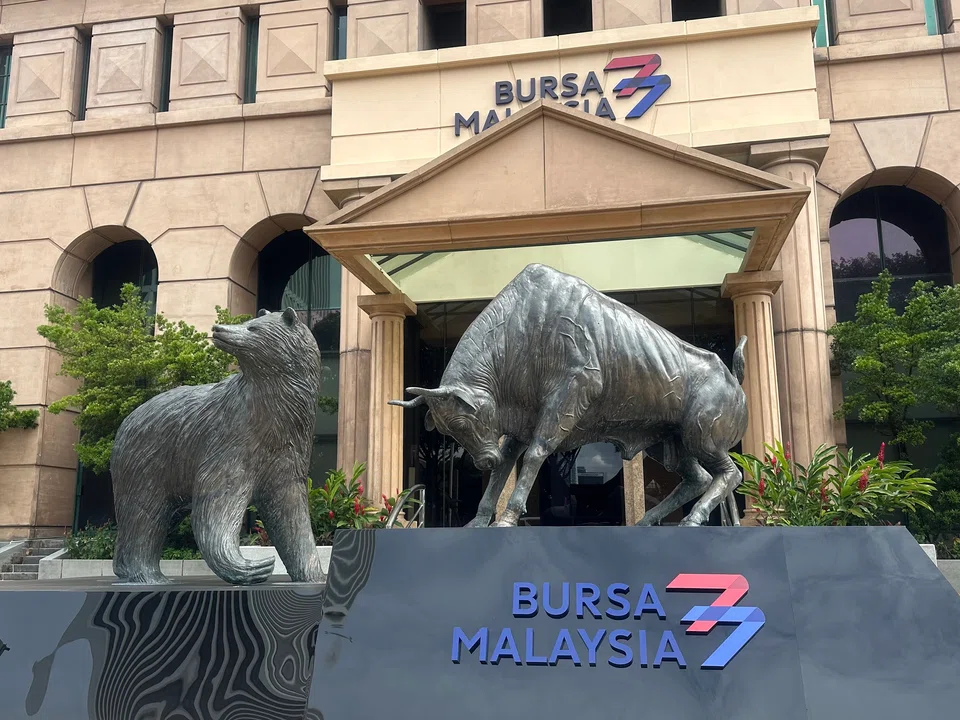
[KUALA LUMPUR] Bursa Malaysia is riding high on growing economic optimism, sectoral momentum and a streamlined approval process, fuelling an initial public offering (IPO) bonanza amid a trading surge on the local stock exchange.
The strong showing of new listings on Bursa is attracting more interest among investors, including institutional funds.
They’re “selling like hotcakes” - is how Ng Zhu Hann, chief executive officer of boutique fund manager Tradeview Capital, described the demand for IPOs. He noted that even institutional investors are receiving smaller allocations than in previous years due to the heightened interest.
“For some high-demand IPOs, we could only get around 1 per cent of the allocation, which is equivalent to the size of our assets under management (AUM), compared to 3 to 5 per cent previously,” he told The Business Times.
As at Aug 2, the share prices of nine newly listed companies have jumped by more than double while five have declined between 1.6 and 7.4 per cent; the rest have posted increases of between 8.9 per cent to 62 per cent.
Top performers include enterprise IT services provider Go Hub, underground utilities engineering solutions company UUE Holdings, and frozen seafood producer Ocean Fresh, with share price increases of 242.9 per cent, 216.7 per cent and 214.3 per cent, respectively.
In the first seven months of this year, Bursa Malaysia welcomed 28 new IPOs, with nearly all experiencing share price increases, while only four saw declines on their first day of trading. Notably, UUE’s share price nearly tripled, finishing at RM0.70 from its IPO price of RM0.24 per share.
Ng noted that many of the new listings have managed to sustain investor interest.
He also pointed out the diversity of the new listings this year, saying: “This year, we are witnessing a diverse range of new and conventional businesses joining the listing bandwagon, exciting investors with new opportunities.”
They include fertility care centre Alpha IVF, vegetable wholesaler Farm Price, frozen seafood manufacturers and distributors SBH Marine and Ocean Fresh, as well as animation company KucingKo.
Highest number of IPOs in South-east Asia
With 28 new listings in the first seven months of this year, Bursa has topped the IPO chart among its South-east Asian regional peers. It has set a target of 42 IPOs this year.
This follows a lacklustre performance in 2023 when Bursa recorded 32 IPOs, falling short of its initial goal of 35 IPOs set at the beginning of the year – a target that was later revised to 31 in November.
Muhamad Umar Swift, the chief executive officer of Bursa, attributed this year’s vibrant market to robust economic recovery, sectoral momentum and a surge in investor confidence.
Between January and June, 21 companies were listed on Bursa, raising proceeds of US$459 million, the highest among Asean bourses. Thailand followed with US$427 million, Indonesia US$248 million, the Philippines US$194 million, Vietnam US$37 million Singapore with US$20 million.
Of the IPOs on Bursa, four companies listed on the main market, 16 listed on the sponsor-driven Ace Market for emerging companies, and one on the Leading Entrepreneur Accelerator Platform (Leap) Market.
Leap is an adviser-driven market for smaller companies. Unlike Ace, however, Leap is only accessible to sophisticated investors.
These 21 IPOs added a combined market capitalisation of RM7.31 billion (S$2.14 billion) to Bursa, the second highest among Asean bourses. With seven additional IPOs listed in July, Muhamad Umar stated this will bring the total number of listed companies on Bursa Malaysia to 1,017, the highest in Asean.
“The IPO performance on Bursa Malaysia reflects increasing optimism in Malaysia’s economy, underpinned by various government-driven transformative programmes,” he told BT.
In February this year, the approval period for new IPO applications was shortened to three months (from around six months or longer). Bursa Malaysia also introduced the Leap market transfer framework, effective from Apr 1.
Additionally, eligible newly listed technology-based companies are entitled to a tax deduction of up to RM1.5 million on listing costs from 2023 to 2025.
“We are confident these initiatives will further build the momentum for the IPO, with 17 more listings in the pipeline (as at Jul 26). We are well on our way to meet our target of 42 IPOs with RM13 billion in total market capitalisation in 2024,” said Muhamad Umar.
“There could also be additional upside potential for the ringgit, as it is expected that the local currency has reached its lowest point. This would pave the way for a more significant return of foreign portfolio flows,” he added.
Robust trading
In a recent report, Deloitte Malaysia disruptive events advisory leader Wong Kar Choon said the IPO outlook for Malaysia remains hopeful for the rest of 2024, with Bursa Malaysia’s target of 42 listings remaining optimistic.
He noted that many new listings on the Ace market have seen gains in their post-listing share prices, indicating reasonable valuations and ample market liquidity.
Trading activities on Bursa Malaysia’s stocks have also been robust, with the average daily trading value in June exceeding RM4 billion, more than doubling from RM1.8 billion during the same period last year.
Alexander Chia, head of regional equity research at RHB Investment Bank, attributed this to improved investor appetite, driven by positive news such as increased foreign direct investments and progress on policy reforms.
The stronger economic fundamentals of the Malaysian economy are also reflected in the performance of its stock market, which has seen significantly higher activity. On May 7, Bursa Malaysia achieved a historic milestone by surpassing market capitalisation of RM2 trillion.
Ng noted that more mid-tier companies are planning to list in the second half of 2024 or next year.
Upcoming listings include convenience store 99 Speed Mart Retail Holdings, edible oil products distributor Sik Cheong, and food processing and packaging solutions company EPB Group.
TRENDING NOW
Simba admits exceeding spectrum limits amid failed M1 deal; full-year profits surge 277%

He built the Vingroup empire. Now South-east Asia’s richest man is handing some key roles to his sons

What’s on the agenda when Xi and Trump meet in Washington

Ex-execs of CW Group, Allied Tech charged with offences linked to lawyer’s S$76 million misappropriation

